

Self-Cannibalization
Why the Best Entrepreneurs Kill Their Own Businesses

In 2008, I sat in a boardroom in Los Angeles with a founder who was worth $400 million on paper. He was physically shaking. Not because he was losing money; his revenue was up 20%. He was shaking because a 22-year-old kid in a hoodie had just launched a free app that did exactly what my friend’s 400-person company did.
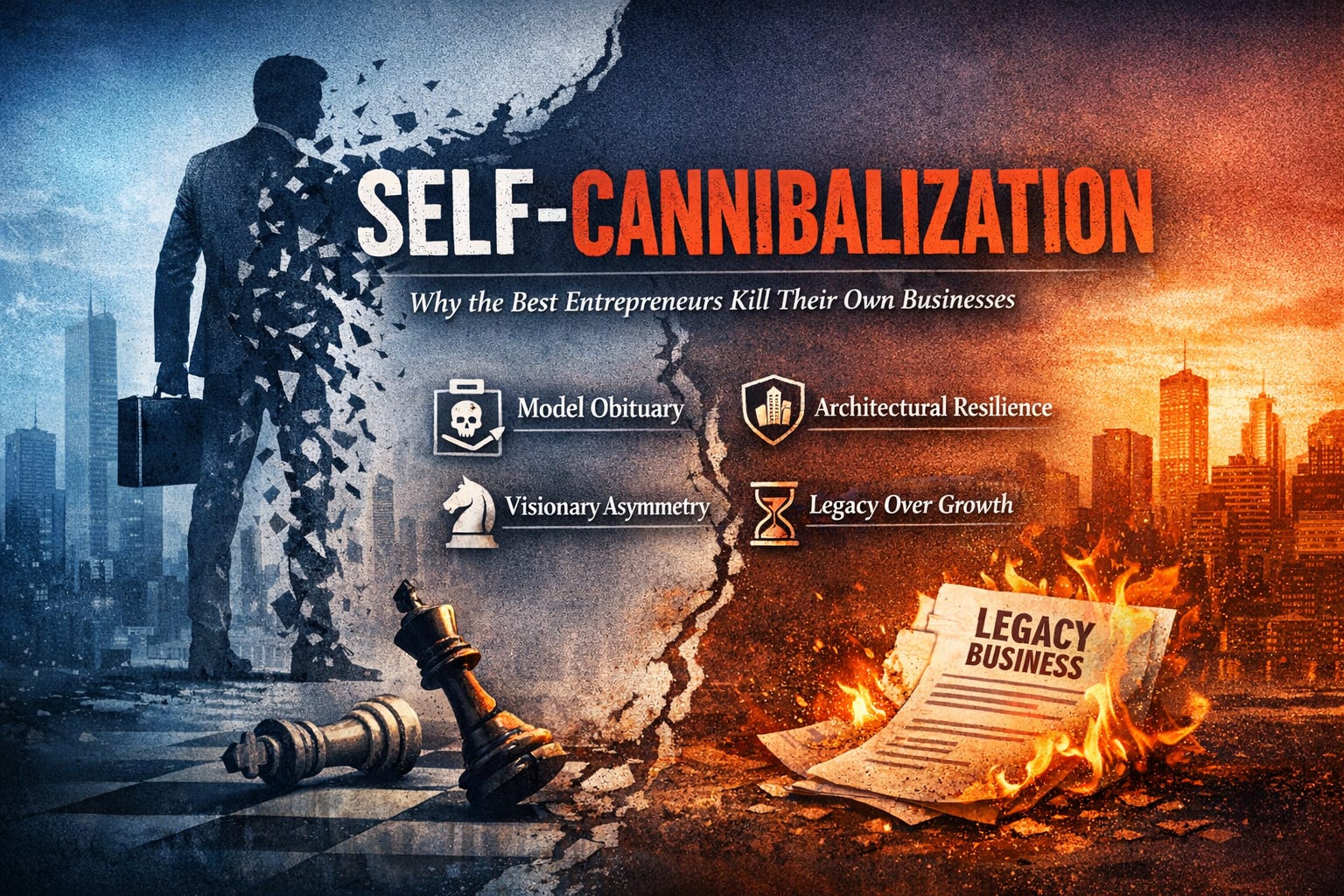
I watched him spend the next two hours explaining why the kid was wrong, why the technology wouldn’t scale, and why their “legacy brand” was a fortress. He wasn’t defending his business; he was defending his identity.
Within 18 months, the company was in receivership. He didn’t lose to a competitor; he lost to the version of himself that refused to die.
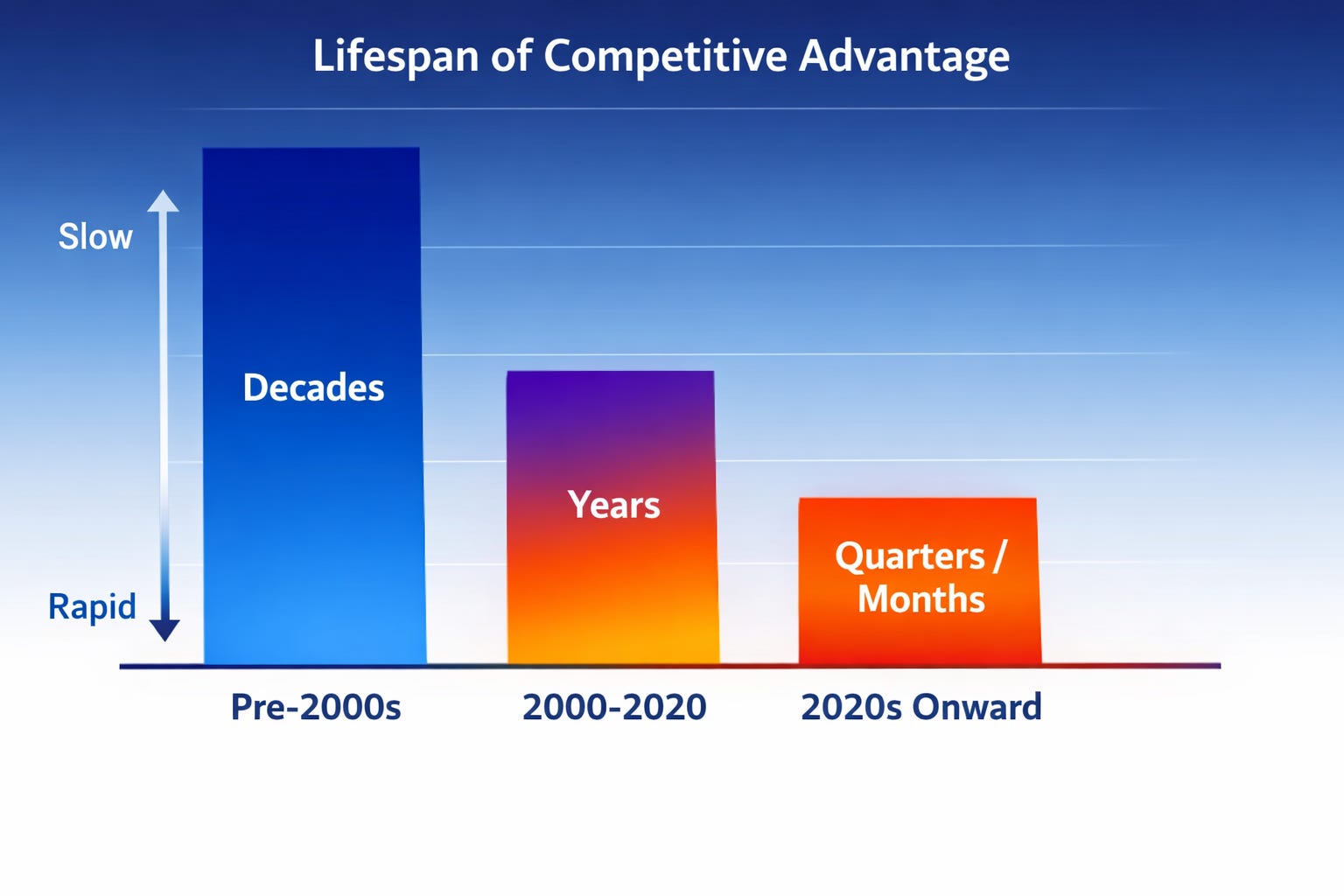
This phenomenon is the Great Compression: the collapse of the half-life of an advantage. Advantages that once lasted decades now expire in quarters. If you are building today based on who you were yesterday, you are already insolvent.
The New Divide: Adaptability vs. Attachment
Most founders are building “biographical businesses”: hero-driven, ego-tied systems that collapse the moment the hero steps out of the room.
Legacy builders build systems.
They master Identity Decoupling: the strategic ability to separate your business’s value from its current form. It is the only way to survive an era where AI-driven replication and zero-barrier entry can turn a “disruptive” model into a commodity in weeks.
The Anatomy of a Self-Cannibal: The Model Obituary
Most entrepreneurs treat their business model like a child; you need to treat it like a prototype. The moment you stop looking for the flaws in your system, the market will find them for you.
To operationalize this, I use a tool called the Model Obituary. This is a formal, quarterly autopsy of your current revenue stream. Imagine you run a high-end consulting firm. Your obituary might read:
“Our $5k/month retainer died today. It was killed by a specialized LLM delivering 80% of our insights for $20/month. We spent too much on office space and not enough on proprietary data sets. We focused on ‘delivering reports’ rather than ‘automating outcomes.’ We are now a legacy cost center.”
If you can’t write that obituary with a straight face, you aren’t being honest about your vulnerabilities. Once written, you pick one cause of death and build the antidote.
Self-cannibalize before the market does.
Structural Resilience: Architecture Over Hustle
I remember a conversation with an entrepreneur in Dubai who was running a massive logistics operation. On the outside, he was the picture of hustle: working 18-hour days, constantly putting out fires, gritting it out. He called it resilience. I called it a design flaw.
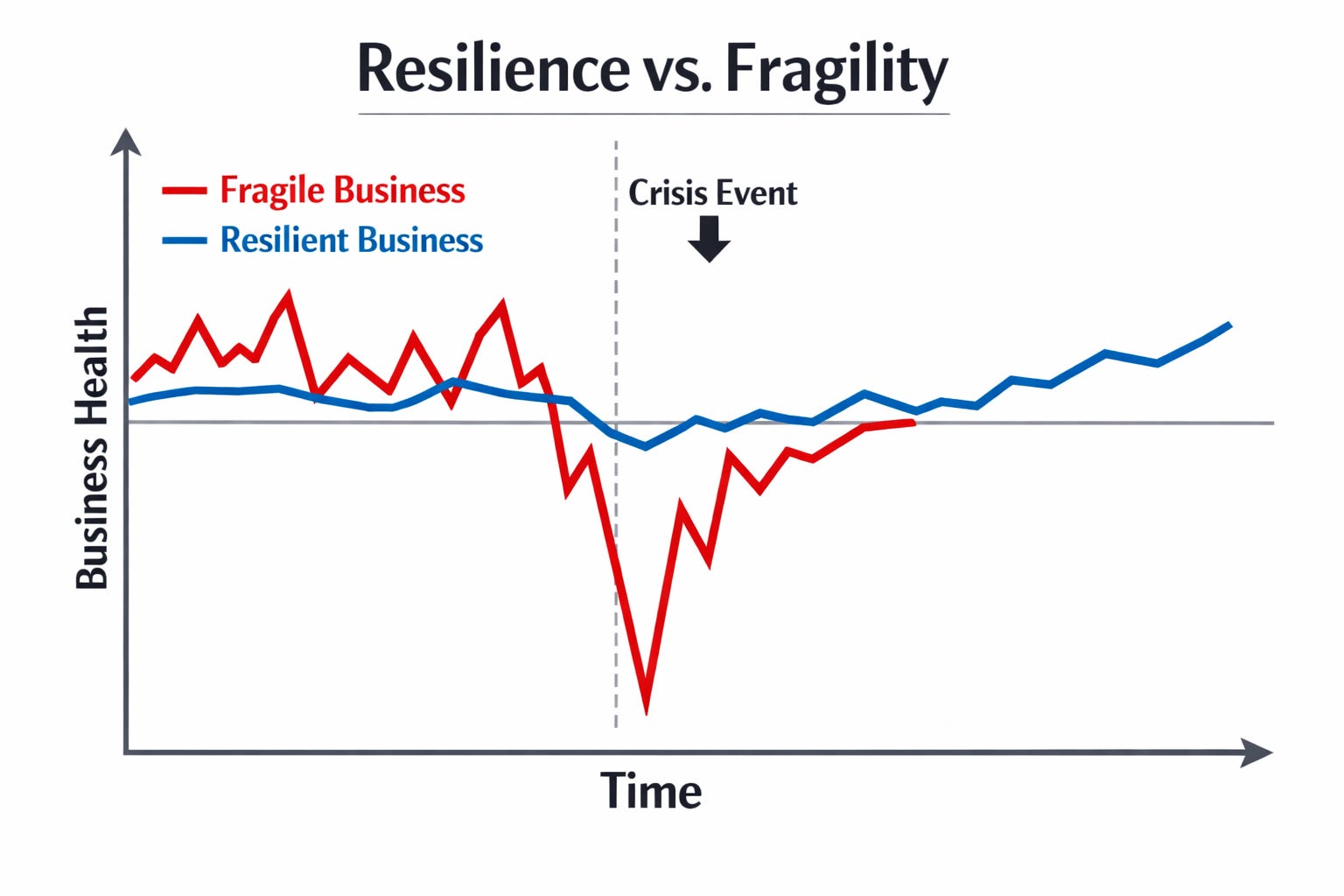
His hustle proved futile when a regional crisis blocked his primary shipping route. He had no redundancy; he had optimized for 100% efficiency and 0% volatility. He was a single-point-of-failure business in a multi-point-of-failure world.
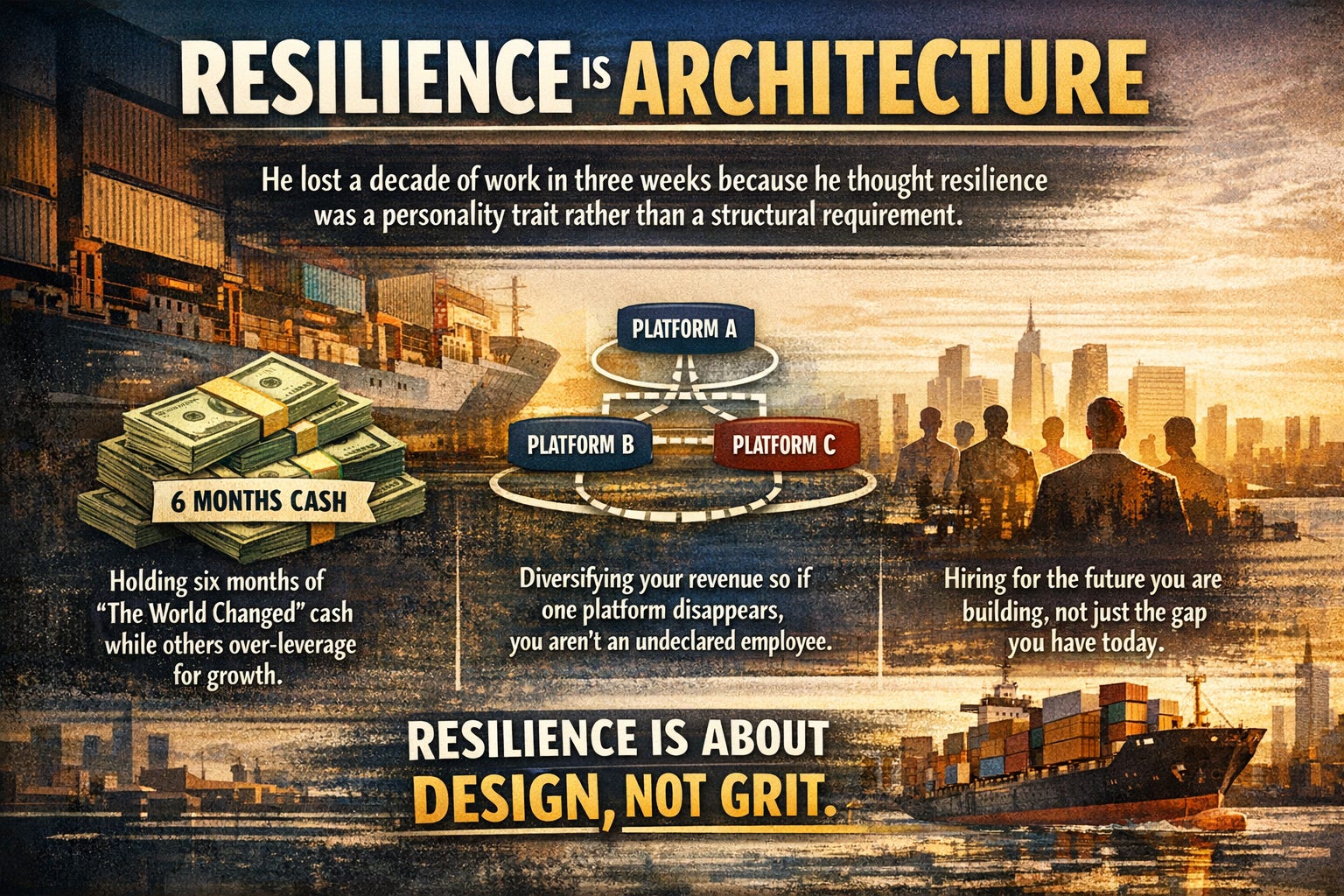
He lost a decade of work in three weeks because he thought resilience was a personality trait rather than a structural requirement.
Real resilience is architecture. It’s the decision to hold six months of “the world changed” cash when your peers are over-leveraging for growth. It’s the decision to diversify your revenue so that if one platform or one client disappears, you aren’t an undeclared employee out of a job. It’s hiring for the future you are building, not just the gap you have today.
The Visionary’s Burden: The Cost of Being Right
In the early 2000s, I stood in the back of a conference room in New York as a group of media executives laughed at the idea of “user-generated video.” They called it a hobby for kids with no talent. One executive—a man who controlled billions in ad spend—looked me in the eye and said, “People want polished stories, Ken. They want the professionals.”
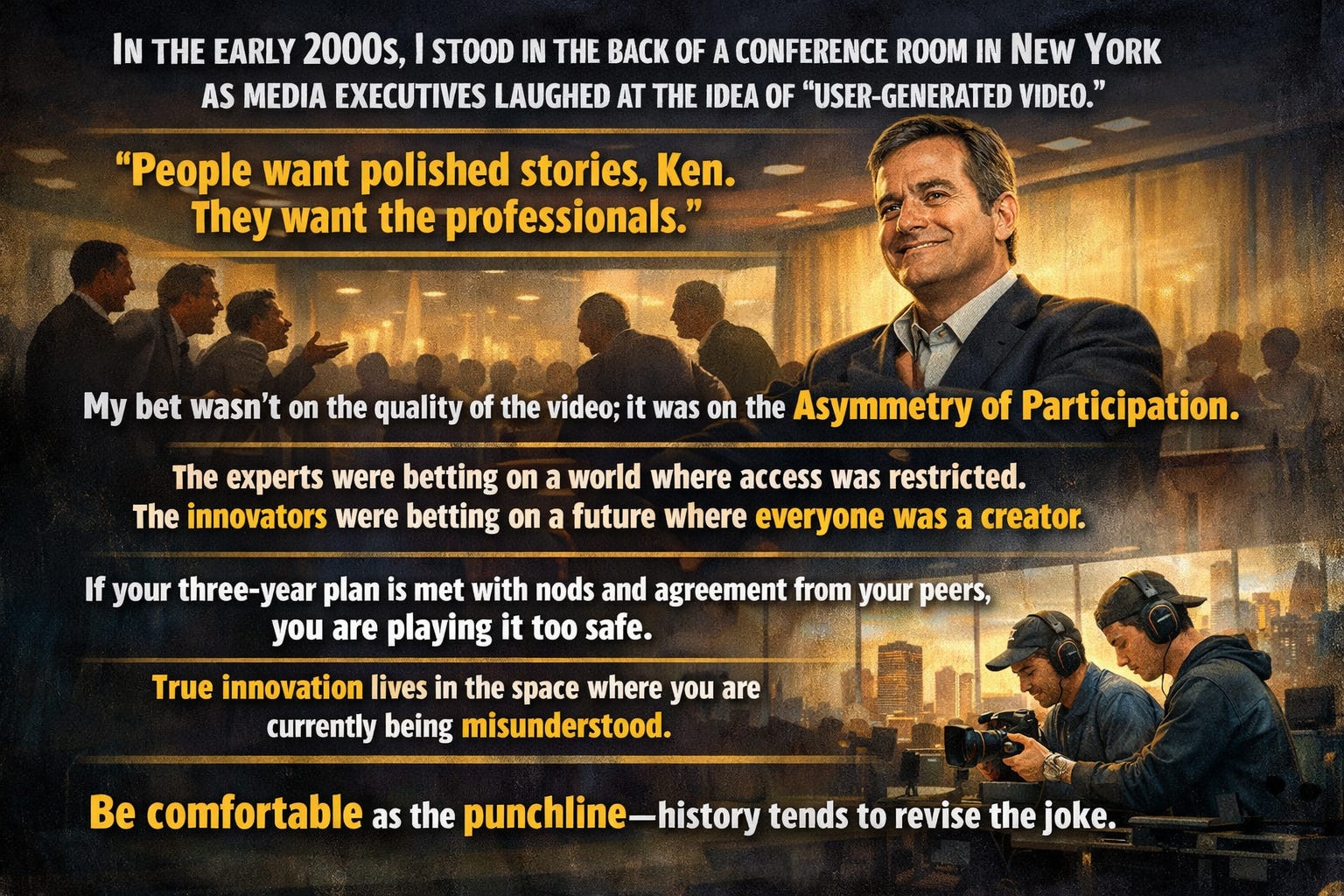
I was in the room with the kids who were building the platforms that wou’ networks. My bet wasn’t on the quality of the video; it was on the Asymmetry of Participation. The experts were betting on a world where access was restricted. The innovators were betting on a future where everyone was a creator.
If your peers nod and agree with your three-year plan, you are overly cautious. True innovation lives in the space where you are currently being misunderstood.
Be comfortable as the punchline—history tends to revise the joke.
The Legacy Roadmap
To move from Growth to Legacy, three shifts matter—and I have seen each one separate the founders who build something lasting from those who build something loud.
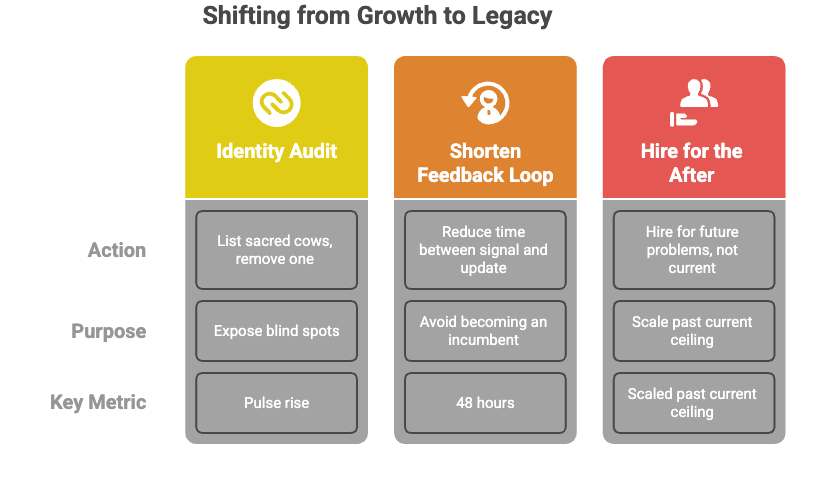
Perform an Identity Audit. In every turnaround I’ve been part of, I start by asking the founder to list the three things they’ve said they’ll never change. Those are the sacred cows, and they are almost always where the defensiveness lives. Pick the one that makes your pulse rise and design a v2 that doesn’t include it. This exposes your blind spots before the market does.
Shorten the feedback loop. I once worked with a software company that felt too big to fail—until they realized a competitor was shipping updates every 24 hours while they were stuck in a 14-day QA cycle. If the gap between a customer signal and a product update is longer than seven days, you are already an incumbent. Aim for 48 hours. In the Great Compression, speed is the only moat that doesn’t dry up.
Hire for the After. One of the best CEOs I know never hires for the problem he has; he hires for the problem he wants to have. Stop filling today’s gap. Find the person who has already scaled past your current ceiling. You are paying for their mistakes so you don’t have to make them yourself.
The Final Divide: Protecting the Intent
The next decade will crown the entrepreneurs who can evolve without losing their Problem-Solving Mandate.
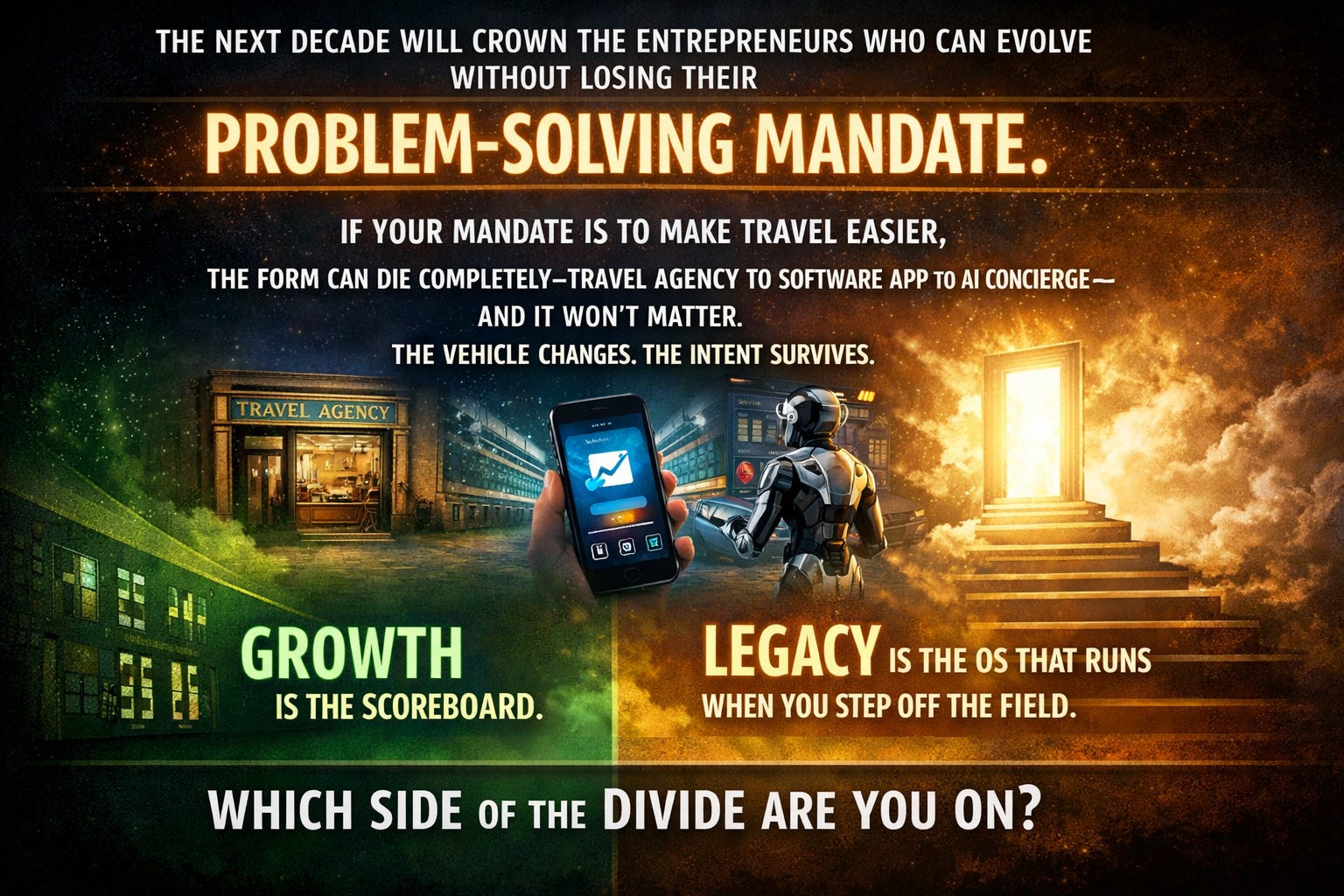
If your mandate is to make travel easier, the form can die completely—travel agency to software app to AI concierge—and it won’t matter. The vehicle changes. The intent survives.
Growth is the scoreboard.
Legacy is the OS that runs when you step off the field.
Which side of the divide are you on?