Stop Being "Nice"
Why Ruinous Empathy Is the Silent Killer of Startup Velocity

Why This Matters Now - The legacy command-and-control model of leadership is obsolete, replaced by an urgent demand for authentic connection coupled with rapid execution. Your ability to scale is no longer limited by capital but by the velocity and honesty of information flow within your teams. Mastering the dynamic between deep empathy and high standards is the only way to build a resilient, market-defining enterprise in a volatile economy.
The defining characteristic of high-growth organizations isn’t just their product innovation; it is the quality of their internal dialogue. Great leaders understand that navigating the tension between being human and driving high performance is not an either/or proposition. It is the fundamental job requirement.
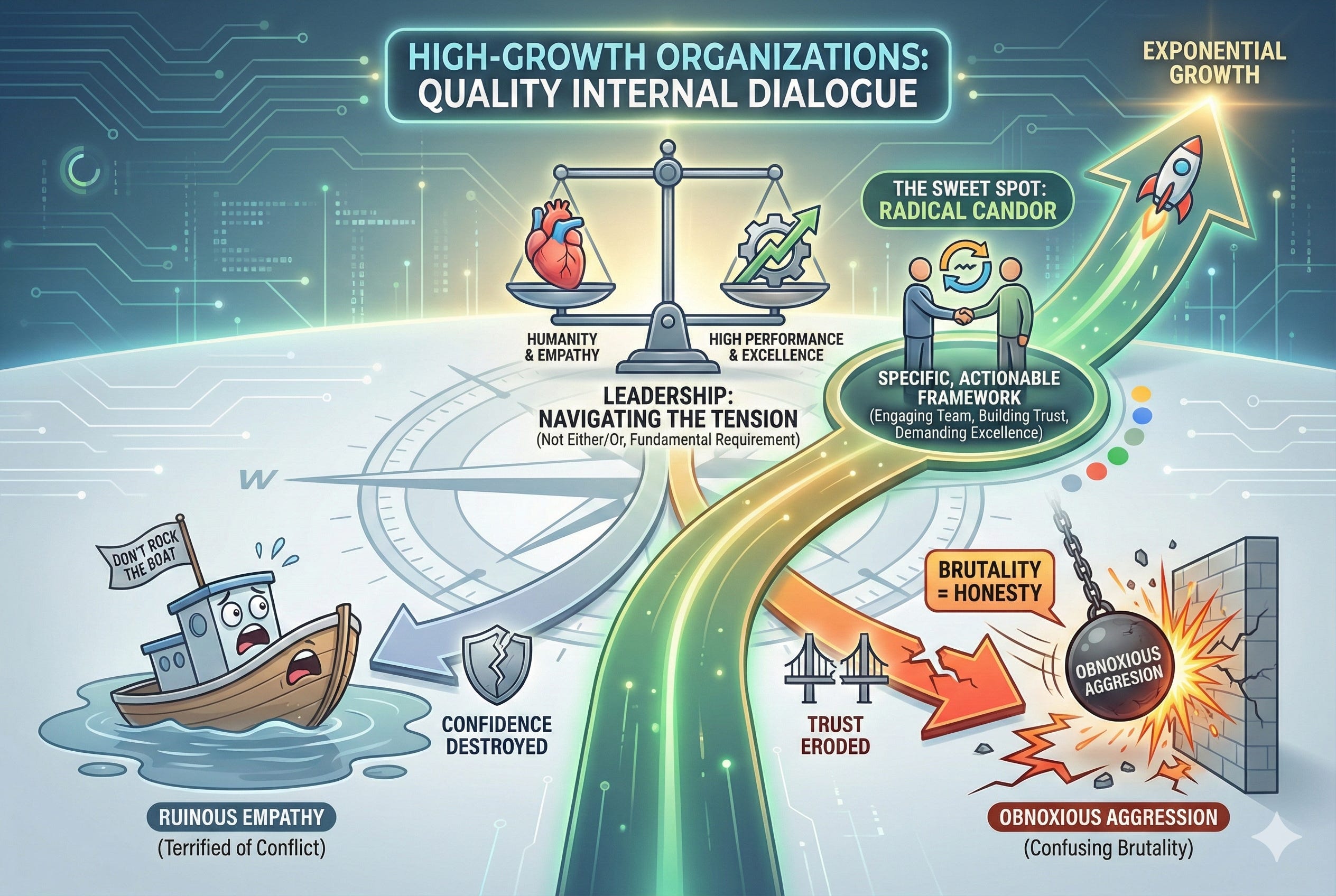
Too many founders default to ruinous empathy, terrified of rocking the boat, or swing wildly to obnoxious aggression, confusing brutality with honesty. The sweet spot, the zone where exponential growth happens, is what author and former Google executive Kim Scott defines as Radical Candor. It is a specific, actionable framework for engaging your team that builds trust while demanding excellence.
Influential leaders like Sara Blakely, founder of Spanx, have long understood that you must bring your “whole self” to work to inspire loyalty, yet you must also possess the rigor to demand the best work from those around you. According to a study by The Economist Intelligence Unit, poor communication practices can cause delays or failures to complete projects in 44% of organizations. The cost of silence and polite mediocrity is too high.
Here is how to operationalize candor to build a high-performing culture that lasts.
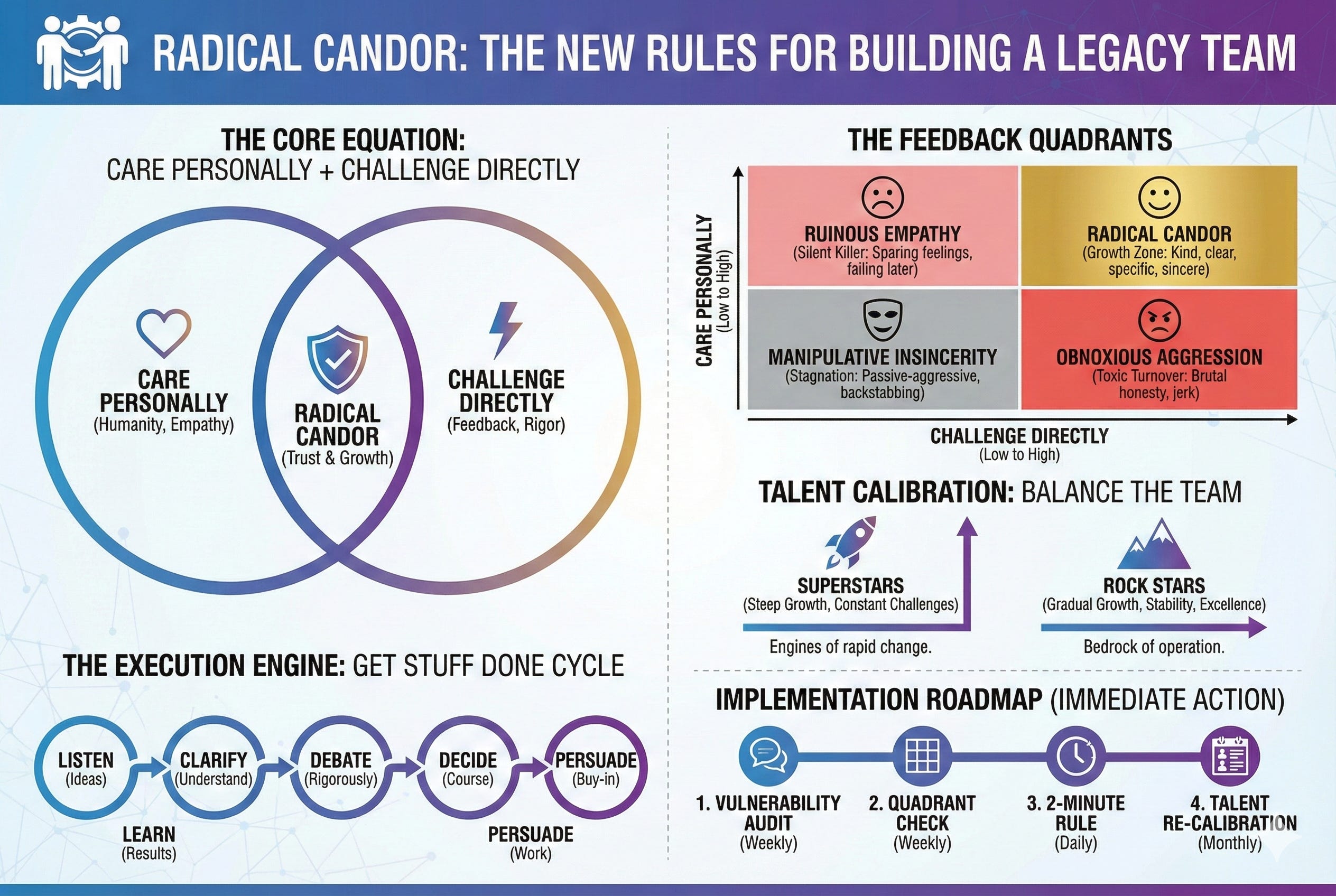
The Core Equation: Care Personally + Challenge Directly
Radical Candor is not a personality type you are born with. It is a daily practice occurring at the intersection of two critical dimensions.
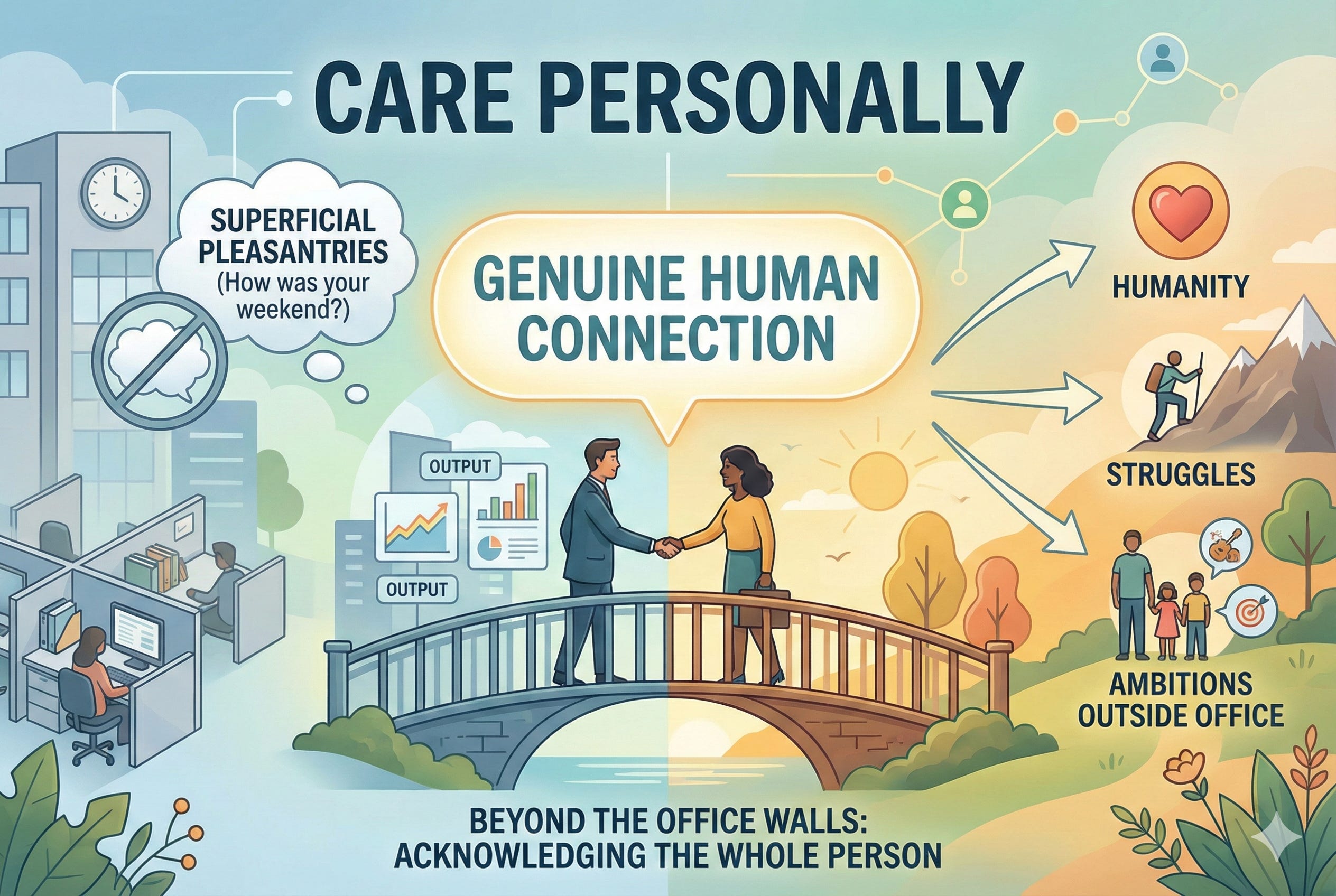
First, you must Care Personally. This goes beyond the superficial “how was your weekend” pleasantries. It means giving a damn about the person, not just their output. It requires acknowledging their humanity, their struggles, and their ambitions outside the office walls.
Second, you must Challenge Directly. You have a moral obligation to tell people when their work is not meeting the standard. Avoiding necessary conflict is not “being nice.” It is leadership negligence. It robs your team of the opportunity to improve and eventually forces you to make harder decisions later.
Understanding where your current leadership style falls is critical to shifting it.
Most managers mistakenly land in the top left quadrant: Ruinous Empathy. They care so much about sparing feelings in the short term that they fail to provide the feedback necessary for long-term success, inevitably leading to failure.
The Trust Catalyst: Solicit Before You Deliver
You cannot demand Radical Candor from your team if you are unwilling to receive it yourself. Trust is not built by broadcasting your opinions; it is built by demonstrating vulnerability.
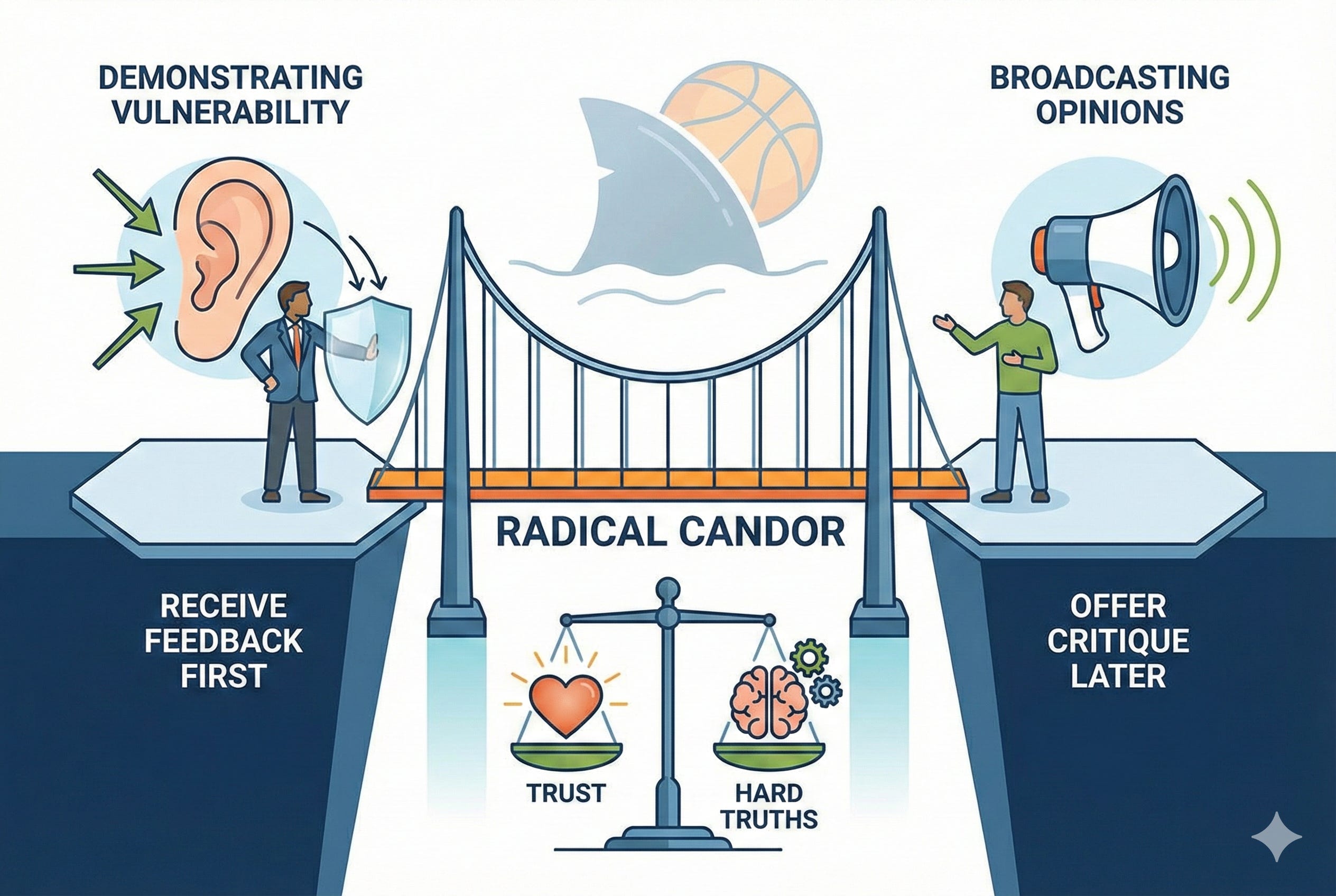
Before you offer a single critique to a direct report, you must prove you can take it. Leaders like Mark Cuban are known for their directness, but their success is founded on an ability to absorb hard truths from their environment.
Start by asking your team a specific, humbling question: “What could I do or stop doing that would make it easier to work with me?”
When they answer, do not defend yourself. Listen with the intent to understand, then reward the candor by taking visible action. Only once you have established this two-way street have you earned the right to challenge them directly.
Watch how Kim Scott herself demonstrates the crucial techniques for soliciting criticism before dishing it out.
Rethinking Talent: The Balance of Steep and Gradual Growth
A pervasive myth in startup culture is that every employee must be constantly gunning for the next promotion. This mindset leads to instability and burnout. Scott argues for a nuanced view of high performance, balancing two necessary archetypes.
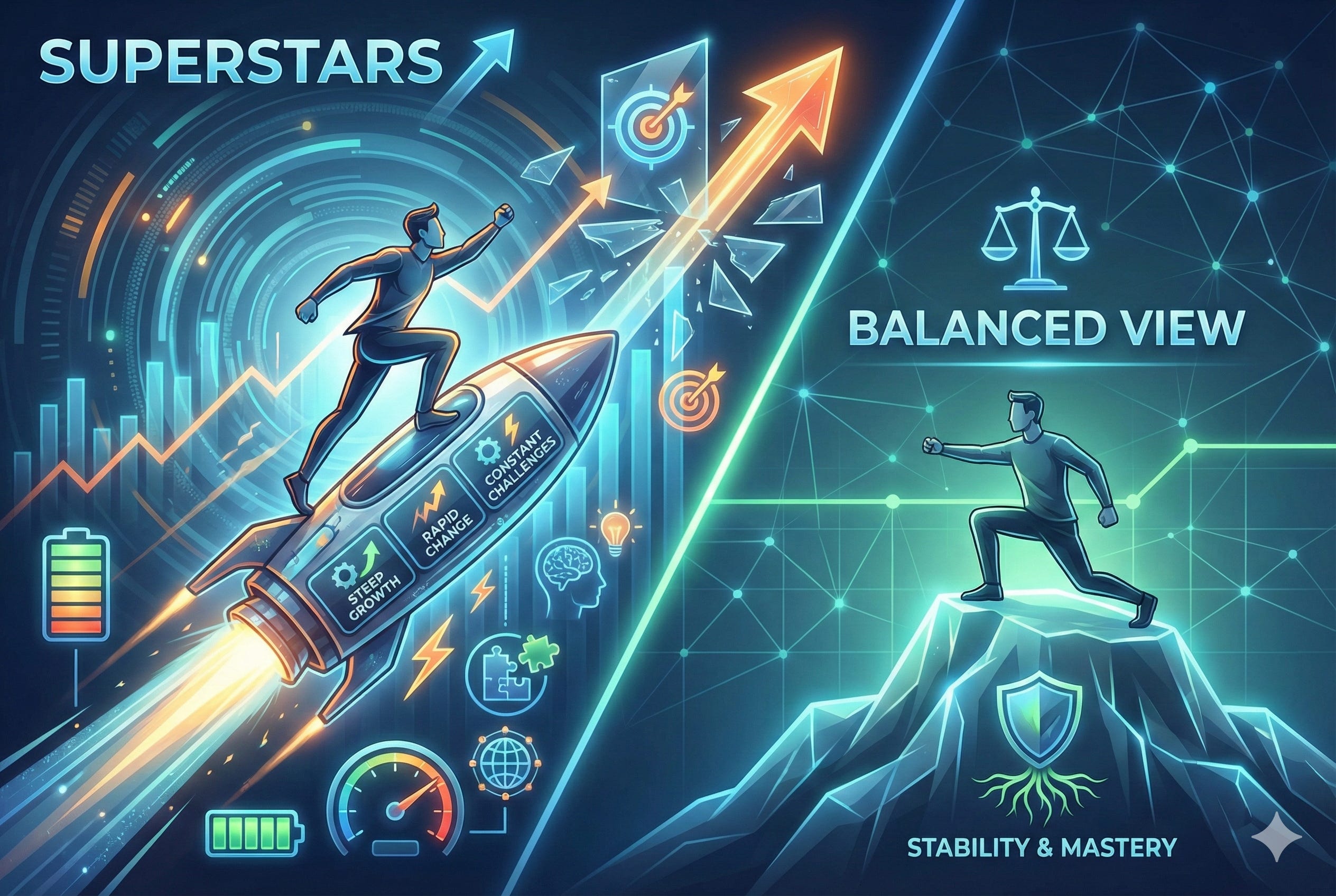
You need Superstars, employees on a steep growth trajectory. These individuals need constant new challenges and will likely outgrow their roles quickly. They are your engines of rapid change.
Crucially, you also need Rock Stars, employees on a gradual growth trajectory. These are the people who provide stability, deep institutional knowledge, and consistent excellence. They are the bedrock of your operation.
The mistake many founders make is forcing Rock Stars to act like Superstars, pushing them into management or rapid advancement they do not want, which often destroys their value. Honor their stability and reward their excellence without forcing them up a ladder they have no interest in climbing.
The Execution Engine: Moving from Debate to Decision
Candor is useless if it doesn’t lead to velocity. Leadership is ultimately about execution. Companies like Tesla move at breakneck speed not because they avoid disagreement, but because they institutionalize fierce debate that leads to rapid decision-making.
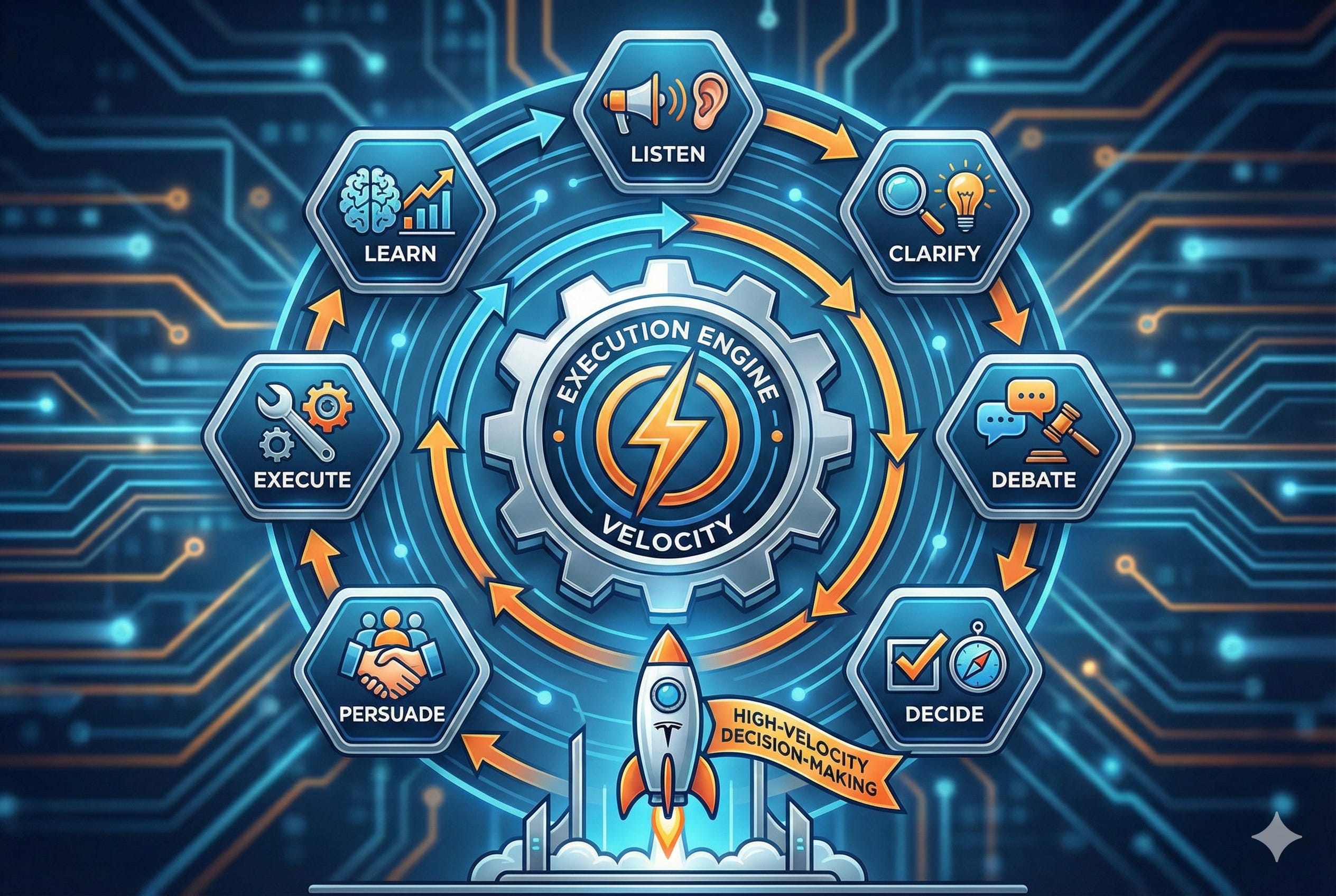
Scott outlines a “Get Stuff Done” cycle that turns feedback into action: Listen to ideas, Clarify them to ensure understanding, Debate them rigorously, Decide on a course of action, Persuade the team to get buy-in, Execute the work, and Learn from the results.
Your staff meetings should not be status updates; they should be forums for the “Debate” and “Decide” phases of this wheel. Save individual feedback for impromptu two-minute sessions or employee-led one-on-ones.
See how high-stakes environments utilize rigorous debate and rapid execution principles to revolutionize industries.
The Courage to Act
The ultimate test of Radical Candor is handling underperformance. Many leaders fall into the “competence trap,” waiting too long to fire someone because they are a “nice person.”
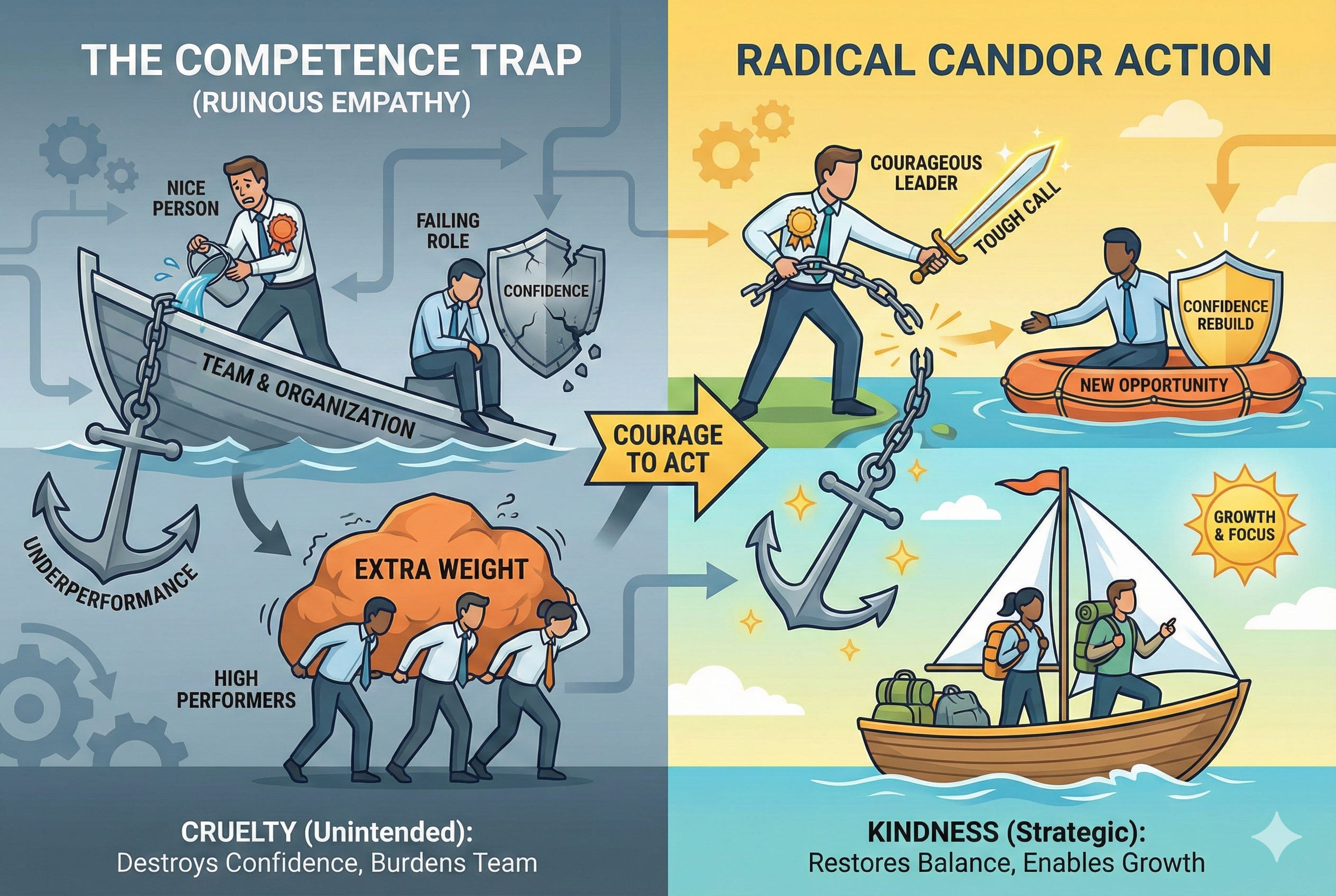
Keeping a person in a role where they are failing is not kindness; it is cruelty. It destroys their confidence and burdens your high performers who have to carry the extra weight. Radical Candor requires the courage to make the tough call when it is truly the right thing for the team and the organization.
Similarly, replace generic annual reviews with real Career Conversations. Understand their life story, identify their “blue sky” dreams, and build a concrete 18-month plan to gain the skills they need right now to move toward those dreams.
Your 4-Step Roadmap to Immediate Implementation
Don’t just read this and nod. Leadership is a muscle built through action. Here is your immediate plan to deploy these principles.
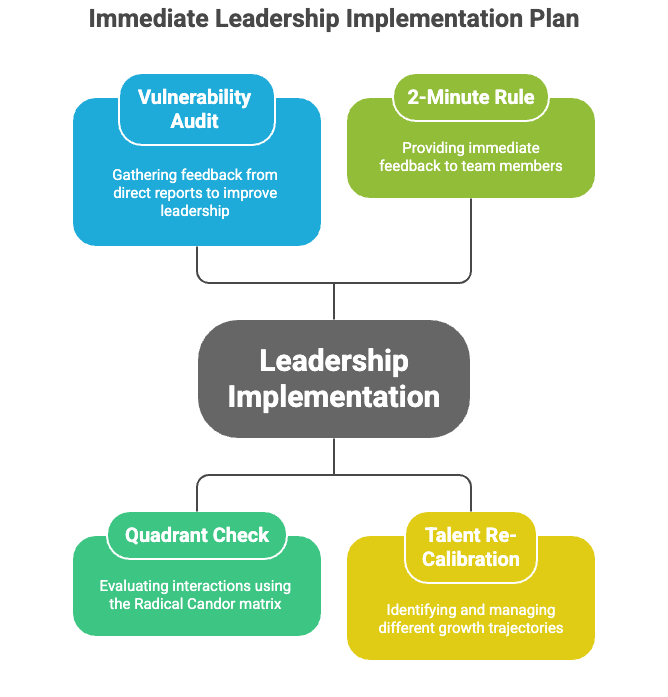
1. The Vulnerability Audit (This Week) In your next one-on-one meetings, ask every direct report: “What is one thing I do that gets in your way?” Commit to listening without defending and take one visible action based on the feedback.
2. The Quadrant Check (Weekly) Review your last five significant interactions with your team. Map them on the Radical Candor matrix. Did you fall into Ruinous Empathy or Obnoxious Aggression? Adjust your approach for the next interaction.
3. The 2-Minute Rule (Daily) Stop saving feedback for quarterly reviews. Commit to giving impromptu guidance—both praise and criticism—immediately after a meeting or event. Remember the golden rule: Praise in public; criticize in private.
4. The Talent Re-Calibration (Monthly) Look at your team roster. Identify who are your Superstars (steep growth) and who are your Rock Stars (gradual growth, high stability). Ensure your management approach and reward systems are tailored to honor both trajectories, rather than forcing a one-size-fits-all model of ambition.