The $25 Dog
The ROI of Uncompromising Belief

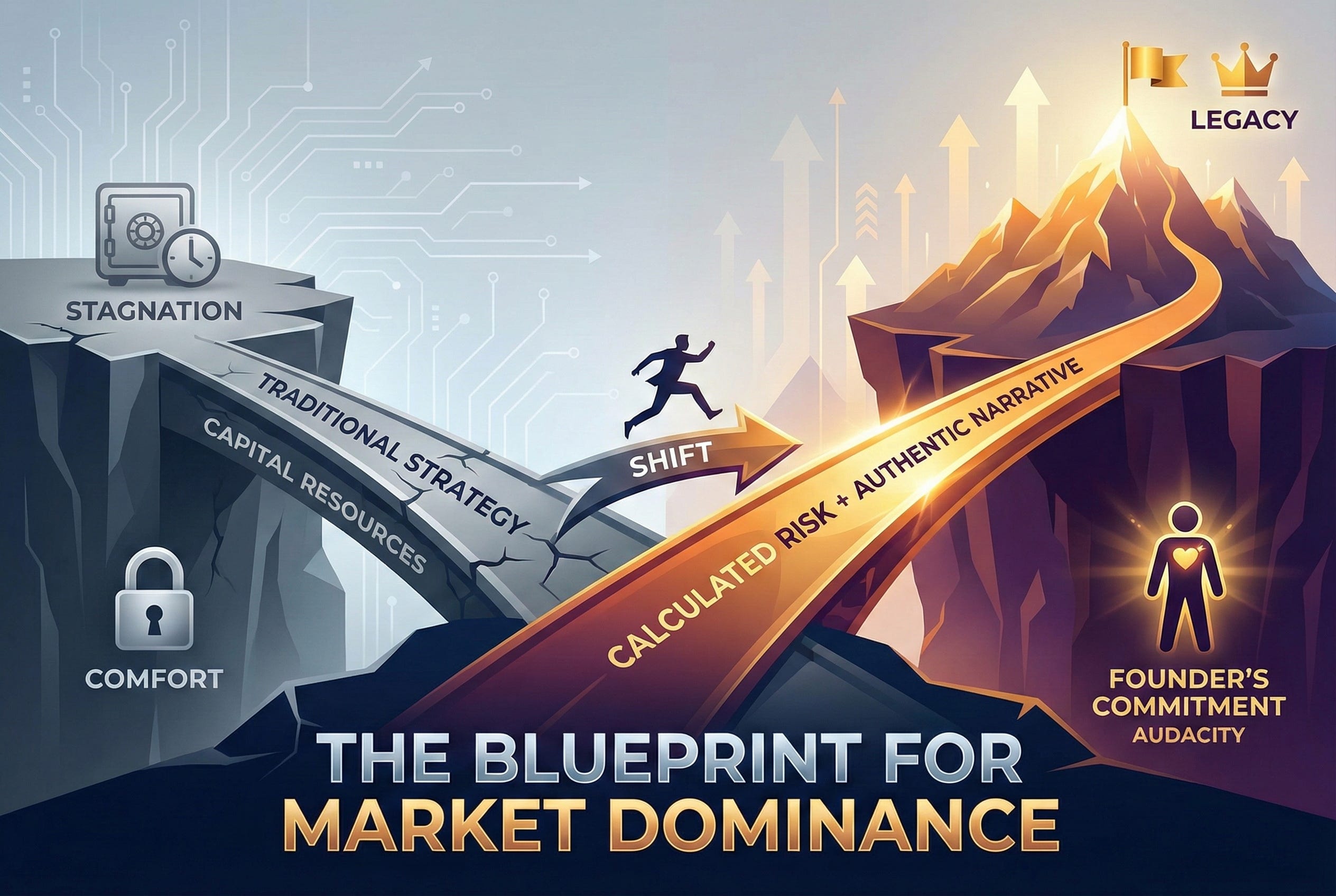
Why This Matters Now - The gap between stagnation and market dominance is rarely defined by capital resources; it is defined by the audacity of the founder’s commitment. We are witnessing a shift where calculated risk and authentic narrative outpace traditional corporate strategy. This model is the blueprint for leaders ready to wager their comfort for a legacy that outlasts them.
The Architecture of the “All-In” Moment
Business history is not written by the prudent; it is written by those who recognize that the greatest risk lies in mediocrity. While the romanticized version of entrepreneurship often highlights the IPO or the exit, the critical moment happens in the dark. It is the moment Sylvester Stallone sells his dog to fund a script no one wants. It is Phil Knight selling shoes from the trunk of a Plymouth Valiant while banks threaten to foreclose.
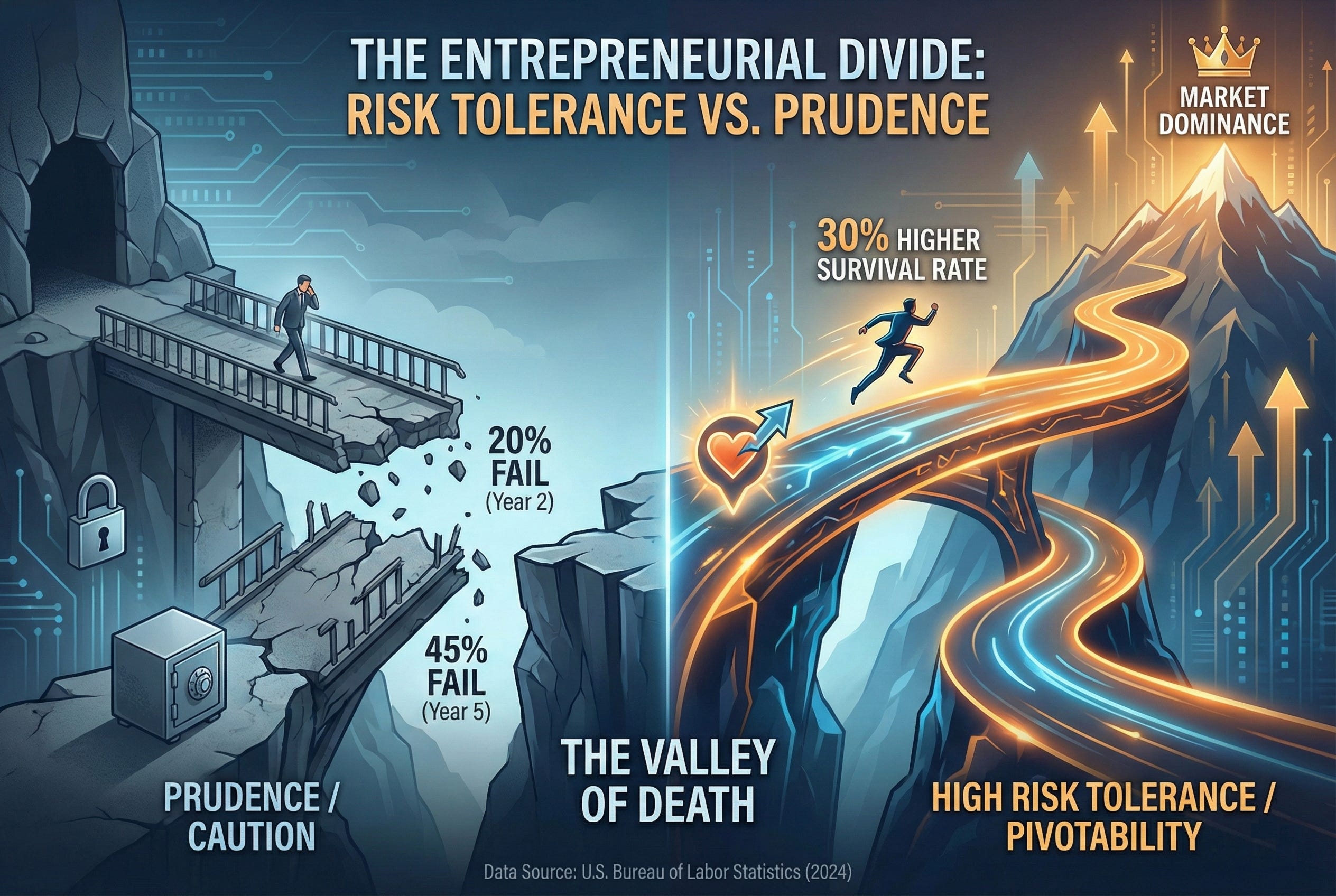
This creates a definitive split in the entrepreneurial ecosystem. According to the U.S. Bureau of Labor Statistics (2024 data), approximately 20% of new businesses fail within the first two years, and 45% fail within the first five. However, a deeper dive into the data reveals a compelling correlation: ventures led by founders who exhibit high “risk tolerance” and “resource pivotability” are 30% more likely to survive the five-year valley of death. The market does not reward caution; it rewards conviction.
The Physics of Resilience: Beyond the Buzzword
Resilience is often discussed as an emotional state, yet in high-growth scaling, it is a strategic asset. Consider Sara Blakely, the founder of Spanx. Before she was a billionaire, she was selling fax machines door-to-door. When she had the idea for footless pantyhose, she did not have a manufacturing plant or a legal team. She had $5,000 and an inability to accept “no.”
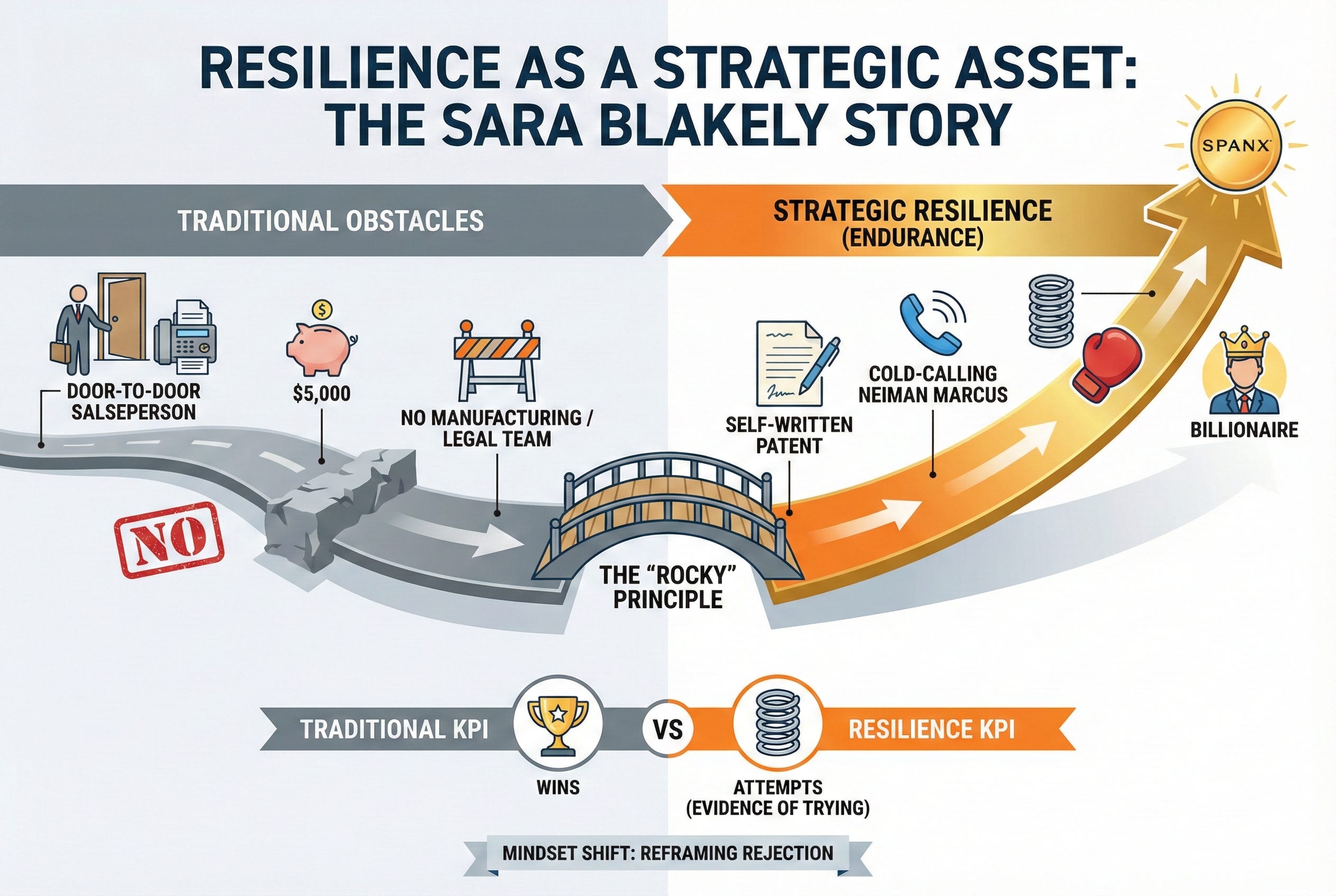
Blakely famously wrote her patent to save legal fees and cold-called buyers at Neiman Marcus. Her strategy was not based on complex market analysis but on the “Rocky” principle of endurance. She recently noted in interviews that her father encouraged failure at the dinner table, reframing rejection not as an outcome, but as evidence of trying. This mindset shifts the KPI from “wins” to “attempts.”
Barbara Corcoran, the real estate mogul and Shark Tank investor, echoes this sentiment. Corcoran built The Corcoran Group from a $1,000 loan. She argues that the difference between the entrepreneurs she invests in and those she rejects is rarely the product; it is the founder’s capacity to handle the heat. Corcoran looks for the “injured” entrepreneur, the one with something to prove, because they possess the stamina required to scale.
Watch how Barbara Corcoran breaks down the specific traits that separate successful founders from dreamers in this candid breakdown of her investment philosophy: Watch how Barbara Corcoran explains the “traits of a winner” and why she invests in people over products
The Cash Flow Paradox: Funding the Vision
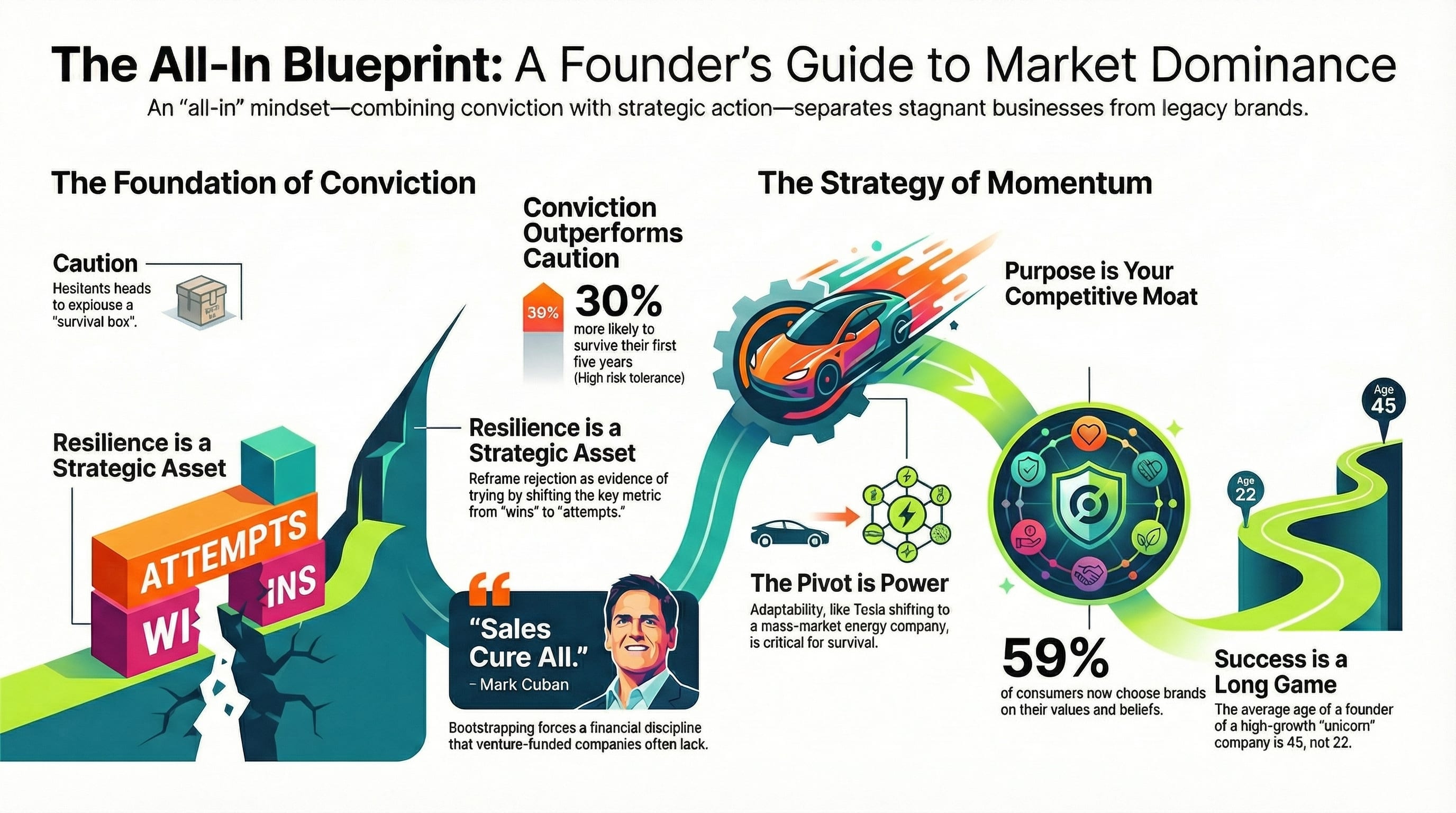
A common misconception among early-stage leaders is that venture capital validates a business model. Mark Cuban frequently challenges this on Shark Tank, reminding entrepreneurs that “sales cure all.” The most resilient companies often begin by bootstrapping, which forces a discipline that funded companies often lack.
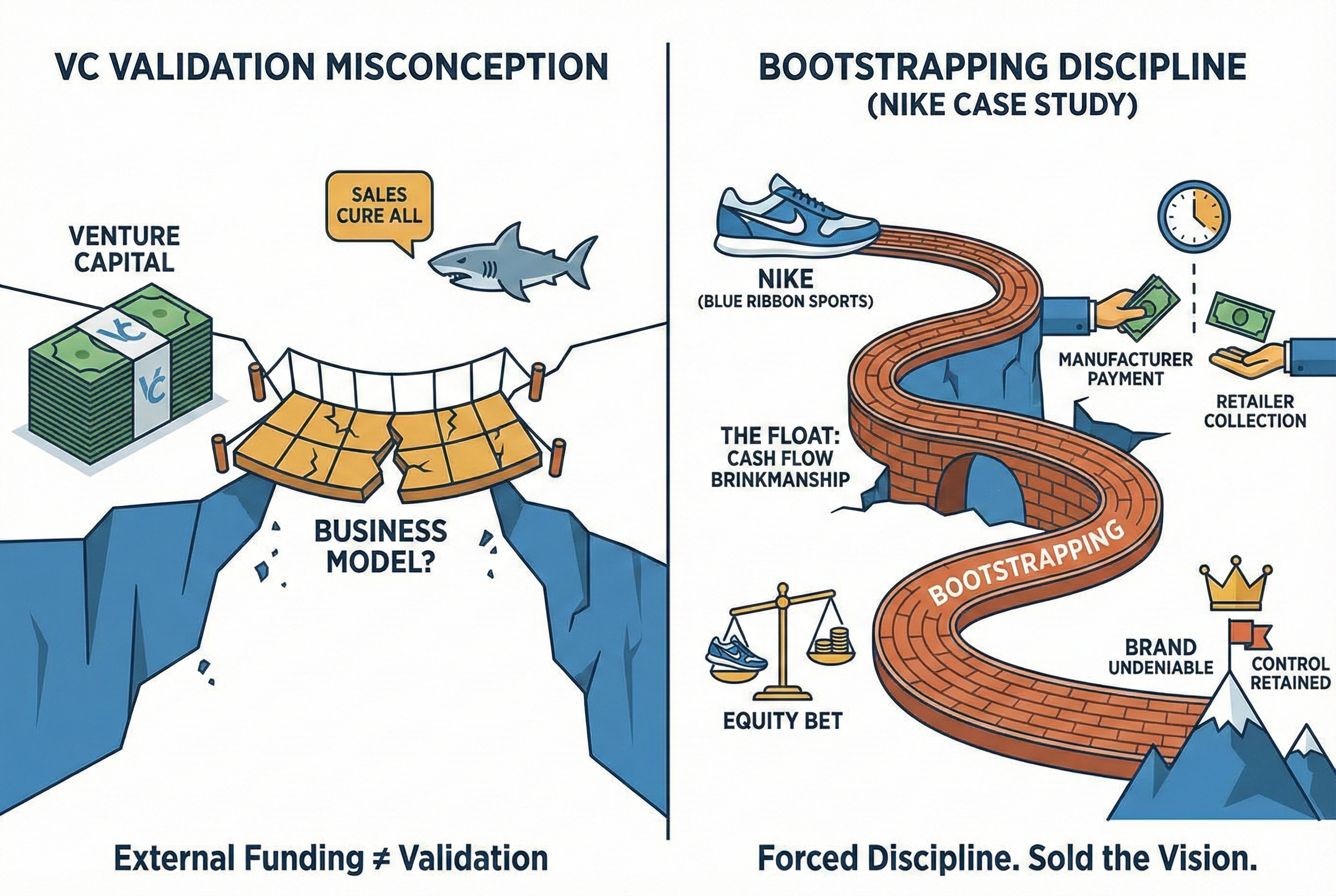
Nike serves as the ultimate case study in cash flow brinkmanship. In his memoir Shoe Dog, Phil Knight details the “float”—the terrifying gap between paying manufacturers and collecting from retailers. For years, Nike (then Blue Ribbon Sports) was technically insolvent, surviving only by betting the entire company’s equity on the next order. Knight didn’t sell equity early; he sold the vision, keeping control until the brand was undeniable.
This mirrors the strategy of Daymond John, founder of FUBU. John didn’t start with a factory; he started with $40 and some fabric, sewing hats in his mother’s house in Queens. He mortgaged the home to fund the first real production run. The lesson here is clear: leverage is not just financial; it is the ability to utilize every available asset to force momentum.
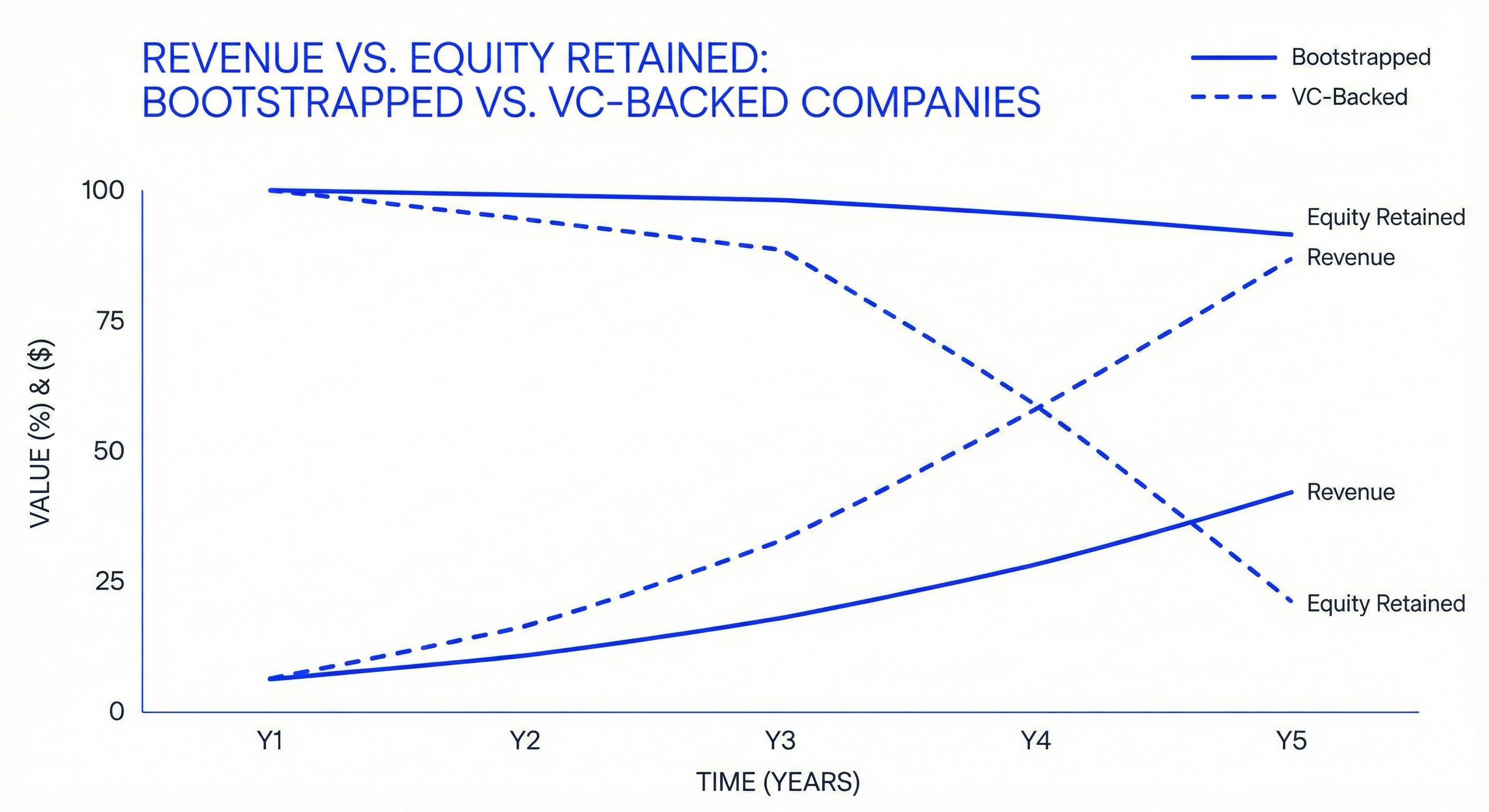
The Pivot: When the Market Speaks, Listen
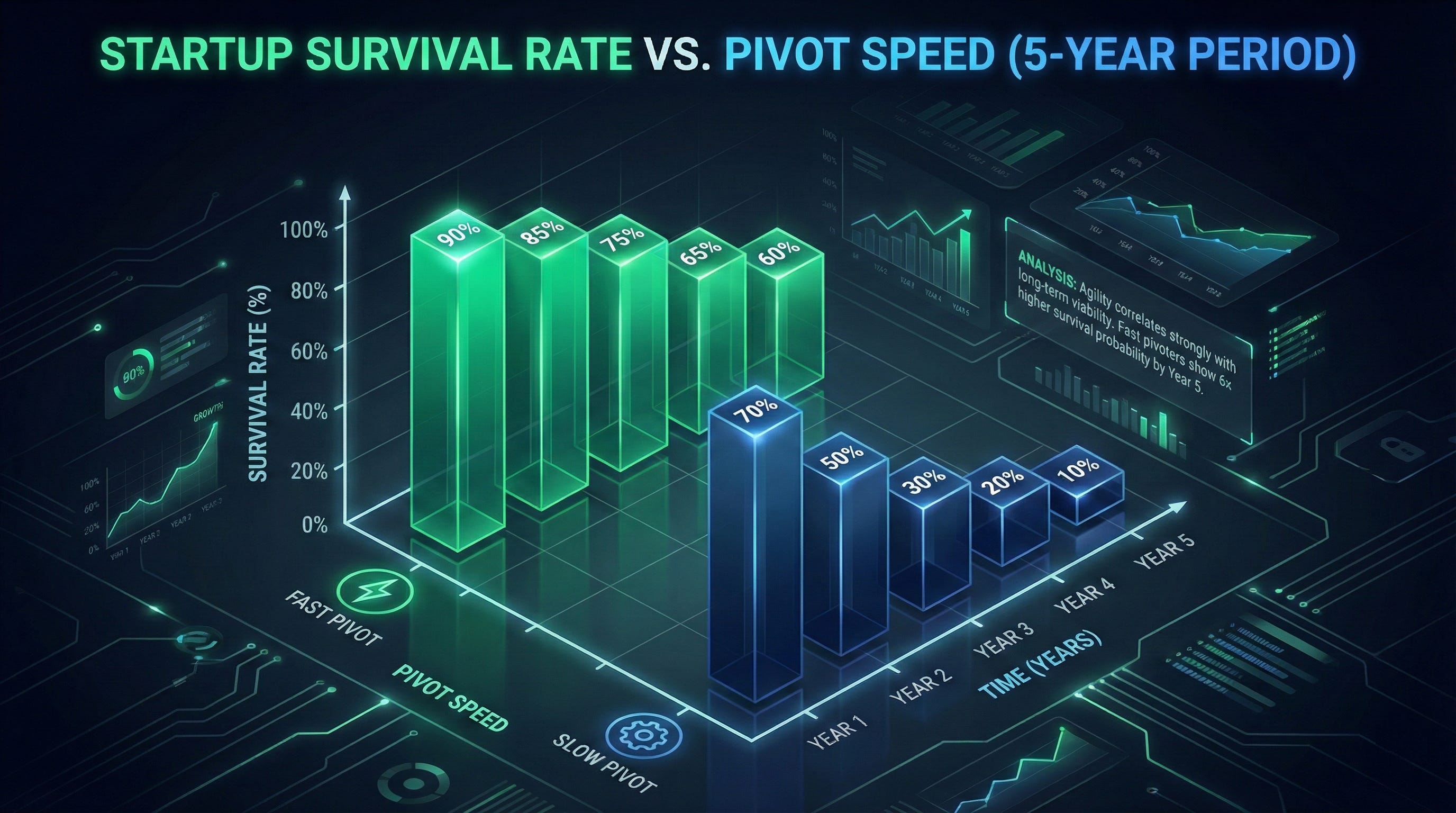
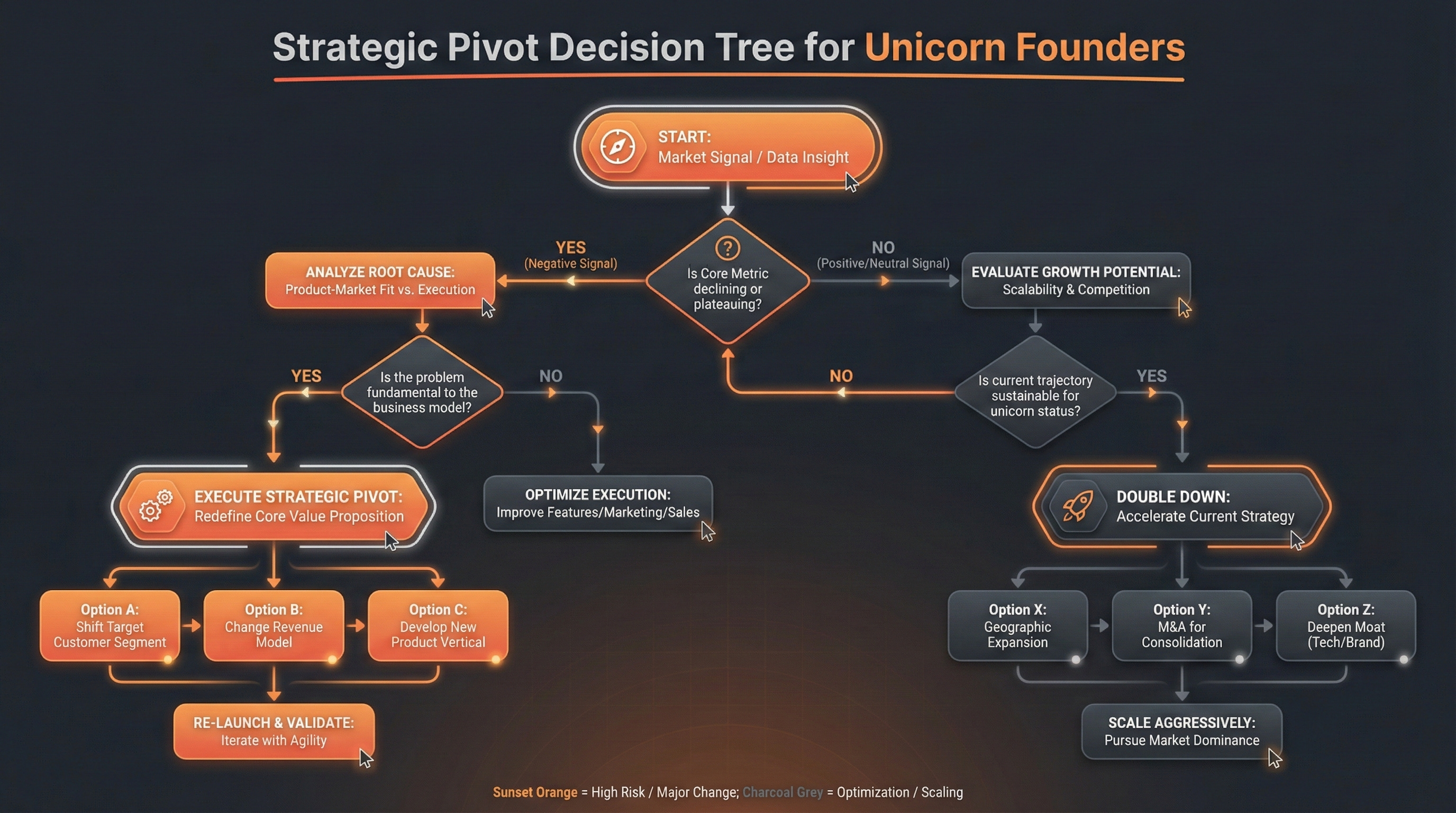
The “all-in” bet is not a suicide pact; it requires the agility to pivot when the market provides feedback. Elon Musk provides a masterclass in this high-stakes adaptability. In 2008, both Tesla and SpaceX were on the verge of bankruptcy. Musk had to decide between splitting his remaining capital to keep both afloat on life support or betting it all on one. He chose a third, more dangerous option: he split the money, invested everything he had left, and lived on loans from friends.
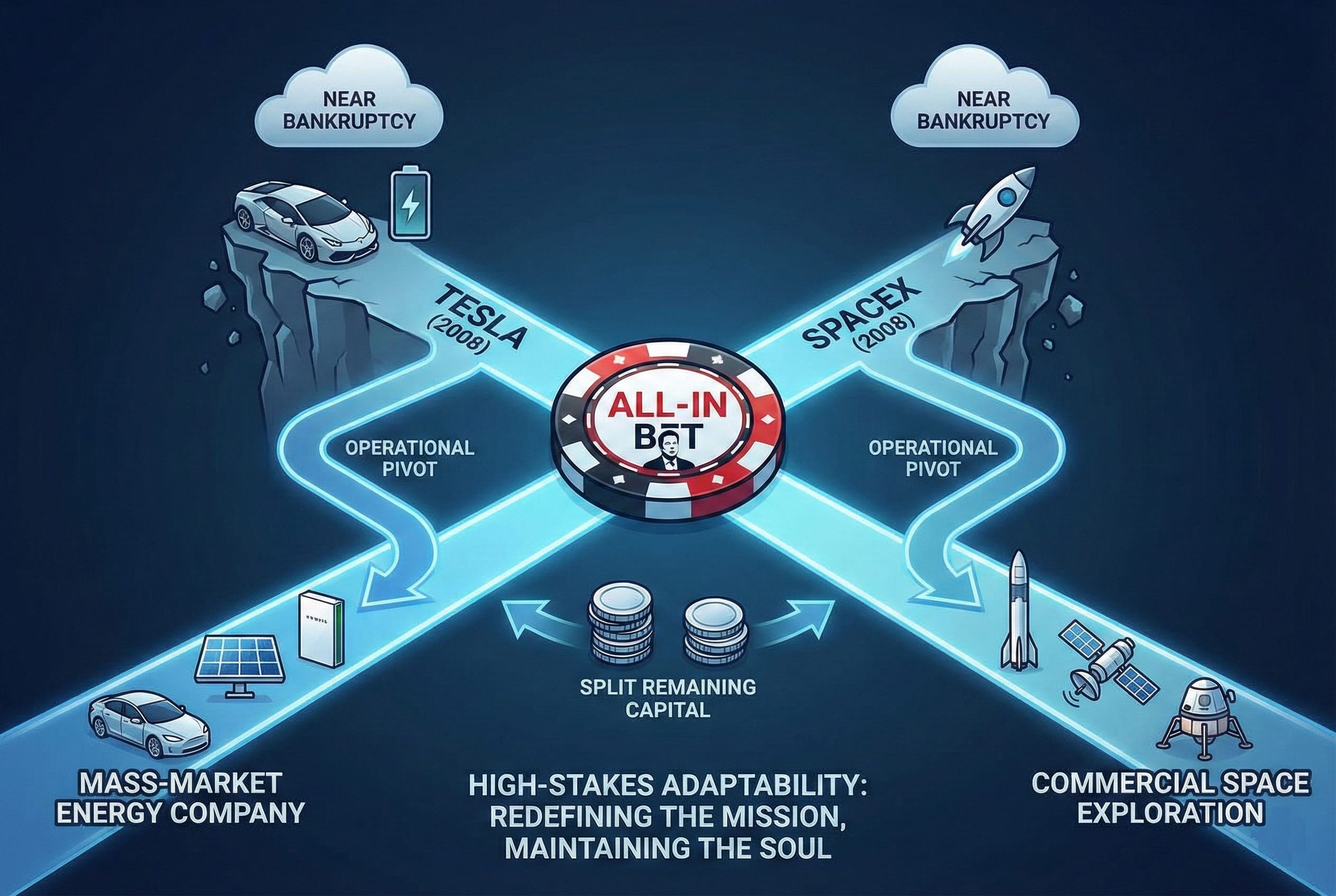
But the real lesson isn’t just the money; it was the operational pivot. Tesla shifted focus from being a niche luxury car maker to a mass-market energy company. This ability to redefine the company’s core mission while maintaining the brand’s soul is what separates a flash-in-the-pan from a legacy brand.
Whitney Wolfe Herd, founder of Bumble, executed a similar pivot. After leaving Tinder in a tumultuous exit, she didn’t just clone the competitor. She identified a market failure—the lack of agency for women in dating apps—and built a mechanic (women message first) that solved a societal friction point. She bet her reputation on a feature that industry insiders thought would reduce engagement. Instead, it built a billion-dollar empire.
Watch how Whitney Wolfe Herd discusses the psychology behind her brand’s unique positioning and how she turned a personal crisis into a market opportunity: Watch how Whitney Wolfe Herd redefined the dating app landscape by solving a specific user pain point
Purpose as a competitive Moat
In an era of commoditization, purpose is the only true differentiator. Patagonia founder Yvon Chouinard proved that betting on values can yield higher returns than betting on trends. When Patagonia ran the “Don’t Buy This Jacket” ad in the New York Times on Black Friday, it was a counter-intuitive gamble. Conventional marketing wisdom suggests driving consumption; Chouinard bet on anti-consumption.
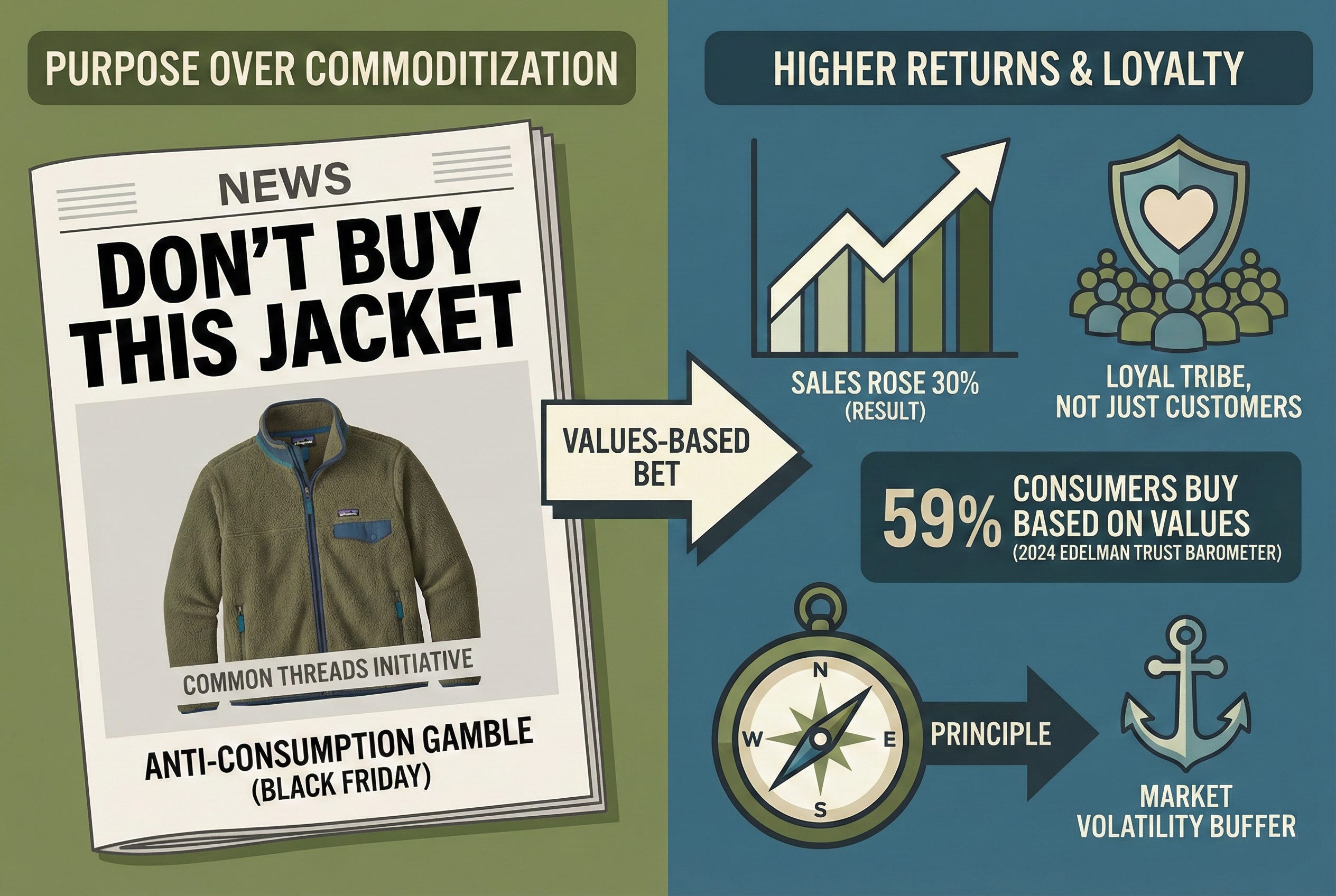
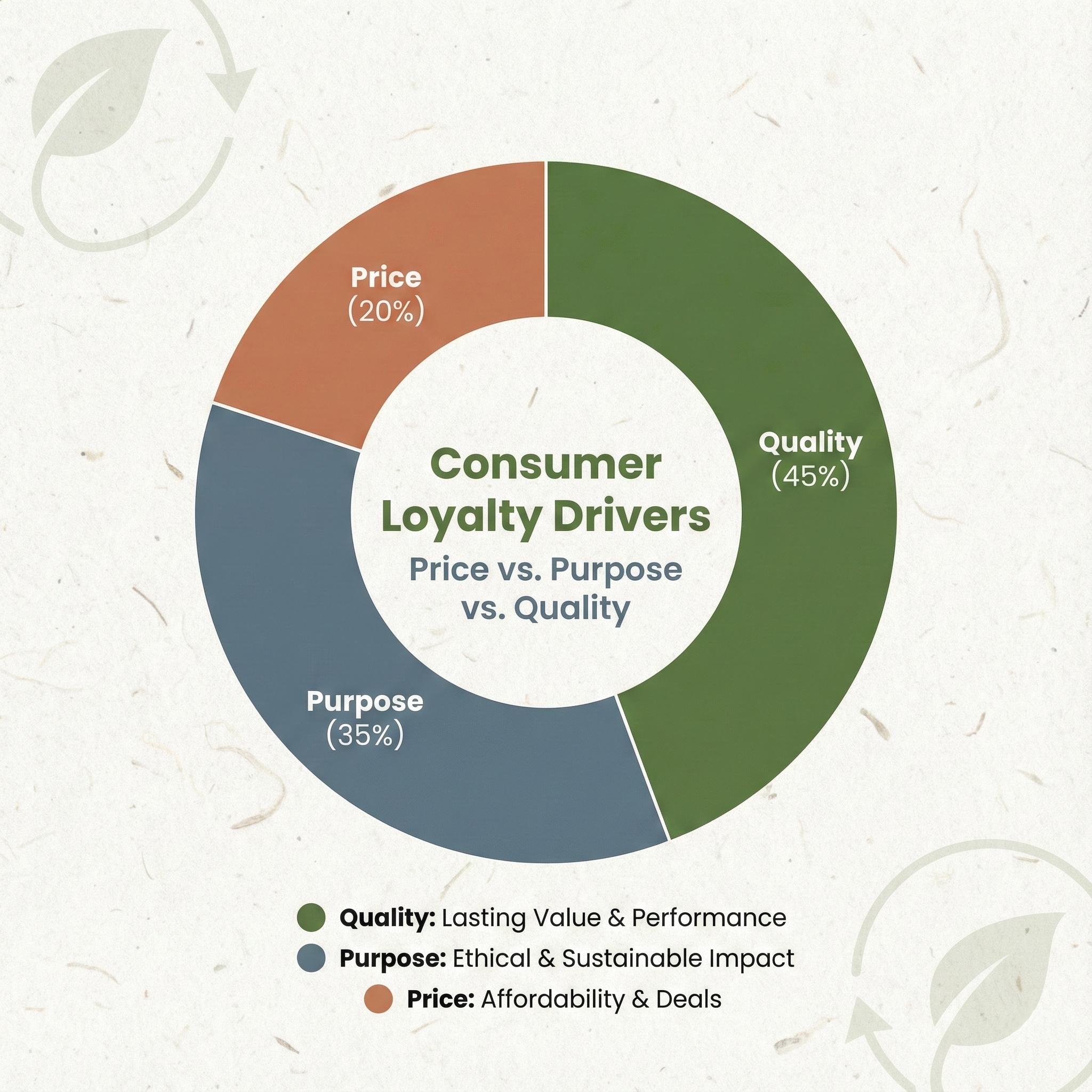
The result? Sales rose 30%. The 2024 Edelman Trust Barometer supports this, indicating that 59% of consumers buy brands based on their values and beliefs. When a leader bets on a principle, they attract a tribe, not just a customer base. This loyalty provides a buffer against market volatility that price-based competitors can never achieve.
Kevin O’Leary, often the voice of cold financial reason, admits that while numbers are the language of business, the narrative is the soul. A business with great margins but no story is a commodity; a business with tight margins but a fanatical following is a brand.
The Data of Persistence
The narrative of the “overnight success” is statistically impossible. James Dyson created 5,126 failed prototypes of his vacuum cleaner over 15 years before the first one worked. He bet his personal savings and his home, relying on his wife’s income to survive.
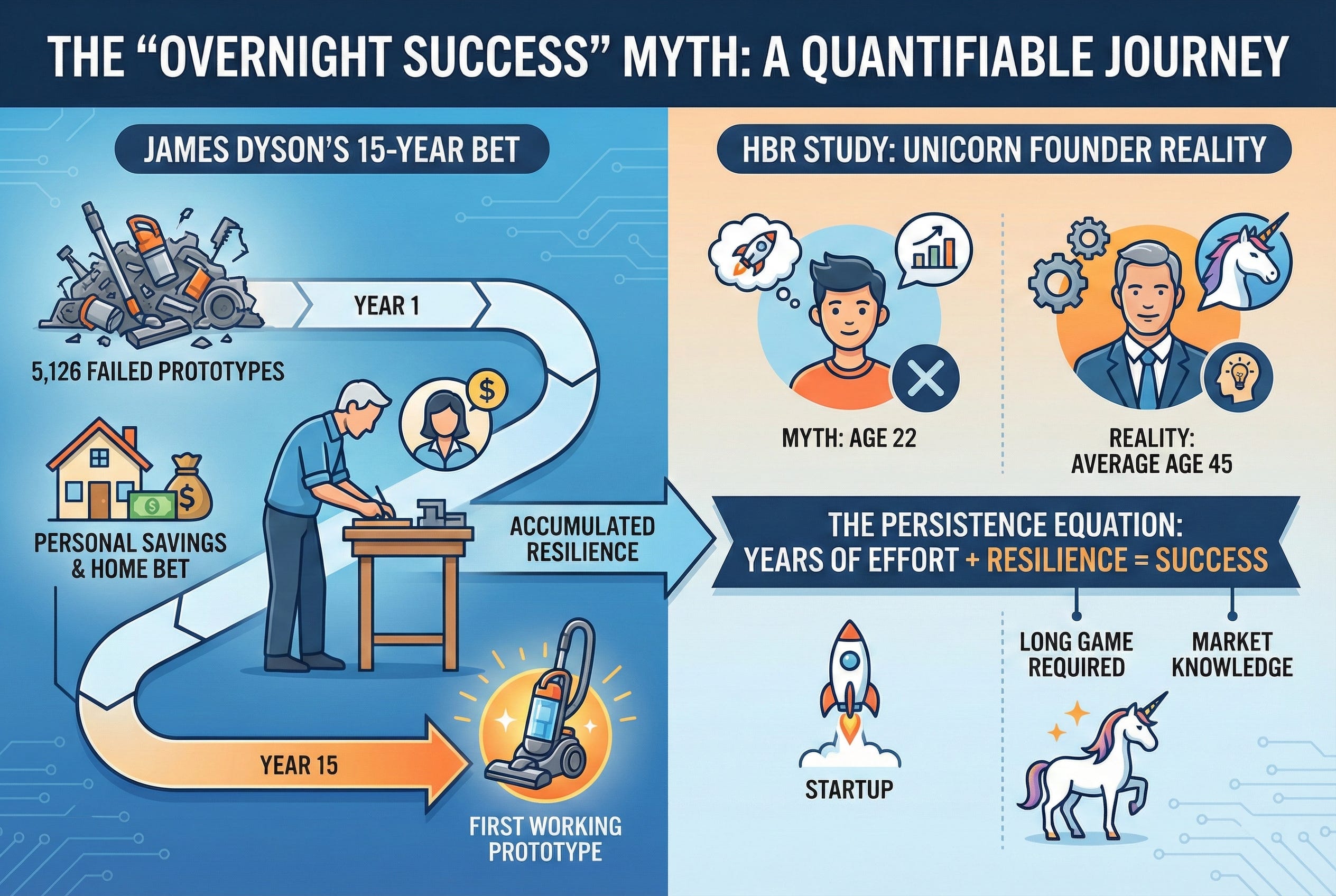
This level of persistence is quantifiable. A study by the Harvard Business Review analyzing unicorn founders found that the average age of a successful high-growth founder is 45, not 22. This data suggests that the “bet” is often a long game, requiring years of accumulated resilience and market knowledge.
Reshma Saujani, founder of Girls Who Code, speaks extensively on “bravery over perfection.” Her initial foray into politics was a “failure” by traditional metrics, as she lost her congressional race. However, she leveraged that loss to identify the gender gap in tech, pivoting her entire career focus. Her “bet” was leaving the stability of law and finance to solve a nonprofit problem with a for-profit mindset.
Watch Reshma Saujani explain why teaching girls to be brave rather than perfect is the key to unlocking the next generation of innovation: Watch how Reshma Saujani argues for bravery as the ultimate entrepreneurial skill.

Your Breakthrough Roadmap
The difference between reading about success and achieving it is the speed of implementation. You do not need to sell your dog, but you must identify what you are willing to sacrifice to cross the chasm.
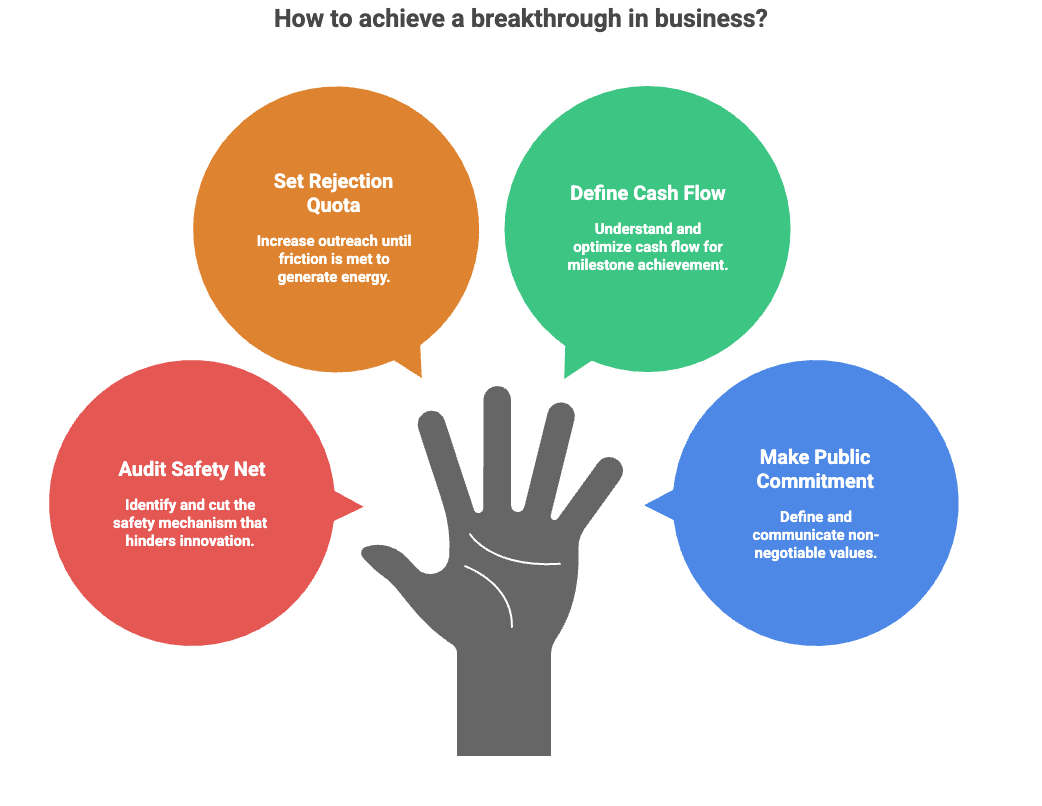
1. Audit Your Safety Net Identify the one safety mechanism that is making you comfortable with mediocrity. Is it a backup plan? A side client that distracts from the main mission? A hesitation to hire? Define it. Then, calculate the cost of keeping it versus the potential yield of cutting it. Innovation rarely happens in the comfort zone.
2. The “No” Quota Adopt the Sara Blakely mindset. Set a weekly target for rejections. If you are not getting rejected, your ask is not big enough. Whether it is capital, partnerships, or sales, increase the volume of your outreach until you hit a friction point. Friction generates heat; heat generates energy.
3. Define Your “Float” Like Phil Knight, understand your cash flow timeline intimately. You do not need an infinite runway; you need enough runway to reach the next milestone. Map out exactly how many weeks of operation you have and how that capital is directly contributing to revenue-generating activities. Cut everything else.
4. The Public Commitment Stallone refused to sell the script unless he starred in it. That was a public line in the sand. Define your non-negotiable. What is the core value or feature of your business that you will not compromise on, even if it costs you a deal? Write it down. Communicate it to your team. A leader who stands for nothing falls for anything.