

The Billion-Dollar Handshake
Turning LinkedIn into Your Revenue Fortress

Why This Matters Now - The era of cold calling is dead; the age of the digital handshake has arrived with ruthless efficiency. Ignore the data at your peril, or leverage it to unlock a revenue pipeline that operates with the precision of a Swiss watch. Your competition is already there; the only question remaining is whether you will be a participant or a dominant force.
For the ambitious entrepreneur, the marketplace is no longer a physical boardroom or a chaotic trade show floor: it is a digital ecosystem where 900 million professionals converge. Among them, four out of five hold the keys to the castle—they are the decision-makers. Yet, too many leaders still treat LinkedIn as a static resume repository rather than what it truly is: the single most lethal B2B revenue engine in existence.
The data is unequivocal. LinkedIn is responsible for 80% of all B2B leads generated through social media. It is 277% more effective than Facebook or Twitter for lead generation. When you execute a strategy here, you are not shouting into the void; you are stepping into a room where the audience has double the buying power of the average web user. The issue is not social media; this is capital deployment at scale.

The “Shark” Mentality: Precision Over Noise
Consider the investment philosophy of Mark Cuban or Kevin O’Leary: they do not waste time on ambiguity. They demand numbers, traction, and a clear path to revenue. Your LinkedIn strategy must mirror this intensity. The days of “spray and pray” networking are over.
Success on this platform requires the same brand discipline seen in giants like Nike or Tesla. Just as these companies do not dilute their message, you cannot dilute your professional presence. Your profile is your landing page; it must convert curiosity into credibility instantly.
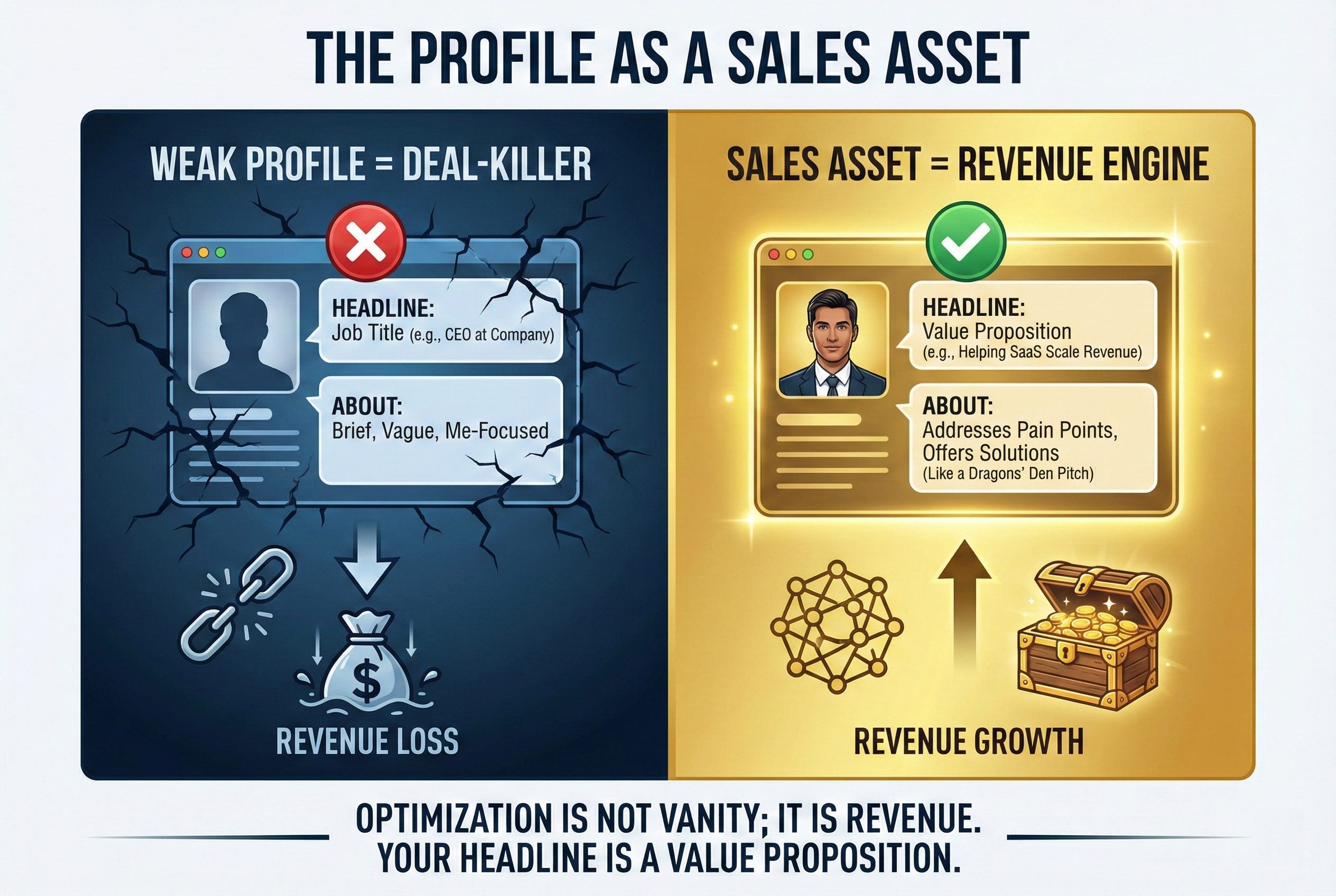
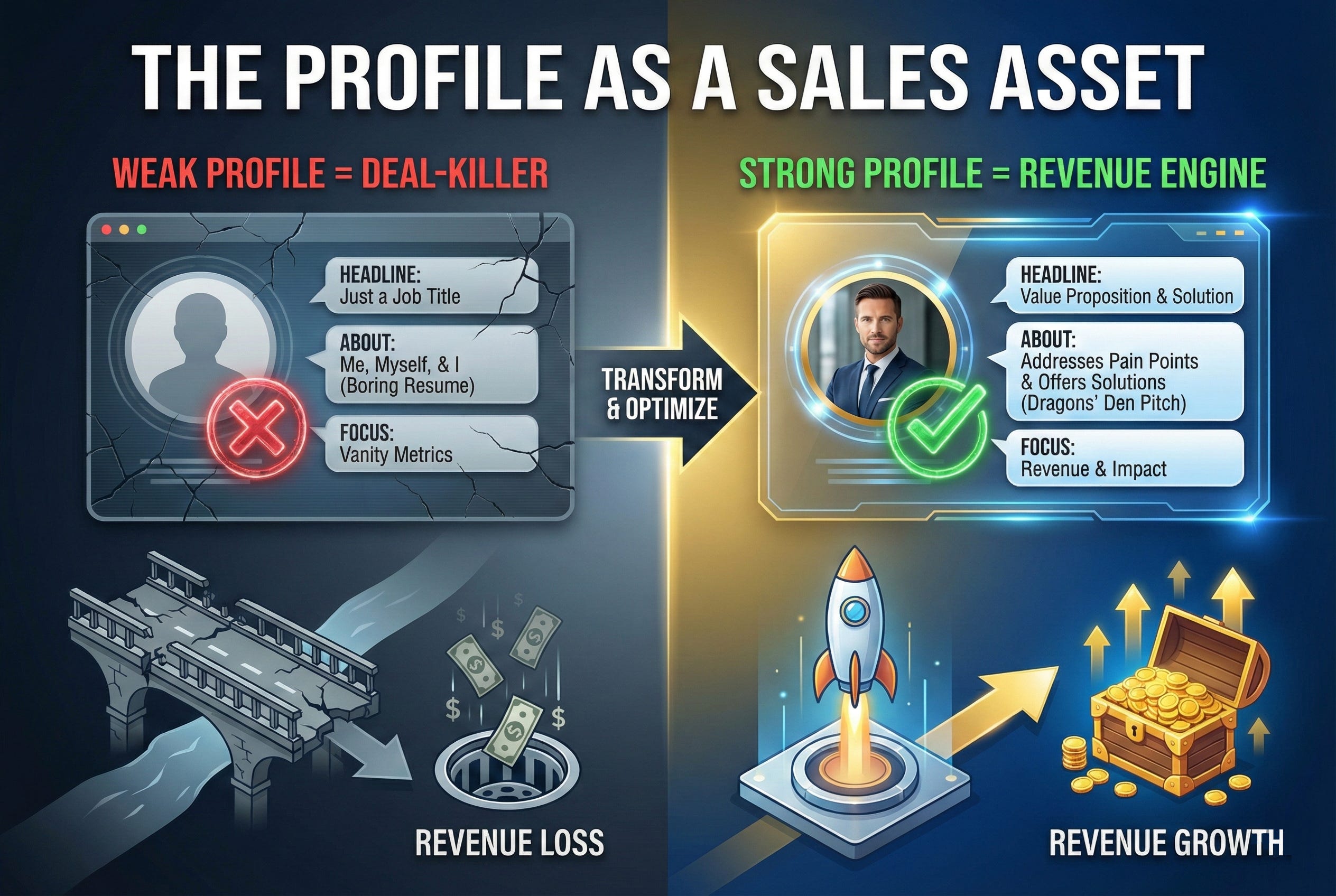
1. The Profile as a Sales Asset A weak profile is a deal-killer. It undermines your outreach before you send a single message. Optimization is not about vanity; it is about revenue. You need a headline that acts as a value proposition, not a job title. You need an “About” section that addresses pain points and offers solutions, much like a well-crafted pitch on Dragons’ Den.
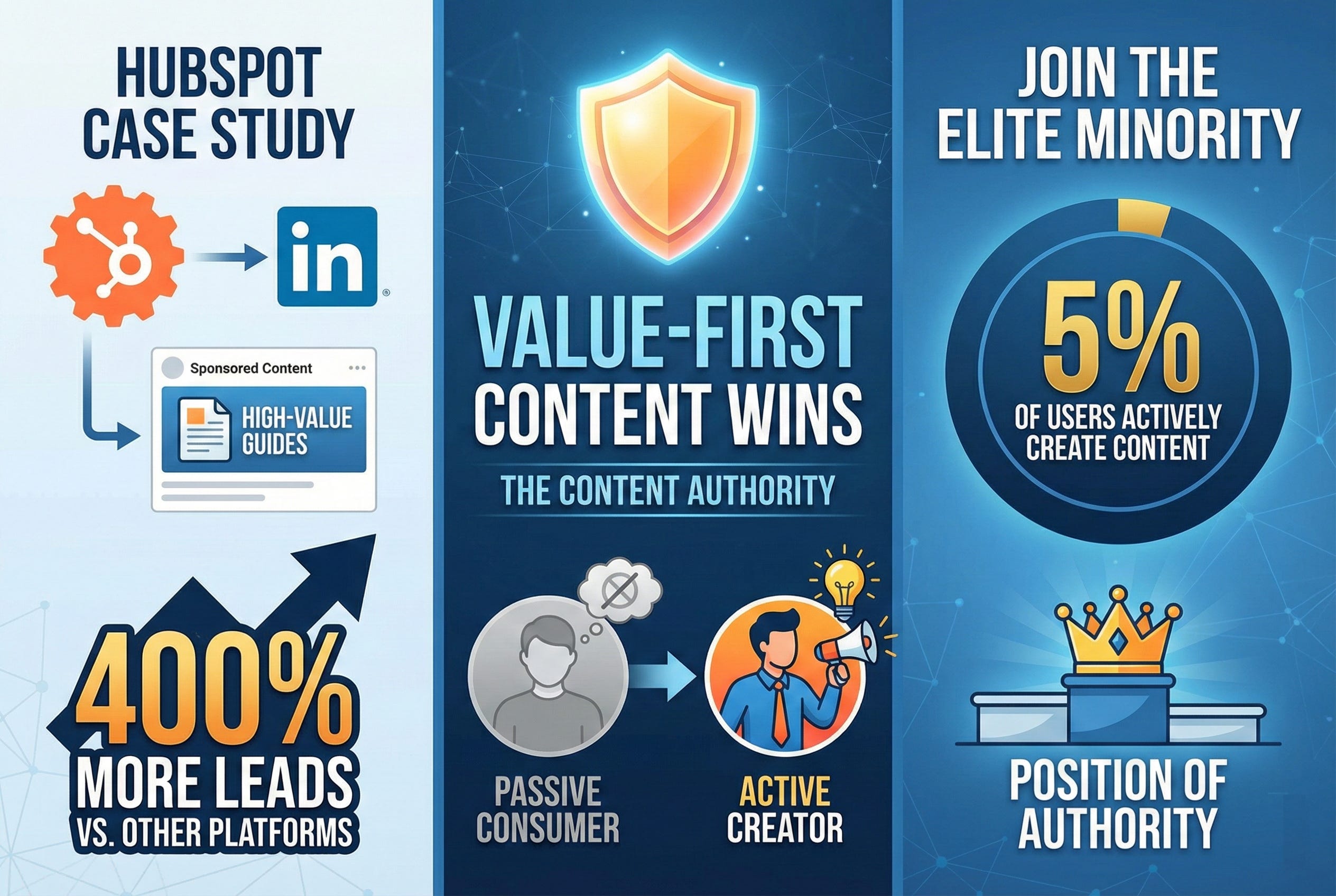
2. The Content Authority HubSpot, a giant in the inbound marketing space, cracked the code: they utilized LinkedIn Sponsored Content to promote high-value guides, achieving 400% more leads within their target audience compared to other platforms. The lesson is clear: value-first content wins. Whether you are Sara Blakely building an empire or a consultant scaling a practice, you must transition from a passive consumer to an active creator. Only 5% of users actively create content; joining that elite minority immediately places you in a position of authority.
Watch how Gary Vaynerchuk breaks down the psychology of winning on LinkedIn through content volume and relevance:
The Data-Driven Hunter: Leveraging Sales Navigator
If the standard LinkedIn interface is a map, Sales Navigator is a guided missile system. This premium tool is not an expense; it is an investment that delivers a proven 312% ROI over three years.

Smart entrepreneurs understand that timing is everything. Using “Job Change” filters allows you to target a decision-maker precisely when they enter a new role—a moment when they are most likely to evaluate new vendors. You can filter by company growth, recent funding, or even content keywords.
Real-World Impact: ThoughtWorks, a global technology consultancy, leveraged these precise targeting capabilities based on job roles. The result? They generated 20 times more leads on LinkedIn than all other platforms combined, driving their cost-per-lead down to $42.45—roughly half the industry average. This is the power of replacing guesswork with data.
Watch how Alex Hormozi dissects the mathematics of acquisition and why targeted leads are the lifeblood of scaling a business:
The Automation Paradox: Scale with Soul
There is a dangerous misconception that automation equals spam. This is false. Automation, when wielded by a strategist, equals scale. Tools like HeyReach and PhantomBuster allow you to bypass the limitations of manual labor, managing multiple accounts, and unifying inboxes.
However, LinkedIn’s policies are strict. The goal is to mimic human behavior, not violate it. Tools like Expandi offer dedicated IP addresses to ensure safety, while CoPilot AI (similar to SaleeAI) helps analyze profiles to generate icebreakers.
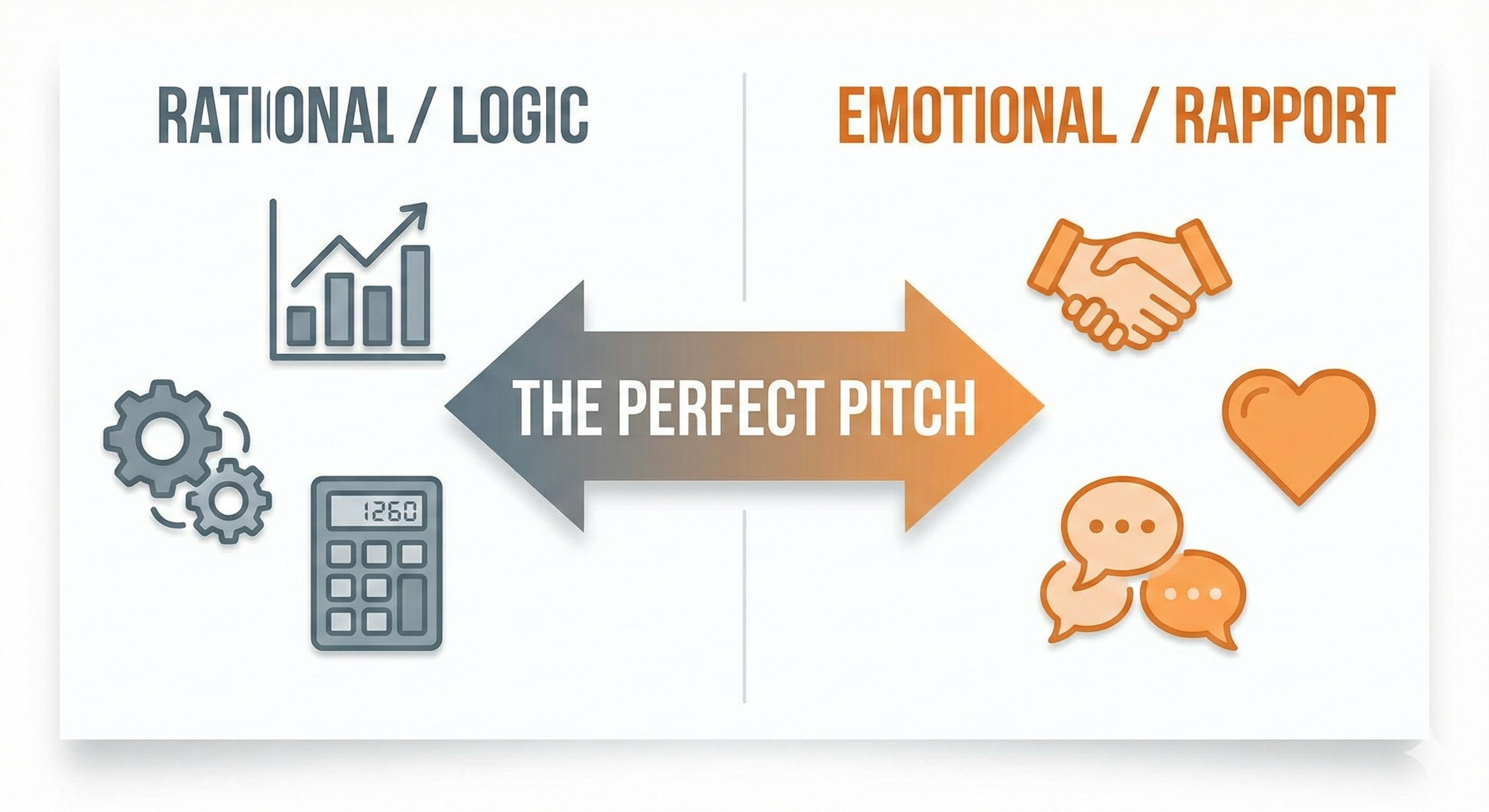
The “Left-Side Right-Side” Technique When you deploy automation or send a direct message, you must use psychology. The “Left-Side Right-Side” technique balances the equation:
Right Side (The Heart): Build rapport. Reference a shared connection, a recent post, or a career win.
Left Side (The Head): pivot to logic. Present data, ROI, or a specific case study.
This mirrors the negotiation tactics used by seasoned leaders like Daymond John: build the relationship, then close on the numbers.
Watch Chris Voss, former FBI negotiator, explain how empathy and tactical communication (the “Right Side”) open doors that logic alone cannot:
Case Study: The Salesforce Blueprint
If you doubt the pipeline impact, look to Salesforce. For their Dreamforce event, they executed a three-phase LinkedIn campaign (pre-, during-, and post-event). They didn’t just run ads; they used immersive Live Event Ads and Sponsored Content.
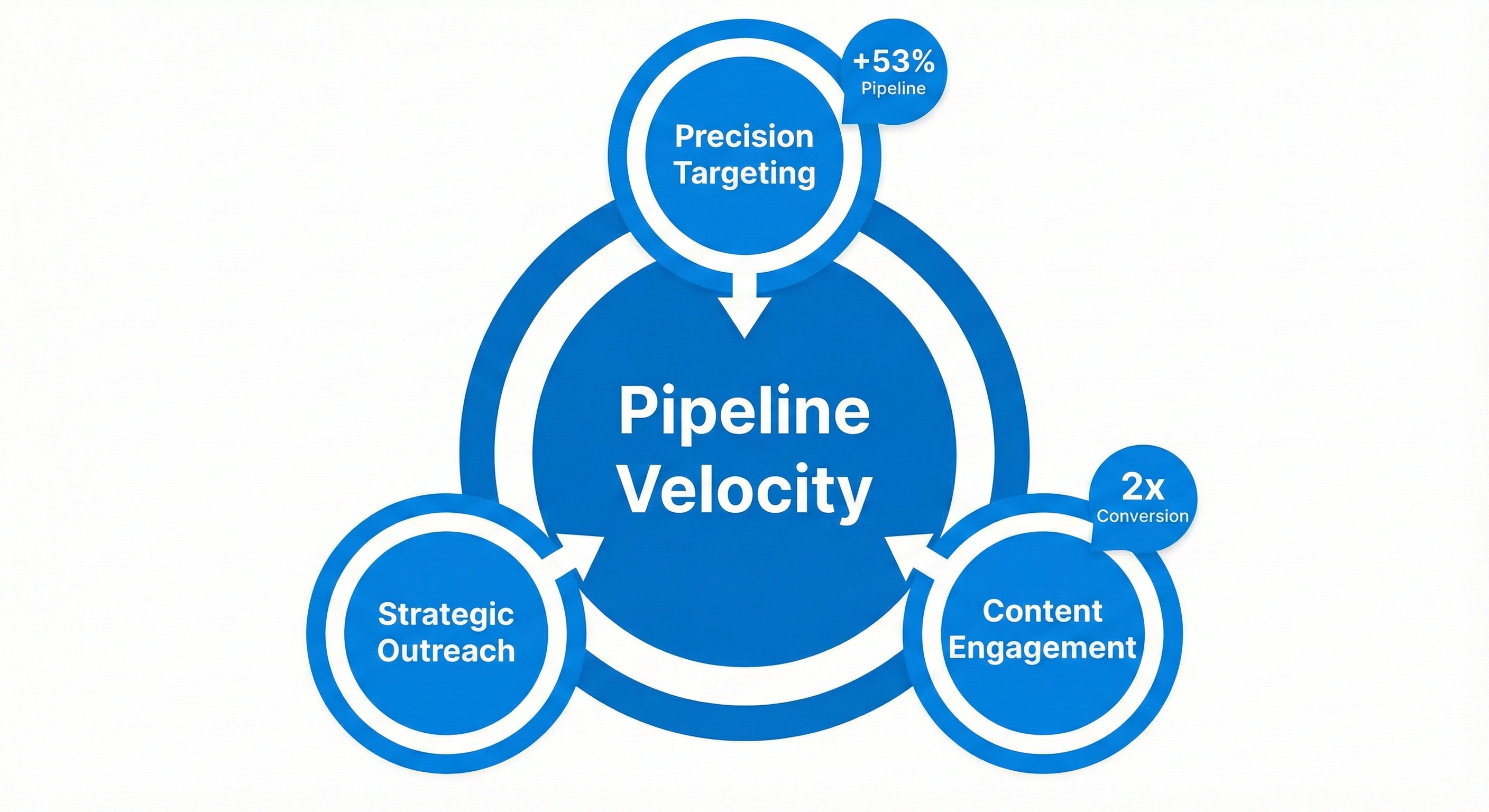
The outcome was staggering: LinkedIn activations influenced over 53% of the total sales pipeline associated with the event. They achieved a 30% lower cost per viewer than anticipated. This is what happens when you treat LinkedIn not as a social network, but as an integral layer of your sales infrastructure.
The Future is Community
We are moving away from the “hard sell” and toward “community-led growth.” Engagement pods and tools like Lempod can amplify your reach, but genuine community building is the ultimate moat.
To support this ecosystem of growth, I (Ken Rutkowski) have established a dedicated resource for ambitious leaders. For those looking to deepen their understanding of these engagement algorithms and join a network of like-minded operators, I invite you to join my private WhatsApp group. Additionally, for those committed to mastering the platform, I curate a specific LinkedIn group designed to help you garner more engagement on your posts: Join the High-Impact Engagement Group here.
Your Breakthrough Roadmap
You have the data. You have the case studies. Now, you need to execute. Here is your four-step implementation plan to transform your LinkedIn presence into a revenue-generating asset immediately.
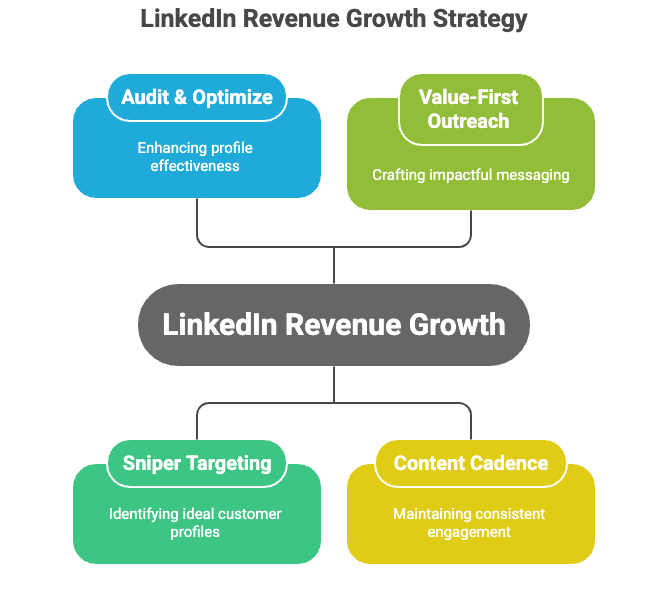
1. The Audit & Optimize (24 Hours) Stop using your profile as a CV. Rewrite your headline to solve a problem (e.g., “Helping SaaS Companies Scale Revenue” vs “CEO”). Ensure your “About” section utilizes the “Pain-Solution-Proof” structure. Upload a professional headshot; perception is reality.
2. The Sniper Targeting (Week 1) Invest in Sales Navigator. Do not skimp here. Set up your “Ideal Customer Profile” using the 50+ available filters. specifically, create a search for decision-makers in your sector who have changed jobs in the last 90 days. This is your “low-hanging fruit” list.
3. The Value-First Outreach (Week 2) Draft your messaging sequence using the RECS framework (Resistance, Explanation, Commitment, Next Steps). Avoid the “I’d like to add you to my network” cliché. instead, send: “I saw your recent move to [Company]; your work on [Project] was impressive. I have a case study on how we solved [Pain Point] for a similar firm. Open to a brief look?”
4. The Content Cadence (Ongoing) Commit to posting three times a week. One industry insight (data-heavy), one personal story (leadership lesson), and one client success story. Engage with five key influencers daily. If you struggle with consistency, leverage AI tools like Taplio or AuthoredUp to schedule and optimize your narrative.
The tools are in your hands. The market is waiting. Go build your legacy.