

The Capital-Efficient Titan
How to Build for the Next Decade

The math of entrepreneurship has shifted. For years, the prevailing wisdom favored the “blitzscale” model: raise massive rounds, burn cash for market share, and figure out the unit economics later. But the era of cheap money is over. Today, the most formidable leaders are those who treat capital efficiency and community trust as their primary weapons.

Why This Matters Now - The current market rewards the “High-Leverage Founder.” With the cost of technical infrastructure approaching zero due to localized AI, the only remaining scarcities are authentic attention and operational discipline. The leaders winning right now are not the ones with the most funding but the ones with the most resonant “Why.”
The New Calculus of Growth
Success in 2026 is a game of margins. While small to medium enterprises now contribute roughly 45% of GDP in developed nations, the survival gap is widening. Data suggests that firms integrating autonomous workflows into their core operations are seeing 35% higher net margins than their traditional peers. This is not about replacing staff; it is about decoupling headcount from revenue.
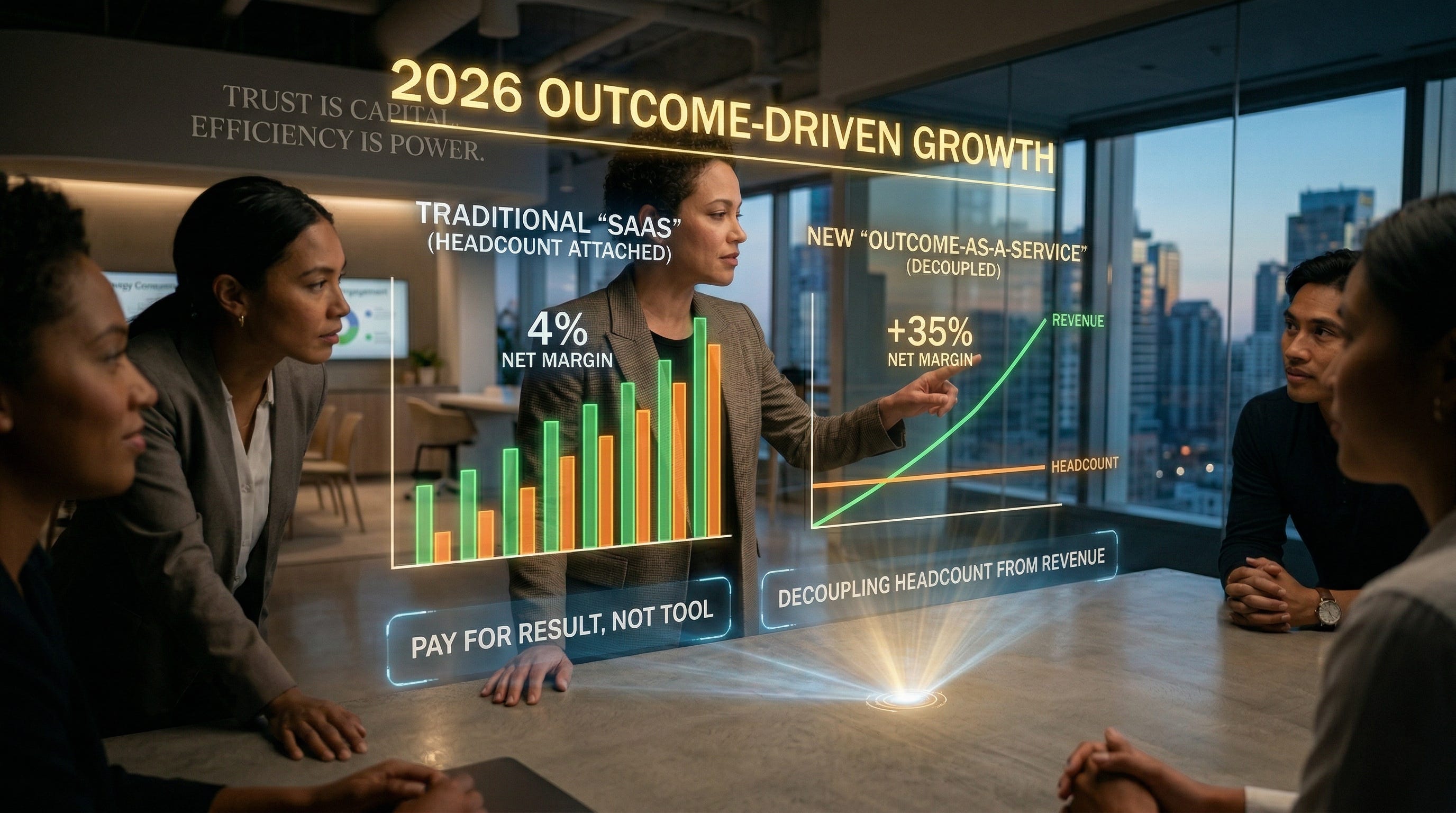
We are seeing a move away from “Software-as-a-Service” toward “Outcome-as-a-Service.” Customers no longer want to pay for a tool; they want to pay for a result.
Architecting the Modern Moat
A “moat” is no longer just a patent or a big bank account. It is a psychological lock-in.
Patagonia remains the gold standard here. By moving their ownership to a non-profit trust, they didn’t just make a statement; they made themselves un-copyable. When a brand’s mission is so deeply integrated into its legal structure, competitors cannot mimic the “vibe” without mimicking the sacrifice.

Tesla took a different route: the “Technical Lock.” By building a proprietary charging network and a vertical software stack, they created an ecosystem that is difficult to leave. For a founder today, the question is: what part of your customer’s life can you own so completely that leaving you feels like a step backward in quality of life?
The Inclusion Superpower: Emma Grede’s Blueprint
Emma Grede, the CEO of Good American and a founding partner in SKIMS, understands a market reality that many legacy CEOs missed: “Average” is a lie. By building for the extremes of size and shape, she didn’t just capture a niche; she exposed a massive, underserved majority.
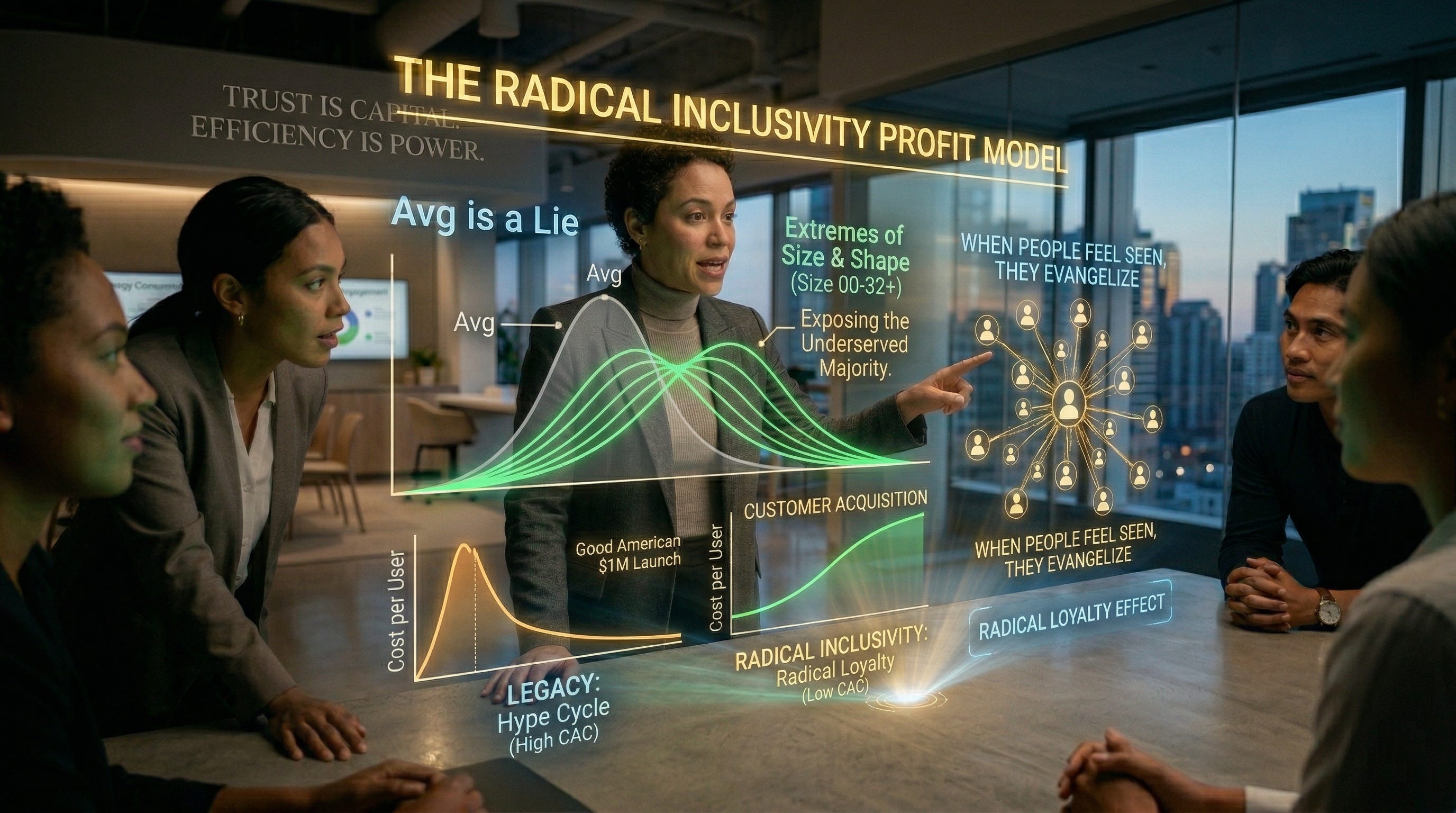
Good American’s $1 million launch day was not a fluke of celebrity marketing. It was a data-driven response to a market that felt ignored. Grede’s strategy proves that radical inclusivity is the most effective way to lower customer acquisition costs. When people feel seen for the first time, they don’t just buy; they evangelize.
“If you aren’t building for everyone, you aren’t building for the future. Inclusion is a growth strategy disguised as a moral one.” — Emma Grede
Watch how Emma Grede discusses the power of building brands through instinct and purpose: Emma Grede: Lessons from building billion-dollar brands This video captures how Grede blends authenticity with high-level corporate strategy to revolutionize the fashion industry.
From Underdog to Asset: The Jamie Kern Lima Method
Jamie Kern Lima’s sale of IT Cosmetics to L’Oréal for $1.2 billion remains a landmark in retail history. Her “unfair advantage” was her vulnerability. By showing her own skin struggles on live television, she broke the fourth wall of the beauty industry.
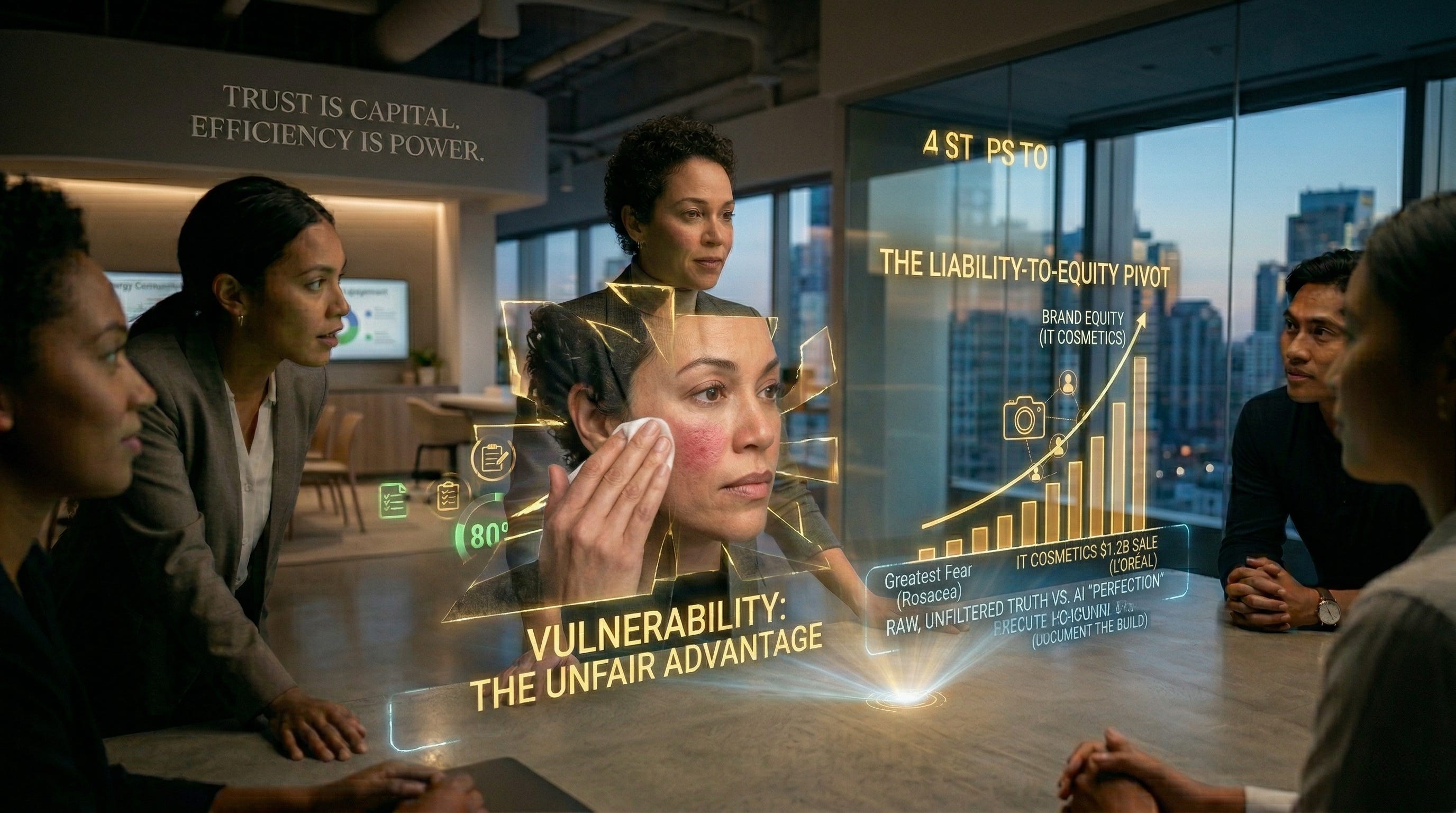
Today’s marketplace, where AI can generate “perfect” marketing images, Lima’s focus on raw, unfiltered truth is more valuable than ever. She proved that your greatest liability—the thing you are most afraid of—is often the key to your greatest brand equity.
Watch Jamie Kern Lima deliver a powerful message on self-worth and resilience in her 2025 address: Jamie Kern Lima: I Dare You to Believe in YOU! A masterclass on why trusting your internal “gut” is a more reliable business metric than any spreadsheet.
The “And” Philosophy: Daniel Lubetzky’s Strategy
Daniel Lubetzky, the founder of KIND, built a multi-billion dollar empire by refusing to accept false trade-offs. He rejected the idea that a snack had to be either healthy or tasty. He applied this same logic to his business: he wanted to be profitable and kind.
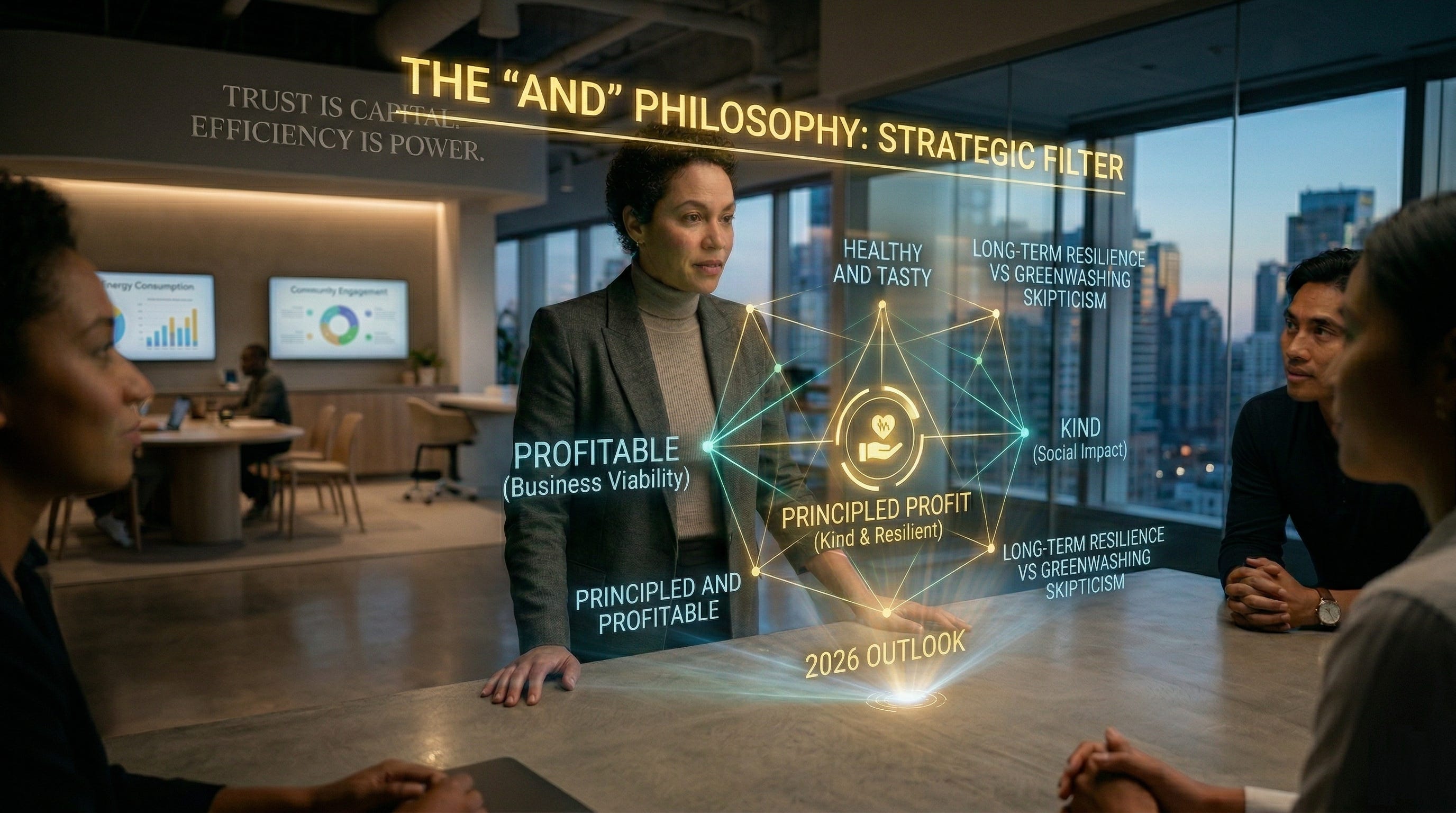
Lubetzky’s “And” philosophy is a strategic filter for every decision. In 2026, as consumers become increasingly skeptical of “greenwashing,” Lubetzky’s model of principled profit stands as a blueprint for long-term resilience.
Watch how Daniel Lubetzky explains how his “And” philosophy prevents the kind of short-term thinking that kills most startups: How Kindness Became a Billion-Dollar Business Strategy This video breaks down why refusing to compromise on core values actually speeds up growth.
Your Breakthrough Roadmap
Do not wait for a perfect market. Follow these four steps to reset your trajectory today.
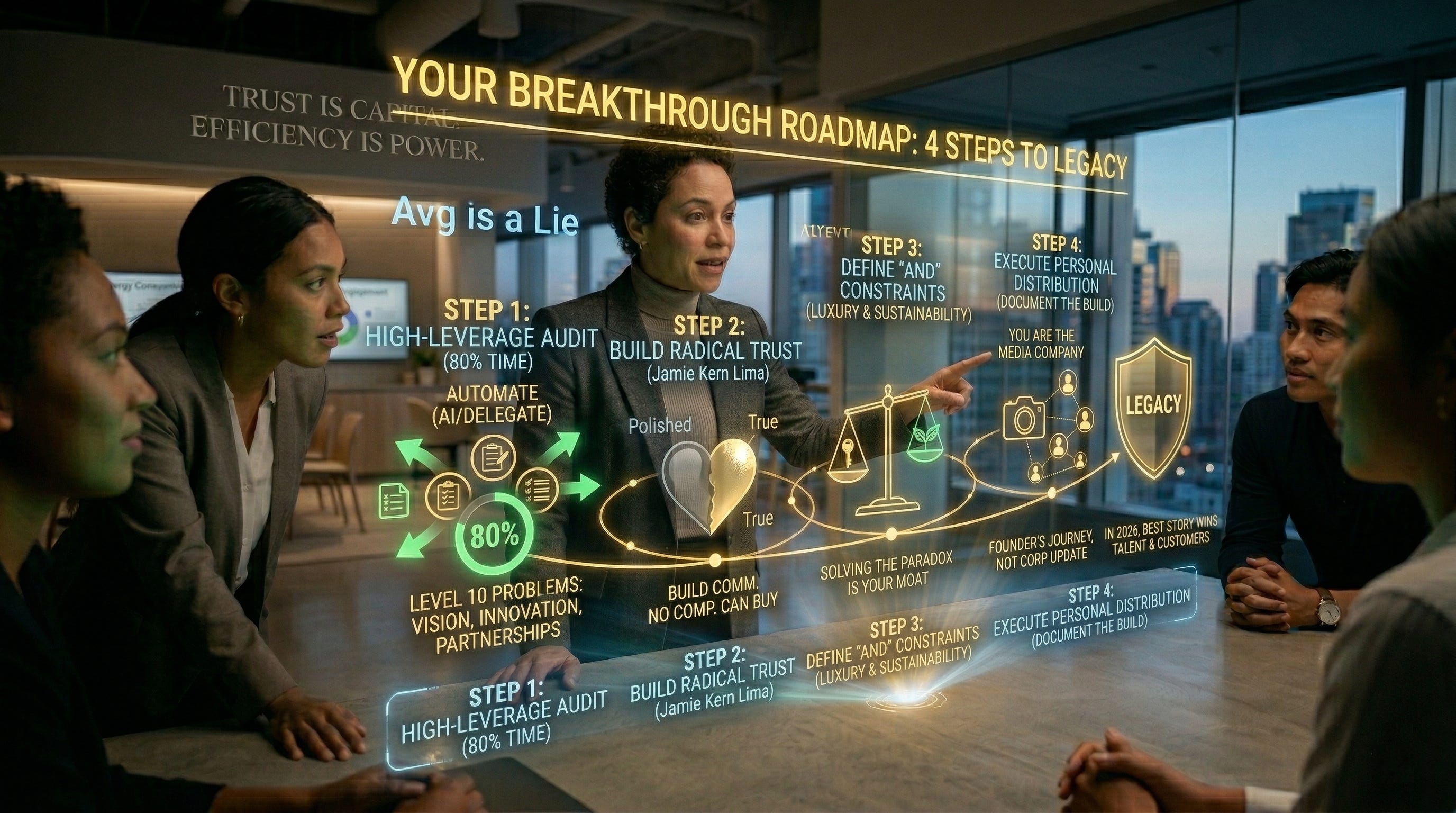
Step 1: Audit for High-Leverage Tasks Identify every task in your week that does not require your specific “human” judgment. If a task is repetitive, automate it or delegate it. Your goal is to spend 80% of your time on “Level 10” problems: vision, strategic partnerships, and deep product innovation.
Step 2: Build Your “Radical Trust” Asset Look at your marketing. Is it “polished” or is it “true”? Follow the Jamie Kern Lima model: share one thing about your business journey that feels slightly uncomfortable. That vulnerability is the beginning of a community that no competitor can buy away from you.
Step 3: Define Your “And” Constraints What are two things your industry says cannot coexist? (e.g., “Luxury and Sustainability” or “Speed and Precision”). Build your business around the tension of those two things. Solving that paradox is your moat.
Step 4: Execute on Personal Distribution You are the media company. Use your personal channels to document the build. People do not want a “corporate update”; they want a “founder’s journey.” In 2026, the person who tells the best story wins the best talent and the best customers.