

The Commander Playbook
How to Stop Being the Bottleneck

Why This Matters Now - The most expensive asset in a scaling company isn’t capital. It’s the time you burn waiting to feel certain. As complexity rises, founders either choose to become commanders who optimize for Decision Velocity (decision quality × execution speed) or they become the bottleneck the market routes around.
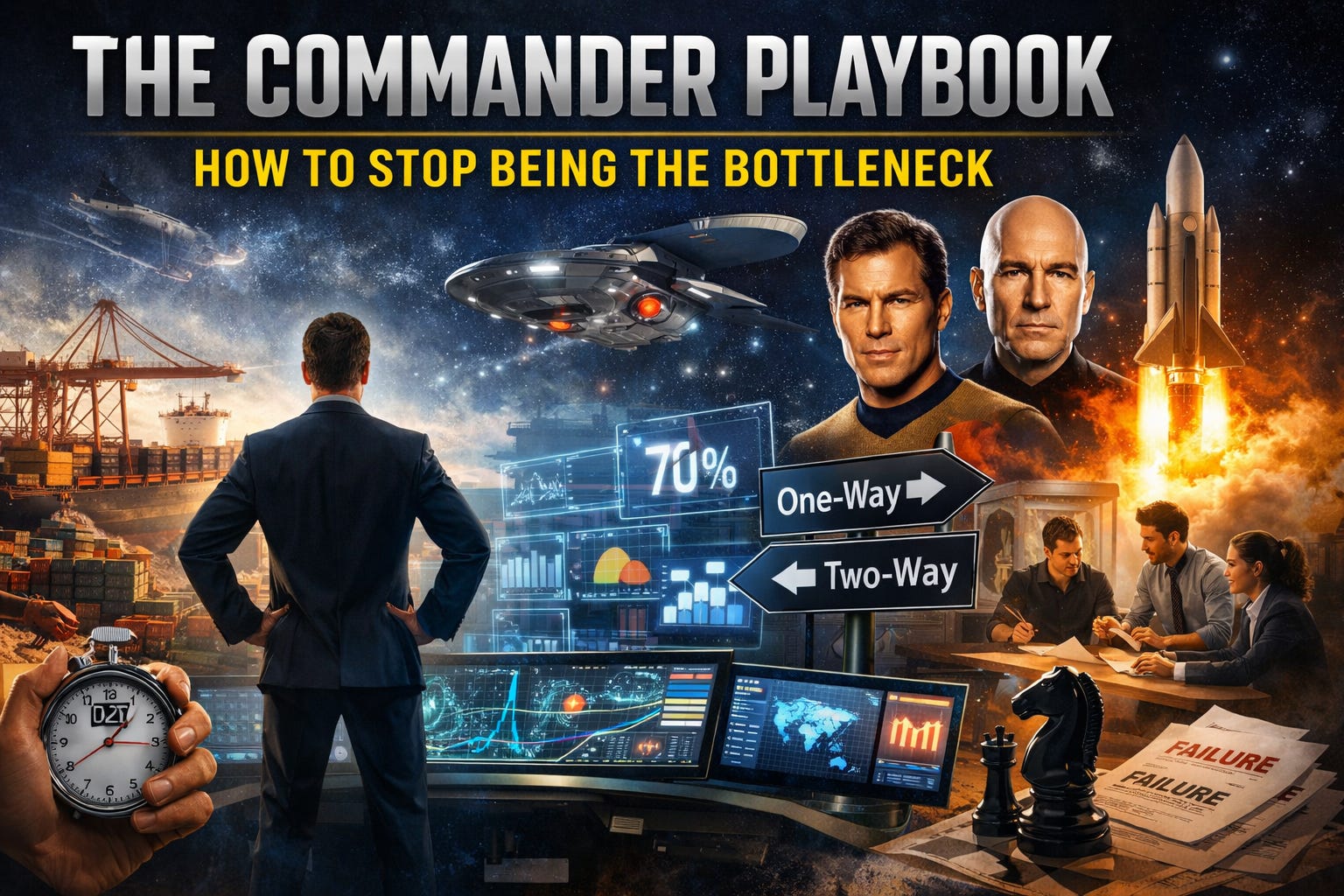
In the logistics sector over the past year, the contrast between freight-tech leaders made the gap undeniable. While some firms stalled under the weight of perfect data modeling, others empowered their directors to make 70% certainty calls on route reassignments to navigate shifting port congestion windows. The failure in the former wasn’t technical; it was a leadership vacuum.
The playbook for this kind of command comes from environments where leaders navigate the unknown with incomplete data, diverse teams, and compressed decision windows. It is the tactical logic of the Command Bridge: a refusal to wait for the fog to clear when the mission requires immediate propulsion. To scale, you must move beyond administration and adopt this architecture of decisive action.

The clearest real-world models for this Command Bridge aren’t corporate case studies; they’re Starfleet captains. Leaders like Kirk and Picard led diverse crews through uncharted space with incomplete sensors and no playbook. They demanded dissent and moved fast on reversible doors. They stayed visible on the front lines and built reflexes that turned latency into advantage. That’s not sci-fi. That’s modern leadership under uncertainty.
1. Cognitive Coverage: The Strategic Utility of Dissent
Homogeneity is an operational liability. For a strategist, Cognitive Coverage is the measure of how many distinct risk lenses are present in the room during a crisis. If your executive team shares the same professional pedigree and risk tolerance, you have effectively paid for the same perspective five times.
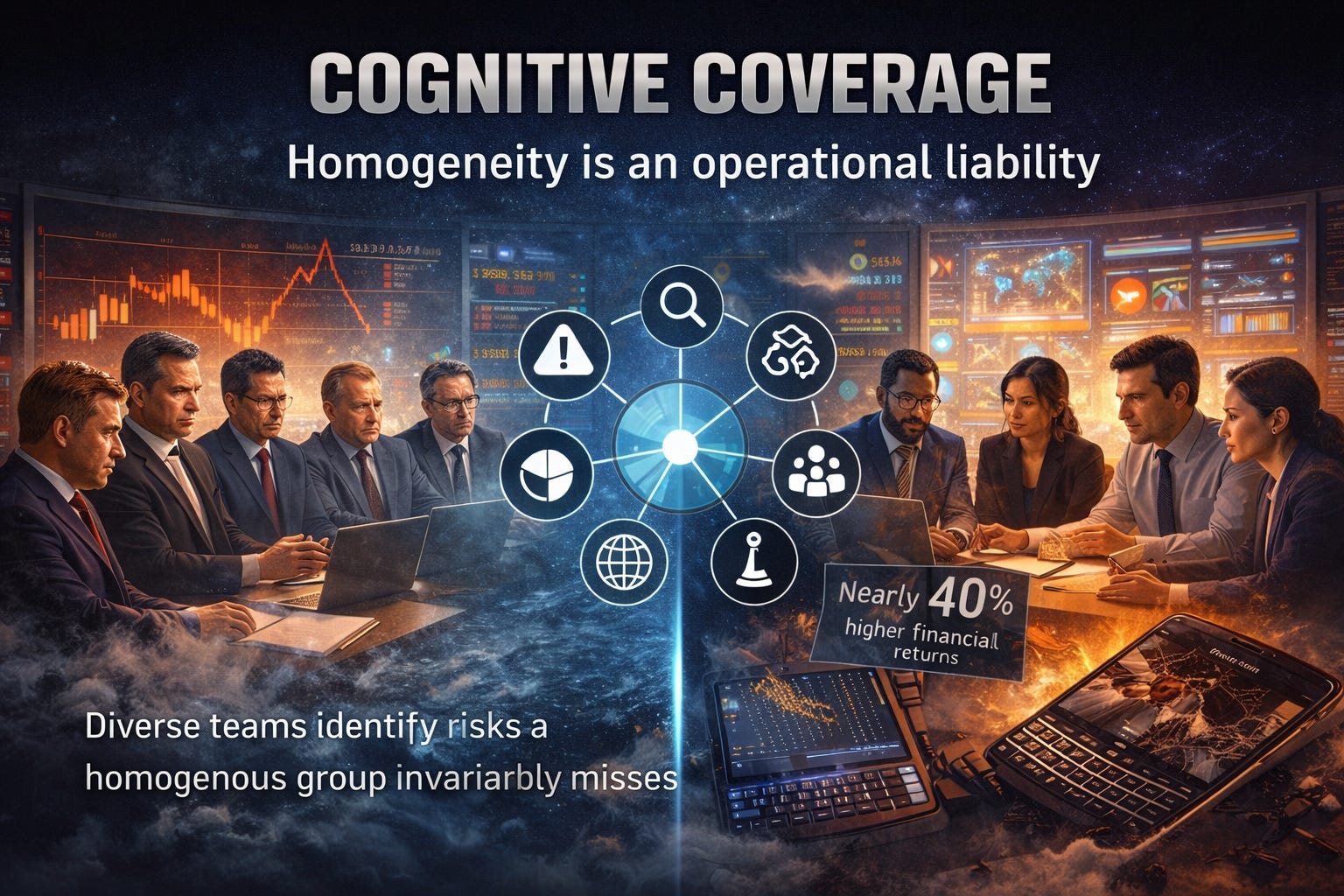
McKinsey’s Diversity Matters Even More (2023) report indicates that companies in the top quartile of executive team diversity are nearly 40% more likely to financially outperform their peers. This isn’t about social sentiment; it is about cognitive range. Consider the fall of BlackBerry: a leadership team optimized for hardware-first assumptions underweighted the shift toward software and touch screens until the market had already moved. A more diverse bridge of digital-first thinkers might have flagged that blind spot before it became an existential threat. Without cognitive coverage, your first real stress test comes from the market, where failure is punished fast.
2. Decision Velocity: Reversible vs. Irreversible
The primary cost of waiting for 100% certainty is the opportunity cost of the time lost. Many high-performing operators use a 70% threshold as a practical guardrail: when you have most of the signal and reasonable confidence, speed matters more than precision. This assumes the decision can be reversed without existential damage.
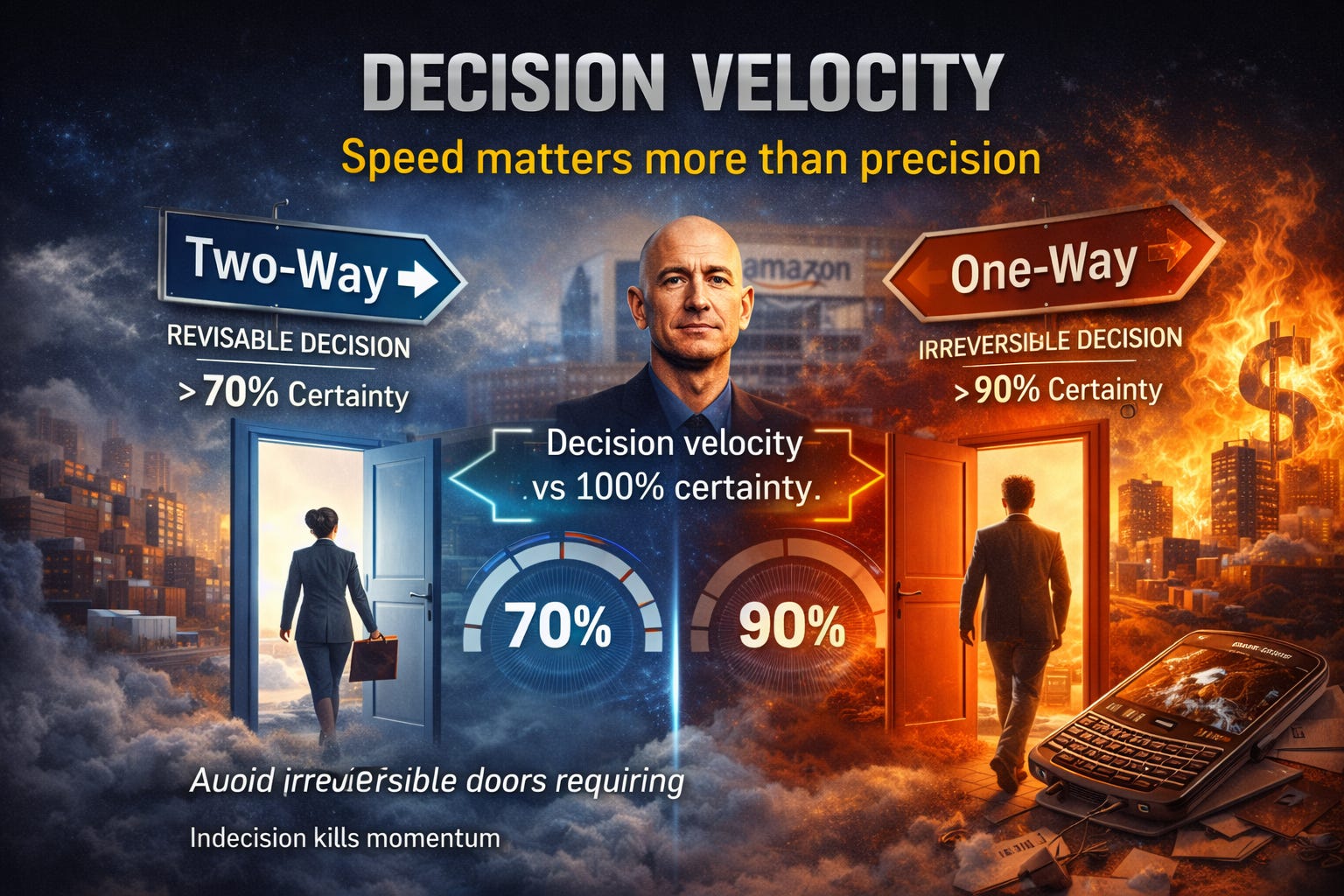
Jeff Bezos established this distinction at Amazon, categorizing reversible decisions as "two-way doors" that require swift processing. The key is distinguishing these from irreversible “one-way doors” such as a massive capital expenditure or a brand merger. Those deserve the 90% data treatment. Without a framework for decision velocity, your organization downshifts into a defensive posture that kills momentum.
3. The Front-Line Short Loop
Executive disengagement creates a disconnect between the boardroom and reality. When leaders manage exclusively through spreadsheets, they lose their ability to verify the facts behind the numbers. This creates data rot, where reports are filtered by middle management to suit perceived expectations.
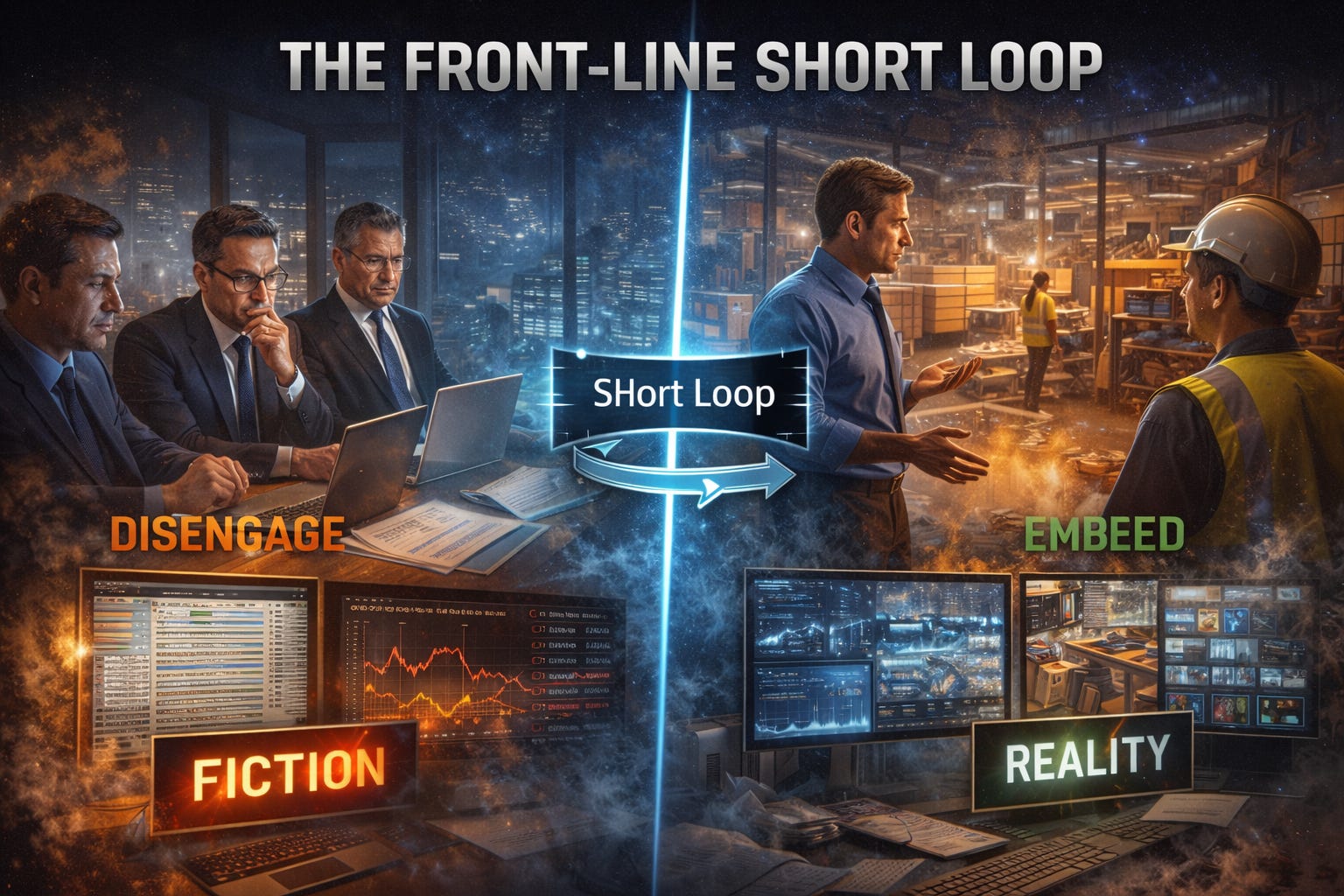
To combat this, you must establish a Short Loop: a direct line of sight between the site of the problem and the site of the decision. If you aren’t visible on the front lines, you lose the ability to influence the culture and verify your strategy. Without a short loop, your dashboards eventually become fiction. Decisions then optimize for reported performance, not actual outcomes. That’s how companies hit their numbers while quietly losing the market.
4. Integrity as Operational Leverage
Trust is a lubricant for execution. In low-trust environments, every transaction requires more oversight, more legal review, and more internal political maneuvering. These act as transaction taxes that slow down the business and inflate the cost of every move.
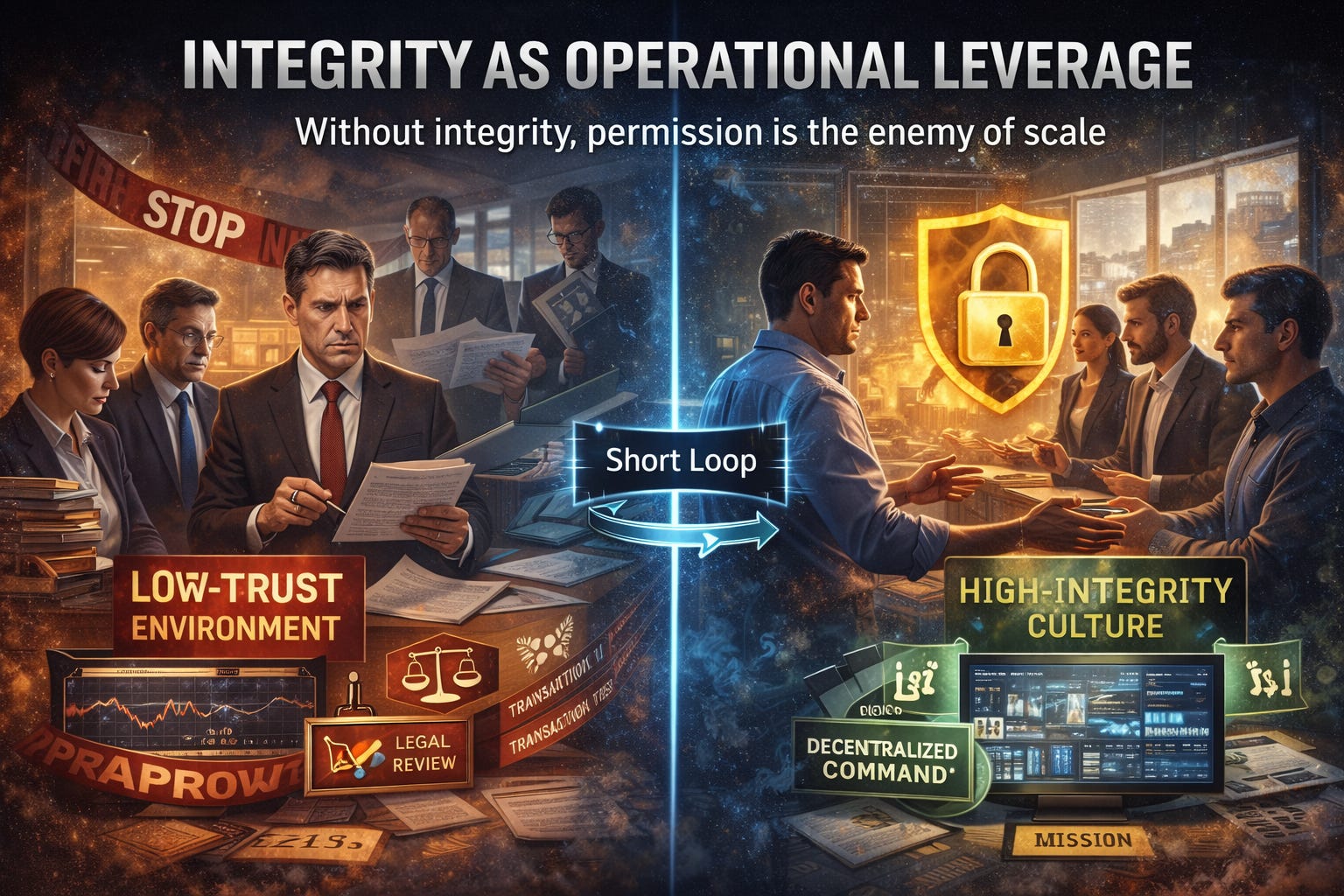
High-integrity cultures allow for decentralized command. If the team knows the leader’s ethical boundaries are immovable, they don’t need to ask for permission for every pivot. They can act with the confidence that they are aligned with the mission. Without integrity, every operational move requires permission, and permission is the enemy of scale.
5. Constraint Reframing: The Kobayashi Maru Strategy
In strategy, a no-win scenario is often just a failure of imagination. Most founders struggle because they try to solve problems within the existing rules of their industry. Constraint Reframing is the act of identifying the underlying assumptions of a problem and discarding them to find a third option.
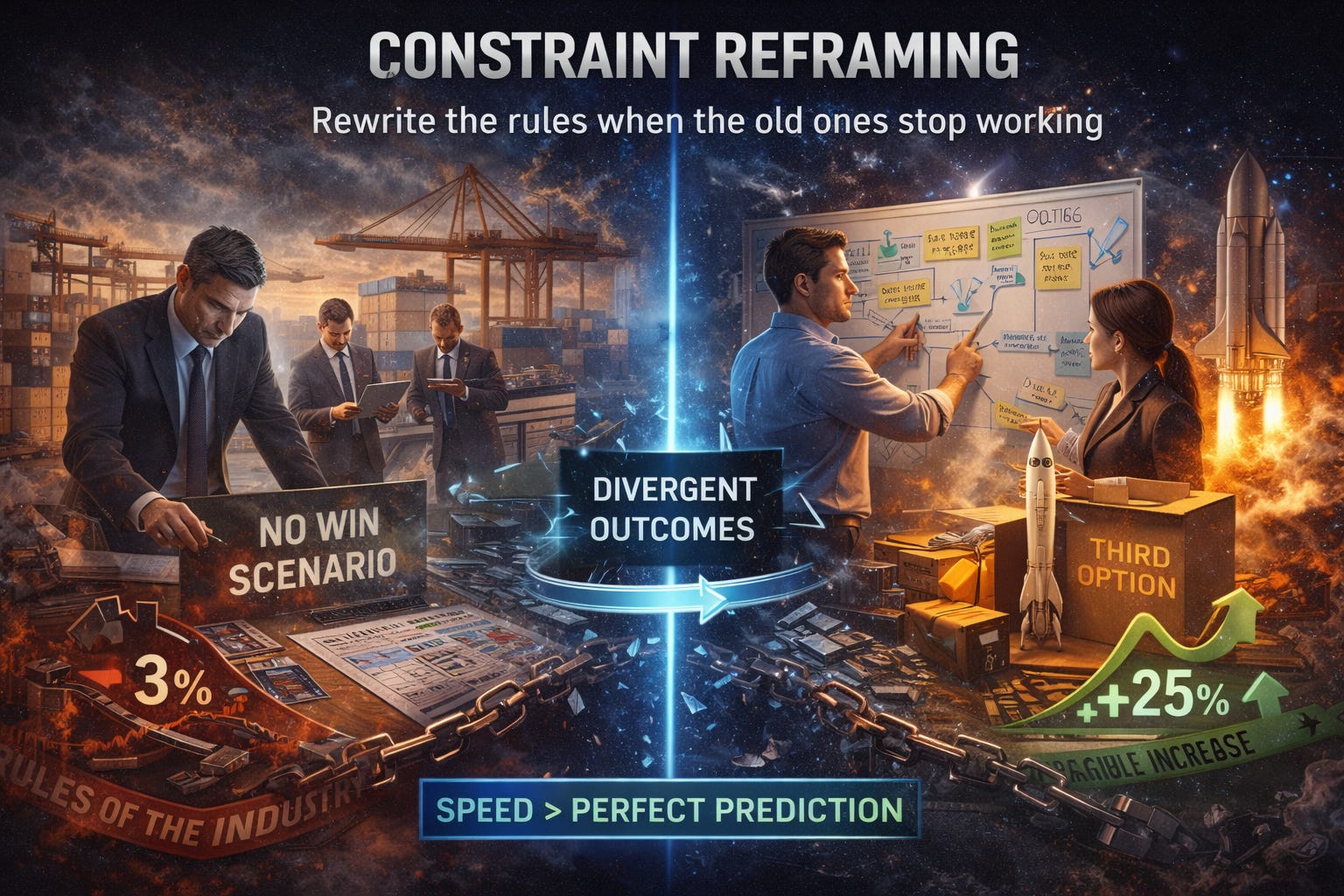
Without oversimplifying the causes, the divergence in outcomes within the freight-tech sector illustrates the principle: speed of constraint reframing beats perfect prediction in a downturn. This mirrors the agility of SpaceX, which proved reusability wasn’t impossible, just mispriced. That’s what rewriting the rules looks like when the old ones stop working. Without reframing, you are simply competing for the same margins as everyone else.
6. The Architect of Autonomy
The ultimate bottleneck in any organization is a leader who cannot let go. This resistance usually stems from a psychological fusion of identity and control. The founder feels that if they aren’t “doing,” they aren’t “leading.”
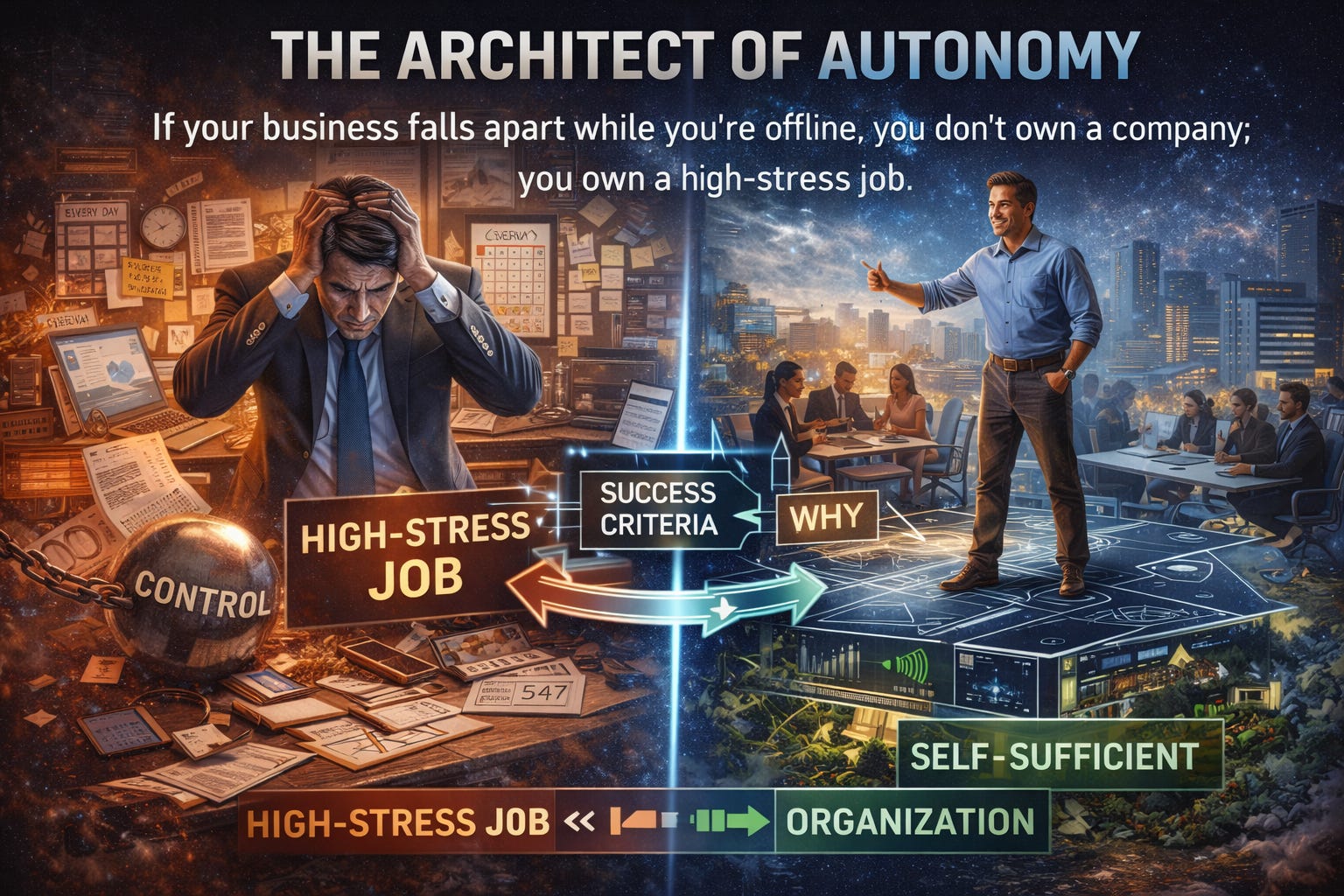
True scale is only possible when you become the architect of a system that functions in your absence. This requires moving from micromanagement to success criteria. If you define the what and the why with absolute clarity, you can leave the how to your specialists. If your business cannot grow while you are offline, you do not own a company; you own a high-stress job.
7. Response Latency Wins Markets
While decision velocity describes the speed of a single choice, Response Latency measures the time it takes for an entire organization to adapt to a changing environment, such as a sudden pricing response or a product repositioning.
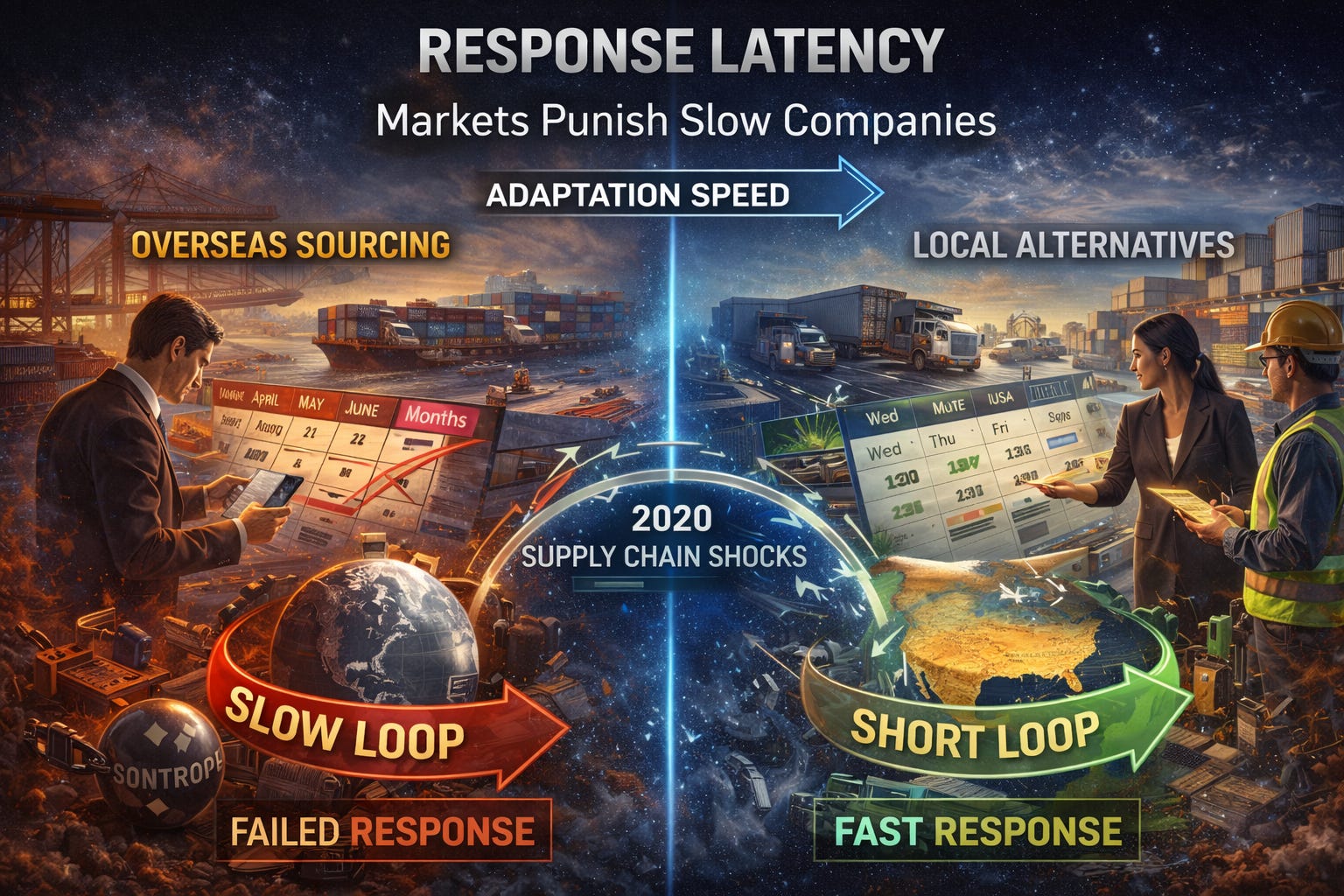
During the 2020 supply chain shocks, companies that thrived were those that could pivot from overseas sourcing to local alternatives in days, not months. Across historical downturns, the winners weren’t those with better forecasts; they were the ones with shorter loops. They didn’t have a better crystal ball; they had better reflexes. Reducing latency is the primary goal of continuous organizational learning. Markets don’t punish bad decisions as much as they punish slow ones.
Your Breakthrough Roadmap
To transition from a founder to a commander, execute this 90-day plan:
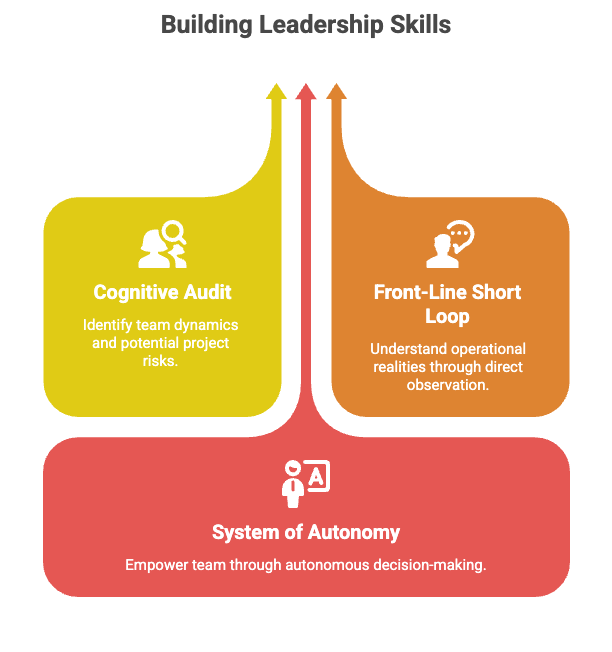
Phase 1: The 48-Hour Cognitive Audit
Identify the “Echo” on your team. Pinpoint one senior staffer who rarely challenges your ideas. Assign them the role of Adversarial Reviewer for your next major project. Their job is to find three plausible ways the project could fail.
Output: A one-page Failure Map.
Phase 2: The 30-Day Front-Line Short Loop
Select one core operational friction point (e.g., customer churn). Spend four hours shadowing the person closest to that problem. Observe the gap between reported metrics and lived reality.
Output: A one-page Ground Truth report.
Phase 3: The 90-Day System of Autonomy
Choose one recurring decision you currently make. Document the success criteria for this decision in one page. Hand it to a deputy and prohibit yourself from intervening for one full quarter. Your job is to improve the system, not rescue the outcome.
Output: A one-page Success Criteria document.
Markets do not reward the busiest leaders; they reward the clearest ones. Lock in command clarity. Step back. Your role is no longer to correct outcomes but to improve the system that produces them.