

The Effort Trap
How to Stop Sabotaging Your Legacy and Start Engineering Your Dream Life

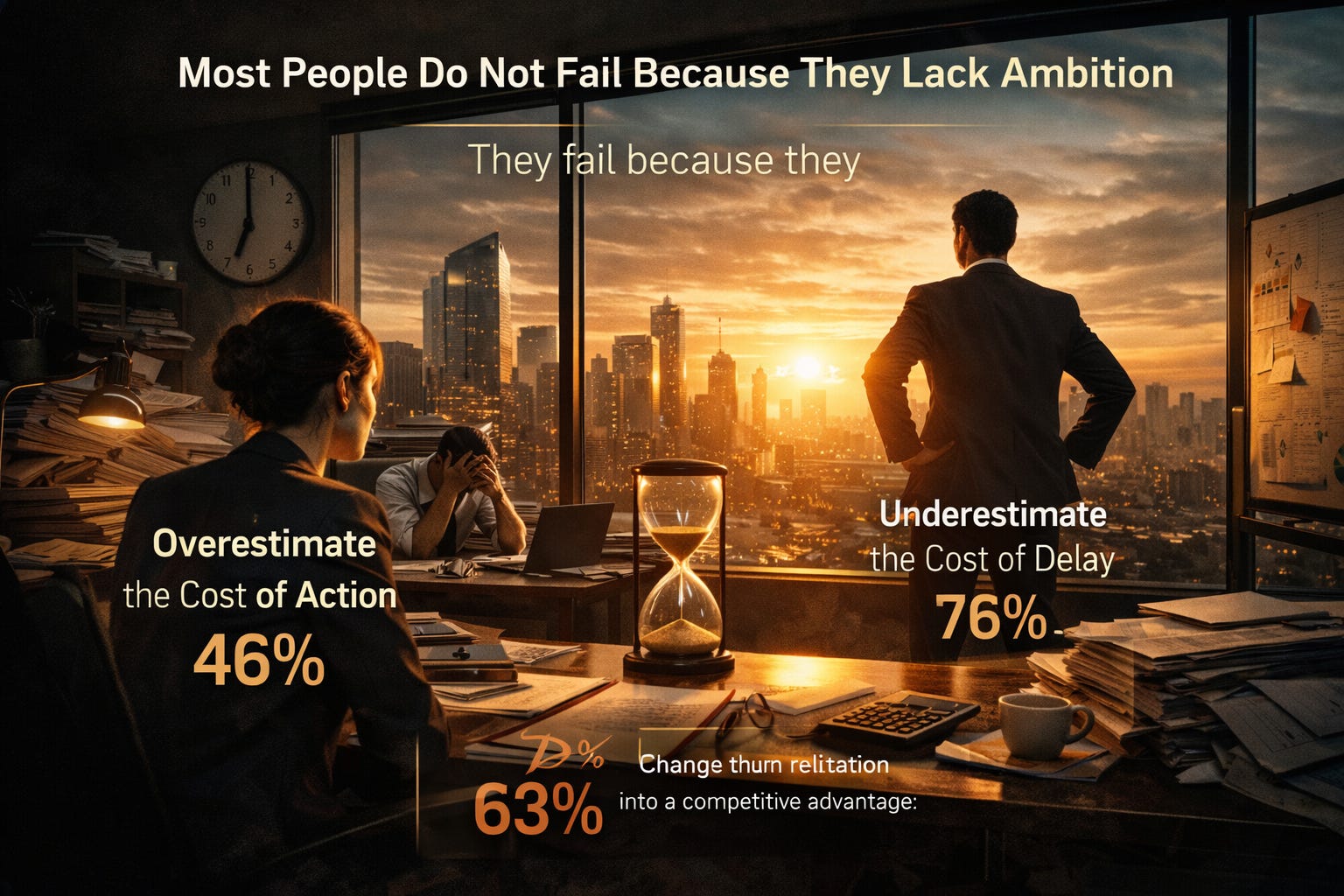
Why This Matters Now - Most people do not fail because they lack ambition. They fail because they overestimate the cost of action and underestimate the cost of delay. By changing how they value effort and reward, leaders turn resistance into a competitive advantage. This is the blueprint for shifting from a cost-analysis mindset to a legacy-driven reality.
In the summer of 2018, Elon Musk lived in a tent on the floor of the Fremont factory. Tesla was weeks away from a total liquidity collapse. The effort required to save the company was, by any rational metric, a form of torture. Musk was not sleeping. He was not eating. He was managing a production line that seemed destined for failure.
A lesser founder would have looked at the logistical friction and surrendered to the math. Musk did the opposite. He ignored the debt of exhaustion and fixated entirely on the terminal payoff. He saw a world where sustainable energy was the default. To Musk, the factory floor was not a punishment. It was the entry fee for the future.
This is the divide. Most people are stuck in what we call the kitchen problem. They are starving, but they are mentally negotiating the effort of washing the dishes. They are overweighting the sweat and underweighting the feast. In business, this cognitive error is often the difference between obscurity and legacy.
The Neurological Audit
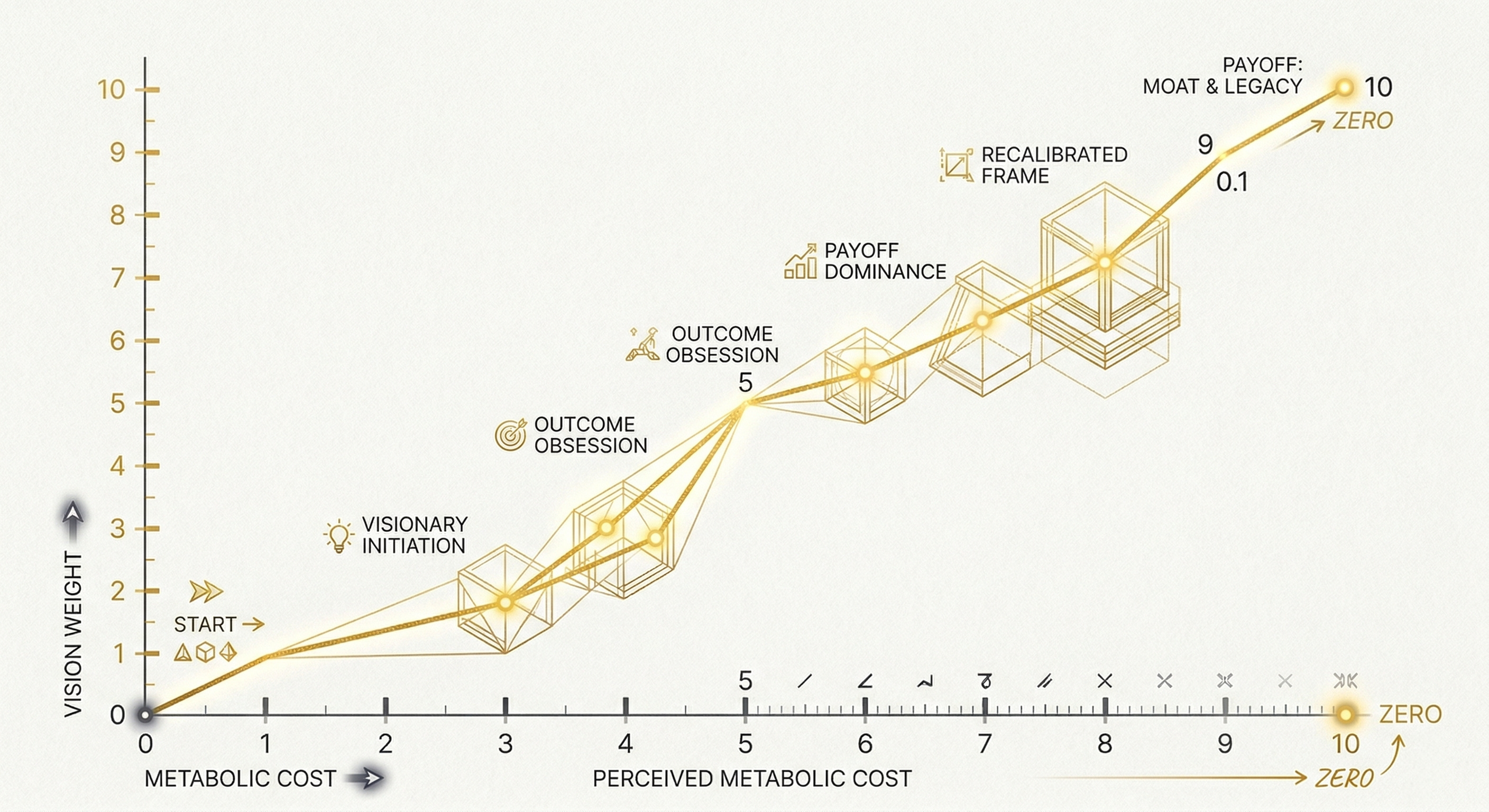
Your brain is a prediction engine. Before you commit to any action, your prefrontal cortex performs a rapid metabolic audit. It asks a single question: Is the projected dopamine reward worth the caloric expenditure?

When you focus on the work, you flood that audit with negative data. You make the task look expensive. This is why opening a blank Google Doc feels heavier than running a meeting. It is undefined effort with an uncertain payoff. You tell your brain that you are about to incur a heavy debt for a vague gain. Naturally, the system shuts down. This is not laziness. It is an evolutionary safety mechanism that has become a professional liability.
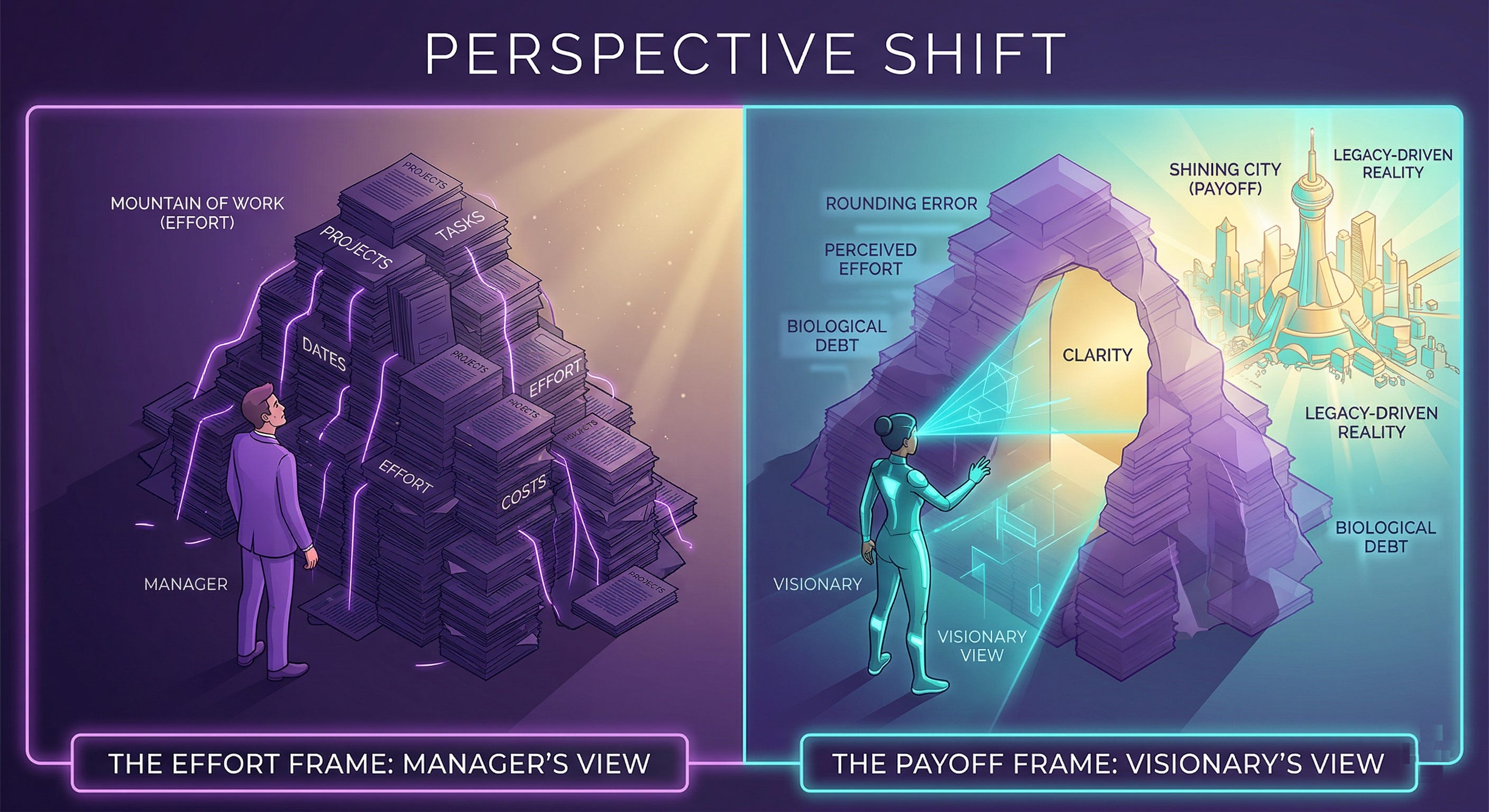
To lead, you must hack the audit. You must make the payoff so substantial that the effort becomes a rounding error. High performers do not have less friction. They just refuse to price it.
The Strategy of Payoff Dominance
Jensen Huang, the CEO of NVIDIA, did not build a trillion dollar empire by being a hard worker. He built it through absolute payoff dominance. For over a decade, NVIDIA poured billions into research and development for a market that did not yet exist. The effort was astronomical. The failures were constant.

During his 2024 Stanford address, Huang noted that resilience matters more than intelligence. Intelligence calculates the cost of the work and often finds it too high. Resilience stares at the payoff until the work disappears. This same logic drives today’s AI builders. Teams invest years into model training before a single cent of revenue appears because the payoff is not incremental. It is exponential. When the payoff is that large, a decade of struggle is a bargain.
The Investor’s Calculus: Outcome over Infrastructure
If you sit across from a Shark Tank judge like Barbara Corcoran, she will not ask you about your work ethic. She already assumes you work hard. She is looking for what she calls the expander mindset. She wants to know if you can see the 100 million dollar exit while you are still packing boxes in a garage.

Kevin O’Leary follows a similar logic. He looks for founders who have a path to the money so clear that it effectively blinds them to the obstacles. Elite investors do not invest in effort. They invest in clarity of outcome. Most entrepreneurs fail because they misprice difficulty. They spend so much energy analyzing the friction of the journey that they never leave the harbor.
Watch how Elon Musk articulated the terminal payoff of his Master Plan to justify the early, agonizing effort of building Tesla:
Watch Barbara Corcoran explain why the ability to fail well and stay payoff focused is the primary indicator of a founder’s ultimate value:
The Counter-Intuitive Truth: Make the Payoff Vivid
The common mistake is trying to make the work easier. You buy better software, you hire more assistants, or you try to life hack your productivity. These are distractions. If the work feels too hard, the problem is not the work. The problem is that the payoff is not vivid enough to compel action.
If you are procrastinating on a proposal, it is because you have not fully visualized the reality that proposal creates. You are thinking about the font size and the data points. You should be thinking about the moment the wire hits and the market share you just took.
The Price of Admission
Discipline is not a dirty word. It is simply the act of remembering what you want. When you find yourself stuck, you are looking at the treadmill, not the body. You are looking at the spreadsheet, not the freedom. The people who win are not the ones with the most discipline. They are the ones who make the payoff so real that the work becomes invisible.
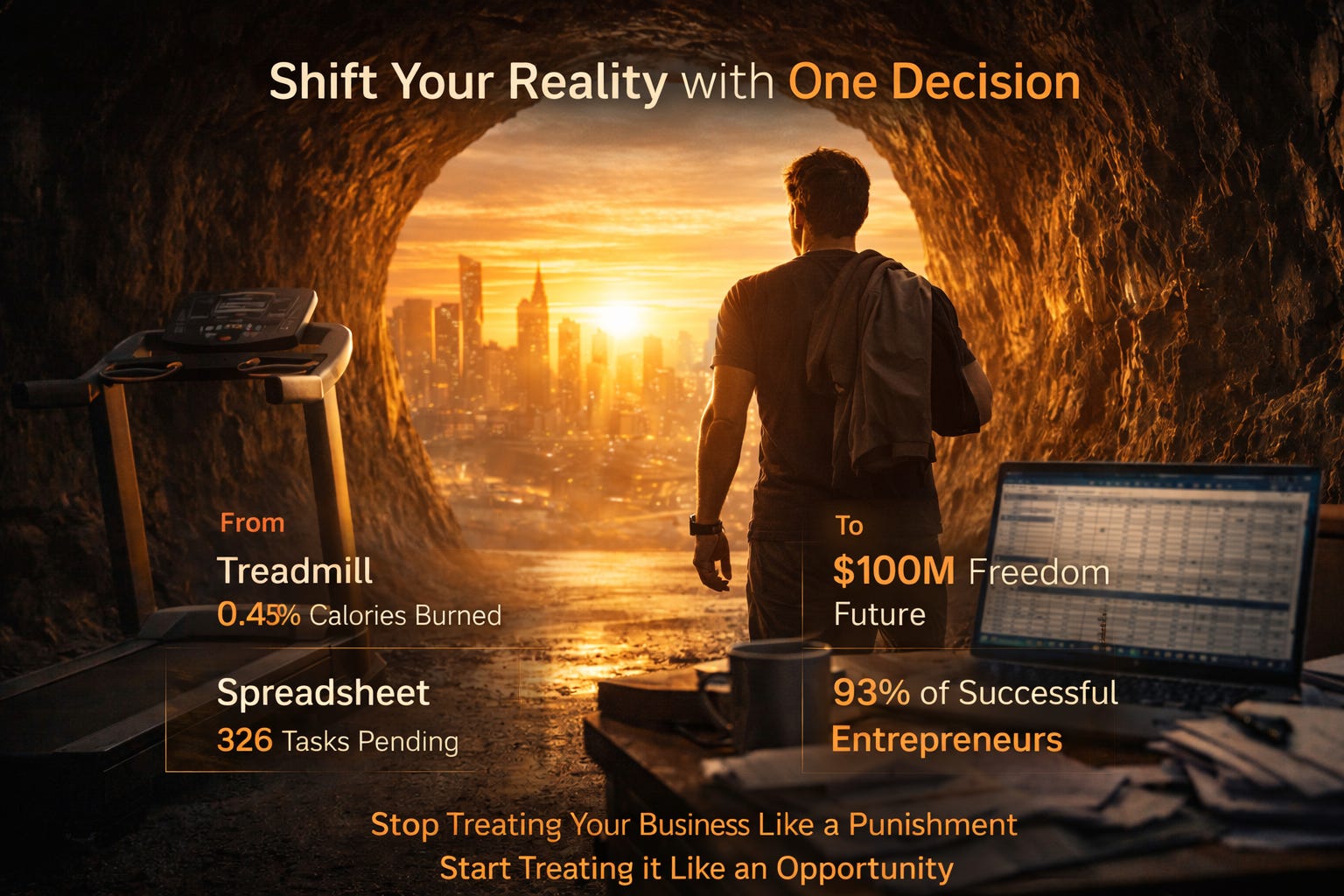
The light at the end of the tunnel is not a flashlight. It is the realization that you have the power to shift your reality with a single decision. That decision is to stop treating your business like a series of punishments and start treating it like a series of opportunities to build a life most people never have the courage to pursue.
Watch Joe Rogan and guests discuss the psychological barriers to high-level performance and why discipline is the only true currency for those seeking a dream life:
Your Breakthrough Roadmap
To engineer your dream life, you must execute these four moves with uncompromising clarity.

1. Force a Payoff-First Frame Take your three most daunting projects. Relabel them in your calendar. Do not call it Investor Pitch. Call it Securing Growth Capital. Force your brain to see the payoff first every time you see the task.
2. Separate Fatigue from Truth Identify where you are avoiding work because of perceived exhaustion. Realize that current fatigue can exaggerate the cost of the task and distort your judgment. Recalculate the payoff using a ten year horizon. If the payoff still outweighs the decade, start immediately.
3. Inhabit the Post-Completion State Before you begin any high friction work, spend sixty seconds mentally inhabiting the moment after it is finished. Feel the relief of the sent email. Experience the silence of a completed goal. Use that dopamine spike to pay the entry fee of the first hour.
4. Quantify the Inaction Premium Write down the exact price of sitting still. If you do not execute today, what is the dollar amount you are losing? What is the cost to your reputation? At some point, you have to decide. Are you pricing the effort or claiming the outcome?