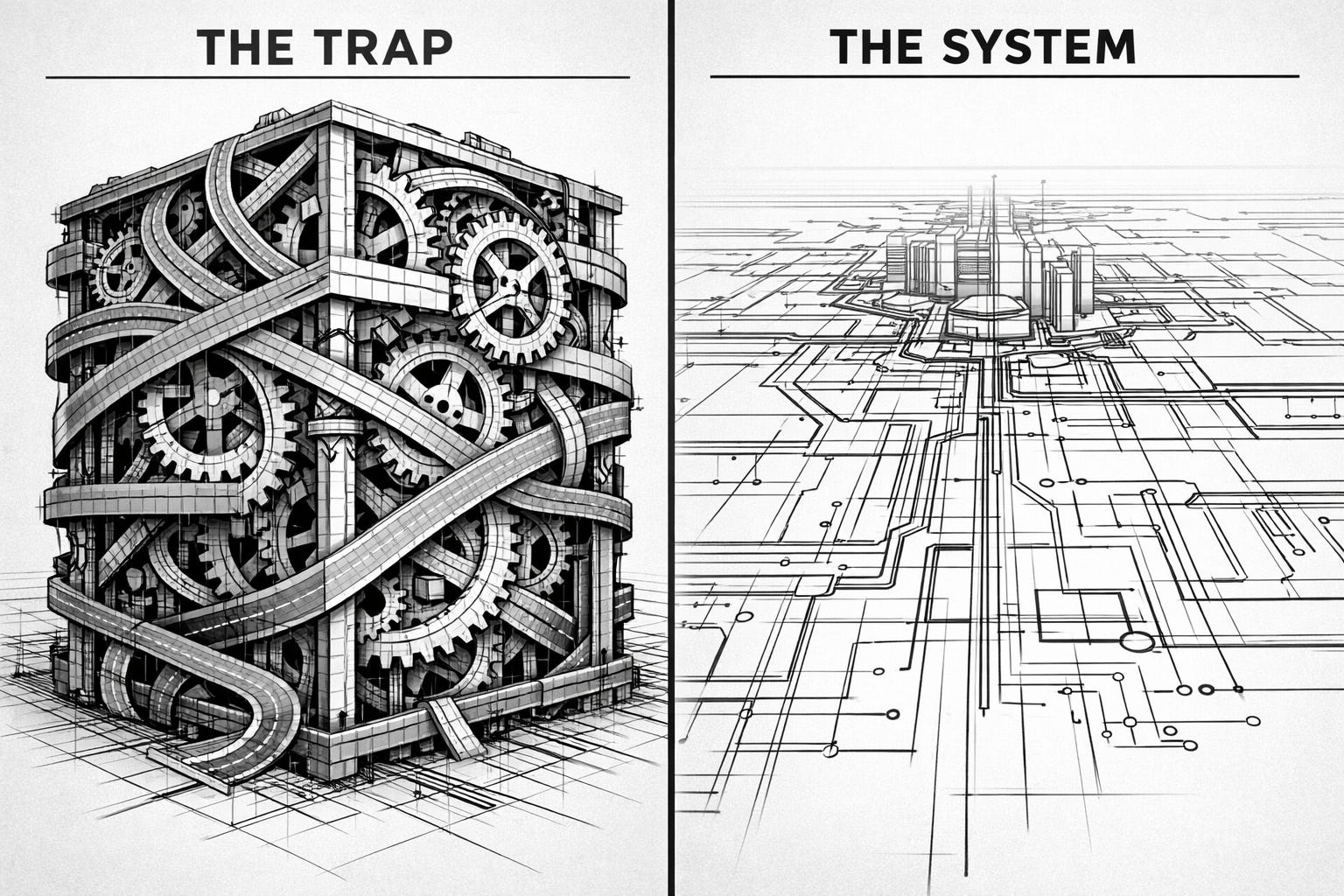
The End of the Builder
Architecting a Legacy in the Age of Infinite Replication

Six months ago, I watched a friend lose $50 million of paper wealth in a three-week freefall.

He had done everything the venture capital playbook demanded. He spent three years and $4 million building a sophisticated data-visualization engine. He hit $5M ARR. He felt untouchable. Then, a three-person team in Vietnam used an LLM-orchestration layer to replicate 90% of his core utility in three weeks.
They didn’t build. They generated.
My friend’s mistake wasn’t technical; it was an identity crisis. He was a Builder. He believed that feature velocity and headcount were moats. He didn’t realize that in an age of infinite replication, building is a low-value activity. If you are obsessed with your roadmap, you aren’t an entrepreneur. You’re managing output, not building leverage.
The era of the Builder is over. We have entered the era of the Architect.
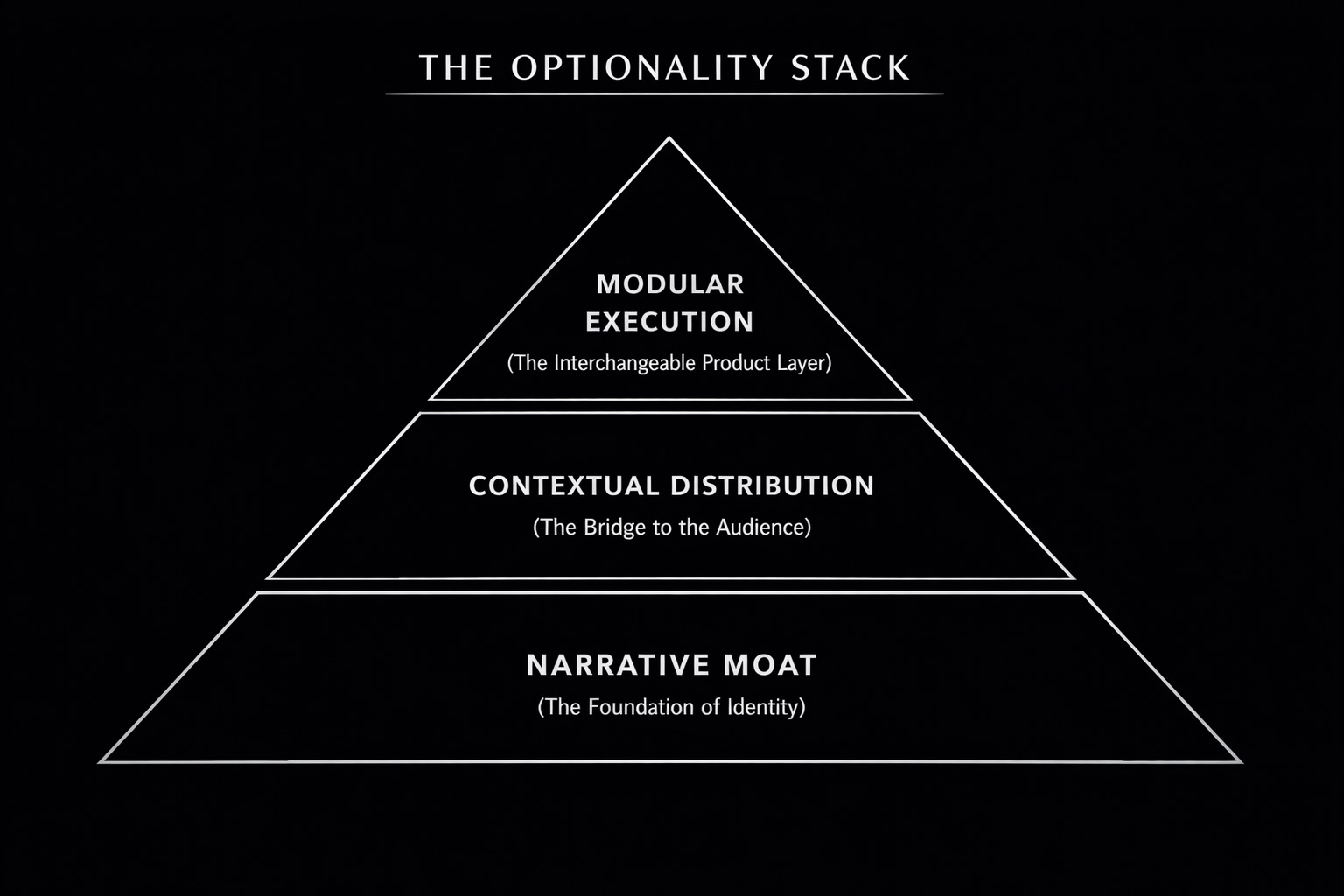
1. The Optionality Stack: Decoupling Identity from Inventory
The Builder is trapped by their product. If the code breaks or the market shifts, they die with the inventory. The Architect uses the Optionality Stack to ensure the “what” is always secondary to the “who.”
Narrative Moat. This is the extraction of a moral tax. Patagonia doesn’t sell jackets; they monetize environmental virtue. Hermès doesn’t sell leather bags; they architect scarcity and heritage. Because they own the narrative, they can pivot their physical inventory without losing the tribe. The product is just a souvenir of the mission.
Contextual Distribution. Joe Rogan doesn’t own a show. He owns the ear of a demographic. The guest is the commodity; the context is the prize.
Modular Execution. Tesla treated the car as the first “app” on an energy stack. By owning the proprietary battery architecture, the specific vehicle model becomes interchangeable.
When you own the narrative and the context, execution becomes plug-and-play. You aren’t a car company; you are a system that happens to sell cars.
2. Distance Collapse: The Architecture of Inevitability
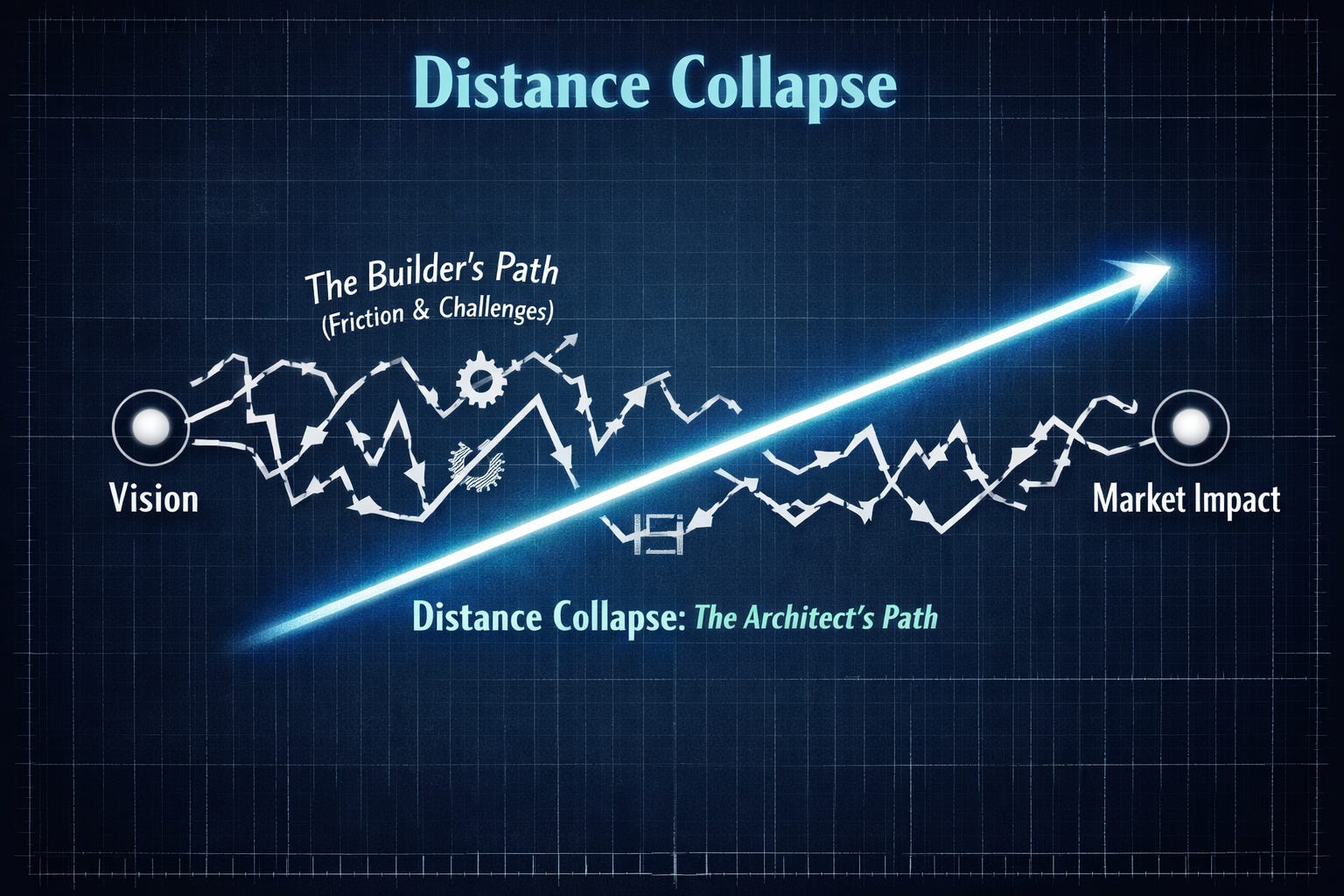
Once you decouple identity from product, your only job is Distance Collapse: erasing every layer of friction between your vision and the market’s impact.
Take NVIDIA. They didn’t just build chips; they collapsed the distance between raw silicon and applied intelligence. CUDA wasn’t a feature. It was a language monopoly. They created a developer lock-in that functions like a digital border.
Architects don’t navigate landscapes; they design the gravity that dictates where everyone else walks. If you are still reaching a market, you are a Builder. If the market has no choice but to flow through you, you are an Architect.
3. Entropy Mastery: The Architect’s Internal Engine
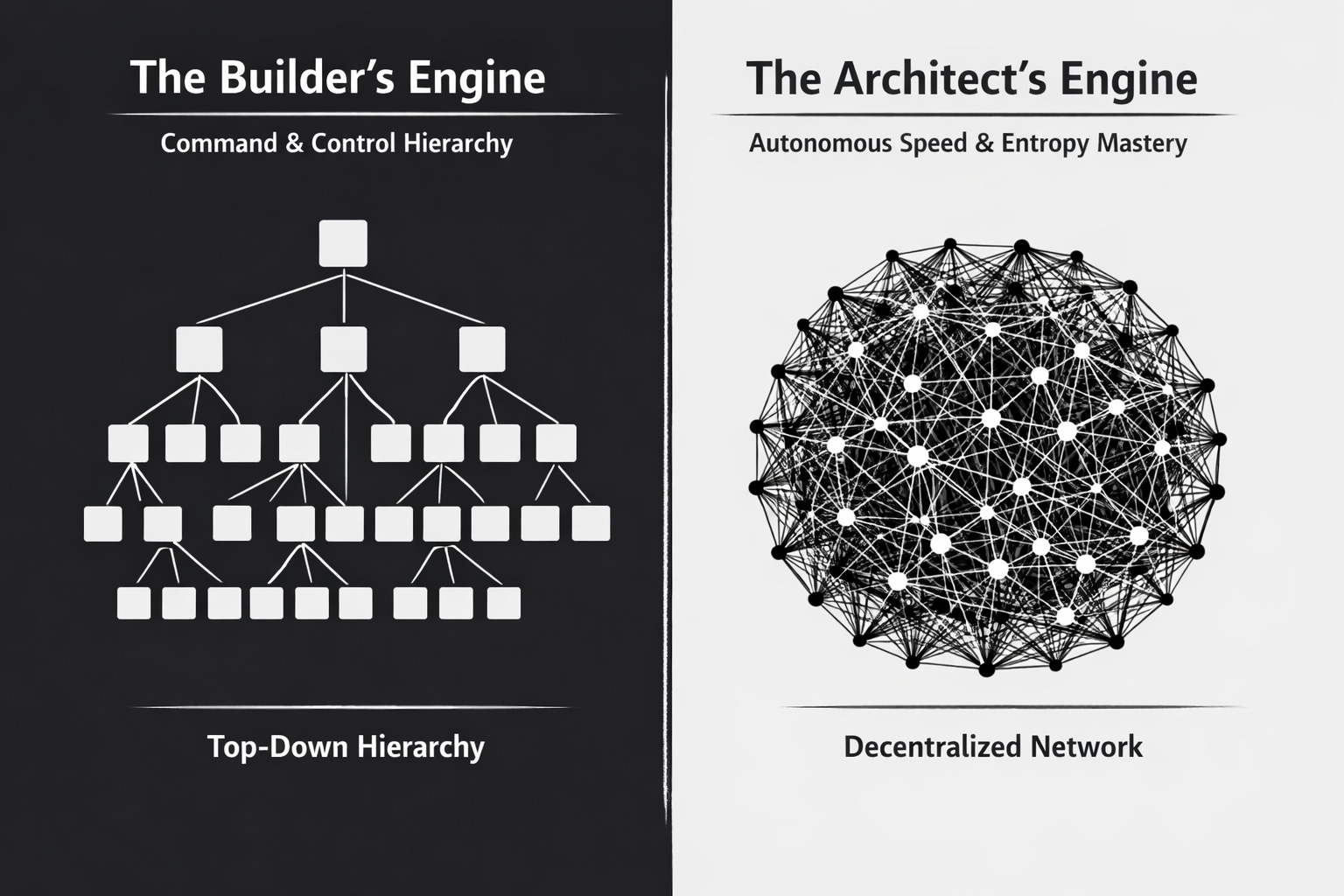
This is where most founders fail. They try to manage people to prevent mistakes. The Architect masters Entropy to allow for speed.
In the old world, you built an org chart to ensure stability. In the new world, stability is a liability. You need high-talent density operating under “lead-with-context” principles. If you still require a signature for a $50,000 decision, you are slowing down the system to protect your own ego.
Real scale comes from making the system so simple it cannot break. You are no longer looking for builders to execute orders; you are looking for fellow architects to maintain the system’s integrity.
The Inevitability
My friend is now starting over. This time, he isn’t hiring forty developers. He’s designing an automated “adversarial testing” system that uses AI to clone and stress-test competitor features the moment they leak. He isn’t trying to out-build them; he’s architecting a system that makes their labor irrelevant.
He stopped building. He started architecting.
You are at a crossroads. You can continue to obsess over incremental improvements and fight for relevance in a world that can replicate your features while you sleep. Or, you can become the one who designs the system.
The rules of the next war are already locked in. The only question left is whether you’re designing the system, or trapped inside one.