The Global Scale Protocol
How to Build a Borderless Empire Without Losing Your Soul

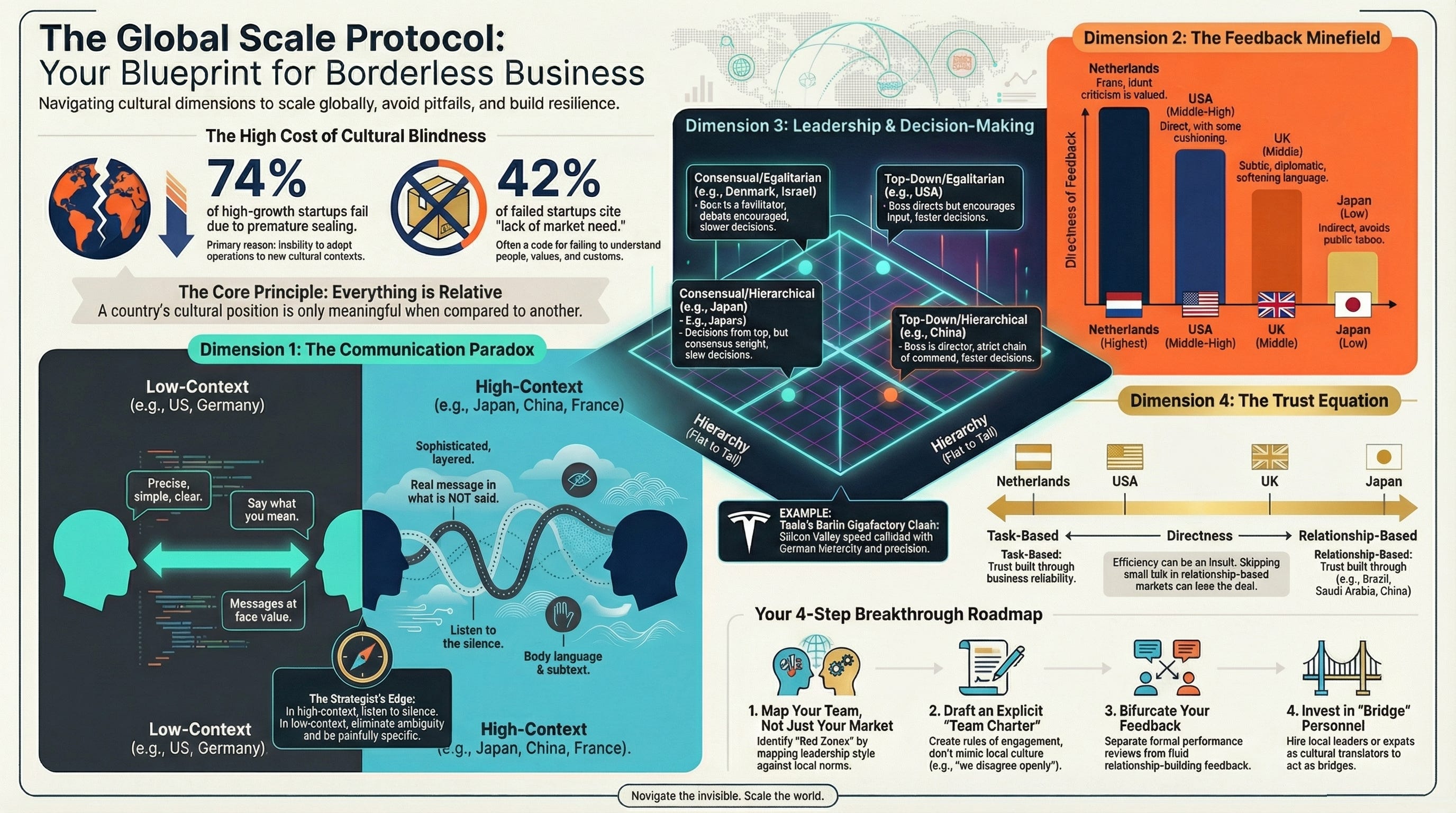
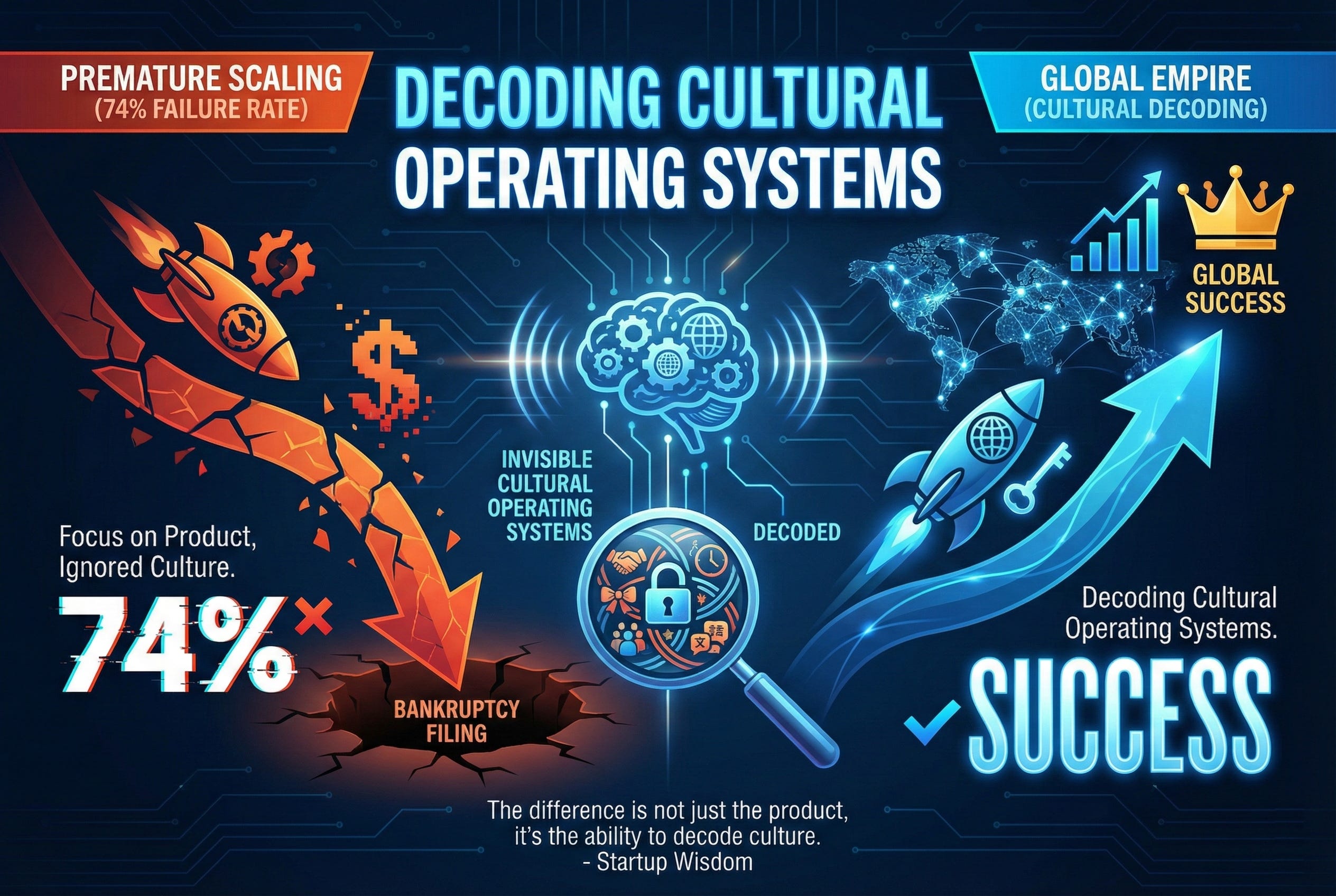
Why This Matters Now - Seventy-four percent of high-growth startups fail due to premature scaling. The difference between a global empire and a bankruptcy filing isn’t your product—it’s your ability to decode the invisible cultural operating systems of the markets you enter.
You have the product. You have the capital. You have the ambition to turn a domestic win into a global legacy. But the moment you cross a border, you enter a minefield where your standard operating procedures can become your biggest liabilities.
In the high-stakes arena of global business, “culture” isn’t a soft skill; it is hard currency. Current data reveals that up to 90% of startups eventually fail, with a staggering 42% citing lack of market need—often a euphemism for “we didn’t understand the people we were trying to sell to.”
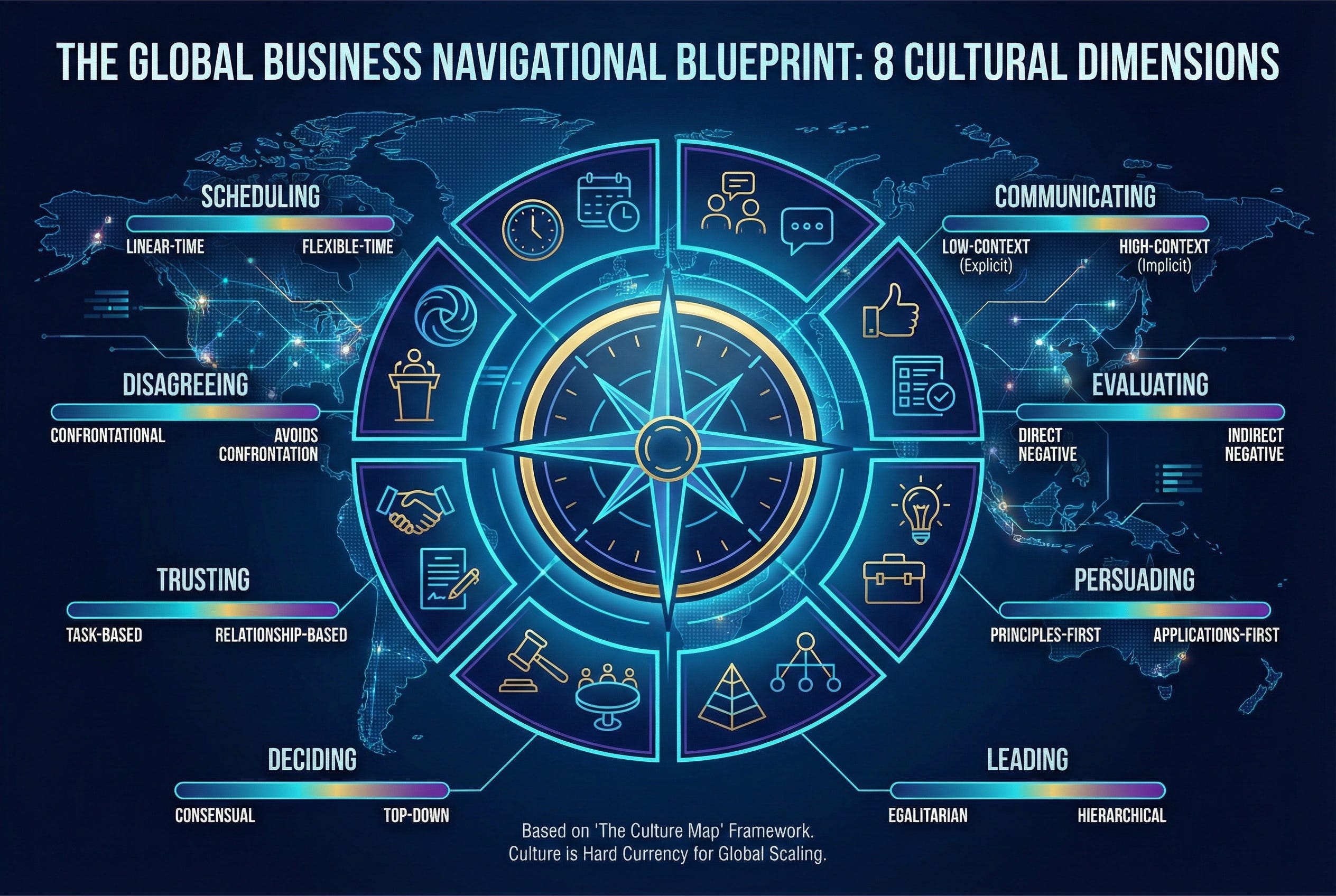
To scale effectively in 2025 and beyond, you need more than a passport; you need a new navigational instrument. Based on the groundbreaking framework of The Culture Map by Erin Meyer and reinforced by the strategies of titans like Netflix and Spotify, here is your blueprint for navigating the eight dimensions of global business.
The Communication Paradox: Read the Air or Read the Email?
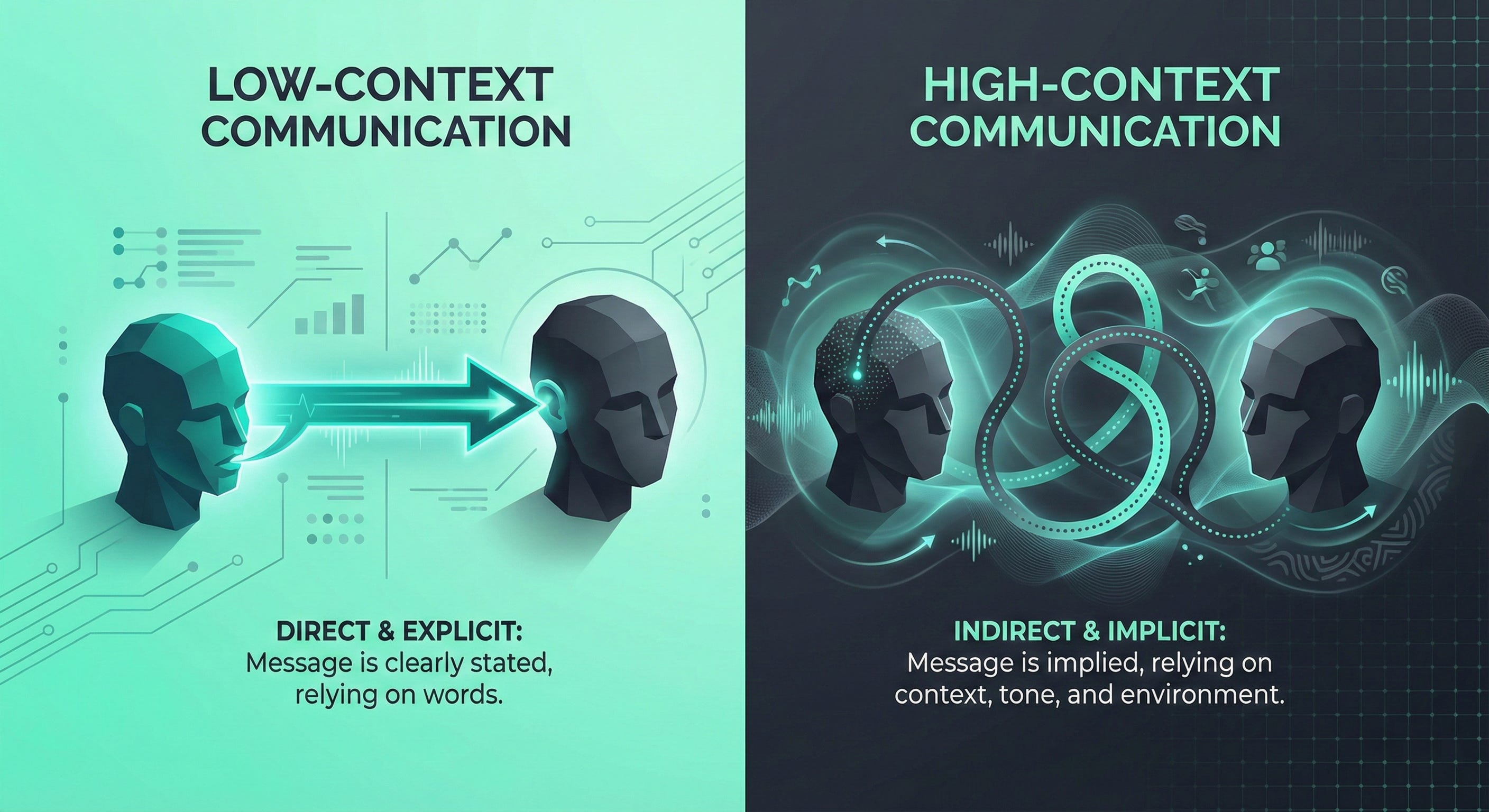
In the US or Germany, we prize clarity. “Say what you mean and mean what you say.” We call this Low-Context communication. But if you take that blunt instrument into a High-Context culture like Japan, China, or France, you aren’t being “clear”—you’re being a bulldozer.
In High-Context cultures, the real message is often in what is not said. It’s in the pause, the seating arrangement, and the silence. To dominate globally, you must become bilingual in communication styles.
The Strategist’s Edge: When you are the visitor in a High-Context market, stop listening to the words and start listening to the silence. Conversely, when leading a Low-Context team, ambiguity is the enemy. Be painfully specific.
Watch: The Hidden Rules of Global Teams
Ricardo Fernandez breaks down the complexities of managing remote teams across cultures, a skill that separates modern leaders from dinosaurs. Watch how diverse teams navigate the “silent” barriers of communication Managing Cross Cultural Remote Teams
The Feedback Minefield: The “Sandwich” is a Choking Hazard
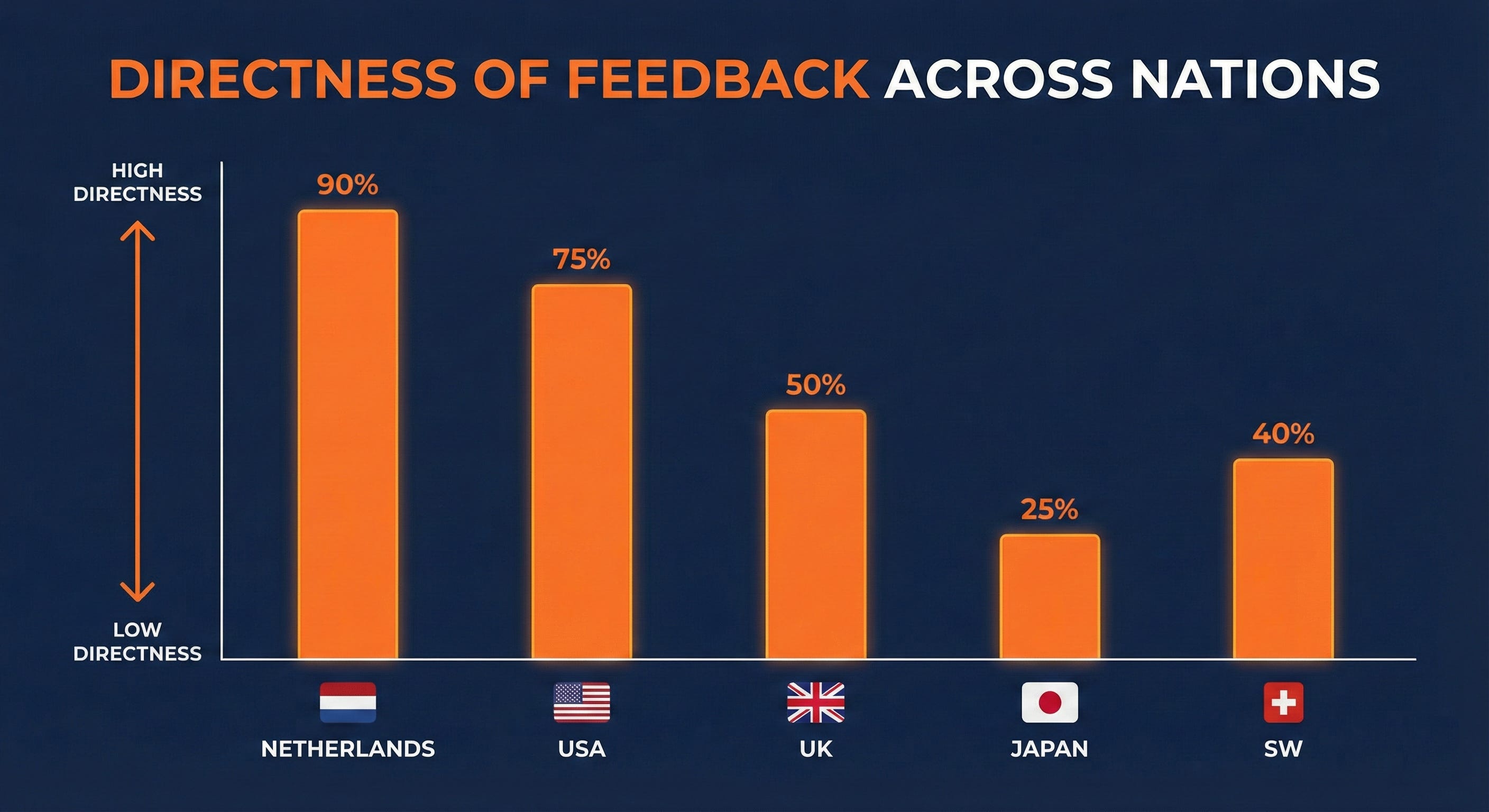
Americans love the “feedback sandwich”—praise, critique, praise. We think it softens the blow. But in cultures like the Netherlands, Russia, or Israel (Direct Negative Feedback), that “softener” is viewed as dishonest fluff. They value the truth, undiluted.
Conversely, in the UK or Indonesia (Indirect Negative Feedback), a “frank conversation” can permanently sever a relationship. A British manager saying, “I have a few minor comments,” might actually mean, “This is a total disaster.”
Real-World Intel: Consider how Netflix handled this. CEO Reed Hastings and Erin Meyer collaborated to map Netflix’s culture of “radical candor.” They found that while radical candor works in the US, it had to be adapted for their Tokyo office, where public critique is taboo. They didn’t abandon their principle; they just changed the delivery mechanism to formal, scheduled feedback sessions where the context was set explicitly.
Leadership & Decision Making: The “Boss” vs. The “Facilitator”
Global expansion exposes a rift in how we view authority.
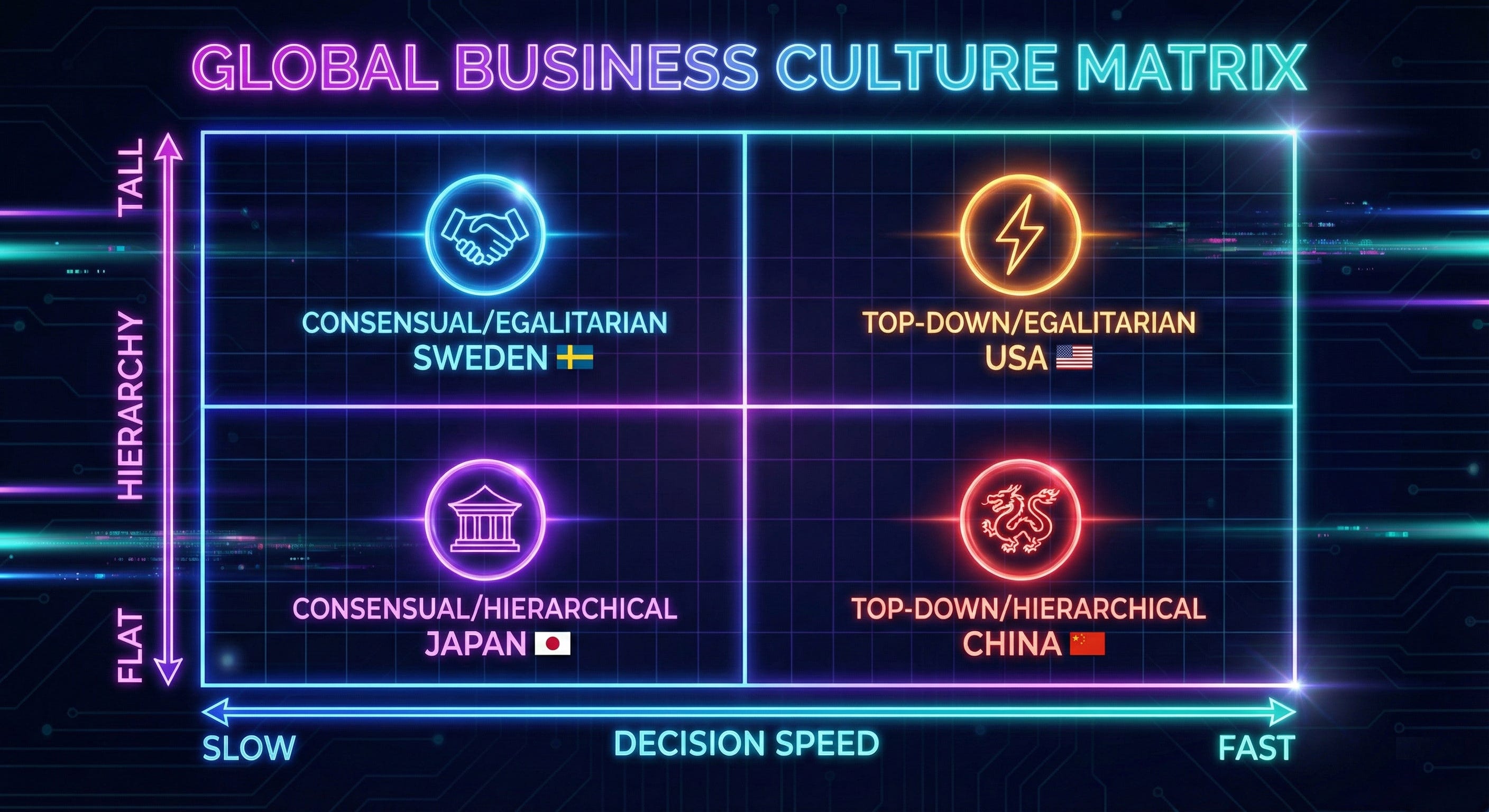
Egalitarian (Denmark, Israel): The boss is just a facilitator. Disagreement is expected.
Hierarchical (China, Nigeria): The boss is the director. Skipping the chain of command is an act of war.
This scale often clashes with the Decision Scale. In the US, we are Top-Down but flexible; we make decisions fast and change them later. In Japan (Consensual), the decision takes forever because everyone must agree (a process called nemawashi), but once made, it is set in stone.
The Tesla Case Study: When Elon Musk opened the Berlin Gigafactory, the clash was palpable. Tesla’s Silicon Valley “move fast and break things” culture collided with German industrial precision and hierarchy. The friction wasn’t about making cars; it was about how decisions were made. Successful scaling requires you to identify these friction points before they grind your gears to a halt.
The Trust Equation: Cognitive vs. Affective
In the West, we are Task-Based. “I trust you because you delivered the report on time.” In emerging markets like Brazil, Saudi Arabia, or China, trust is Relationship-Based. “I trust you because I know your family, we have shared a meal, and I know who you are.”
If you fly into Riyadh, skip the small talk, and open your laptop to start the presentation, you have already lost the deal. You are viewing efficiency as a virtue; they are viewing it as an insult.
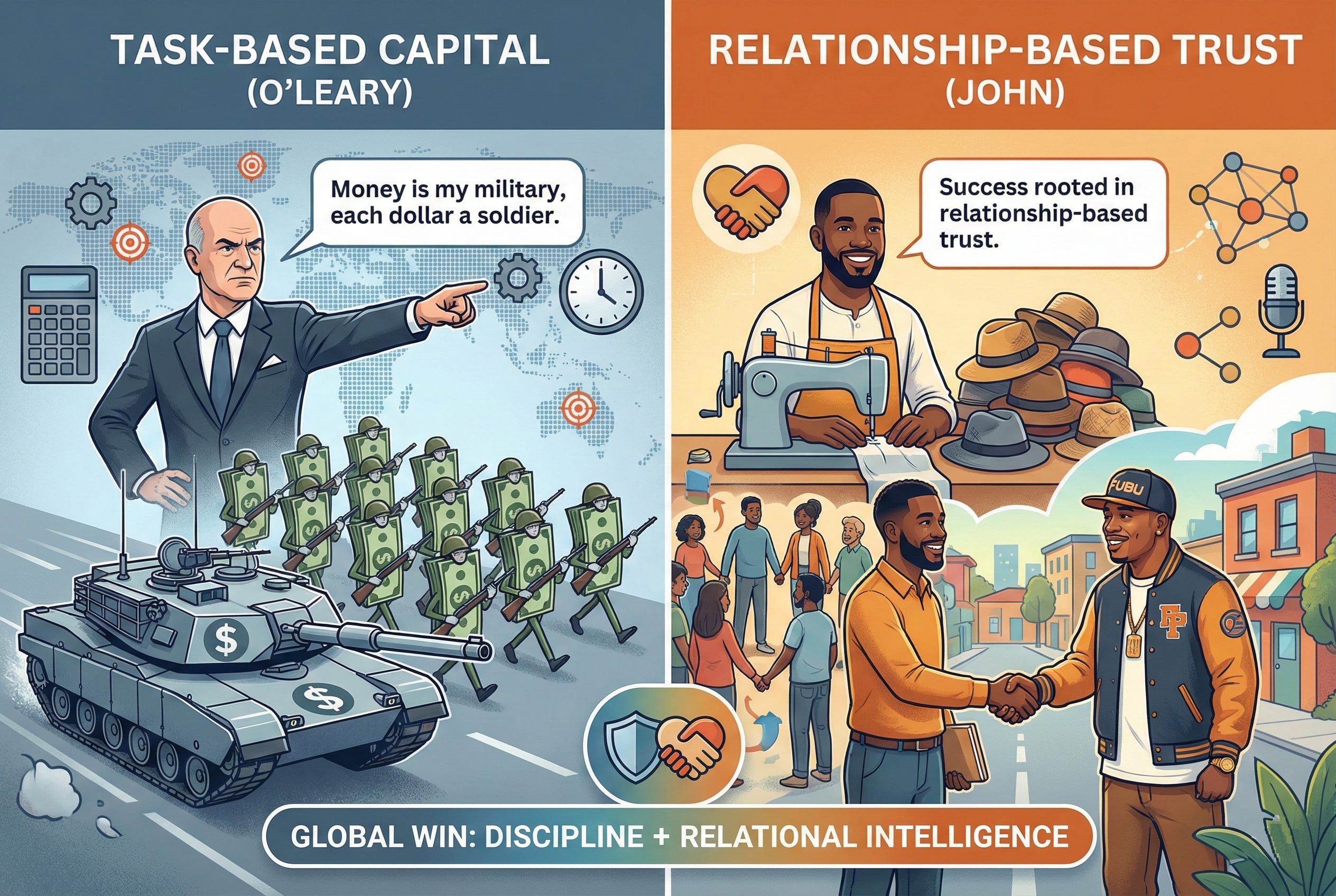
Shark Tank Insight: Kevin O’Leary often says, “Money is my military, each dollar a soldier.” That is a purely task-based, efficient view of capital. But compare that to Daymond John, who built FUBU by hand-sewing hats in Queens and personally connecting with LL Cool J to wear his gear. Daymond’s success was rooted in relationship-based trust within his community. To win globally, you need O’Leary’s discipline and Daymond’s relational intelligence.
Watch: The Power of Cultural Lenses
Simone Buijzen illustrates how our background shapes our reality—and how missing these cues costs businesses millions. Watch how cultural misunderstandings create invisible barriers to profit How cross-cultural understanding can help us to see each other
The Rule of Relativity: Your Anchor is Wrong
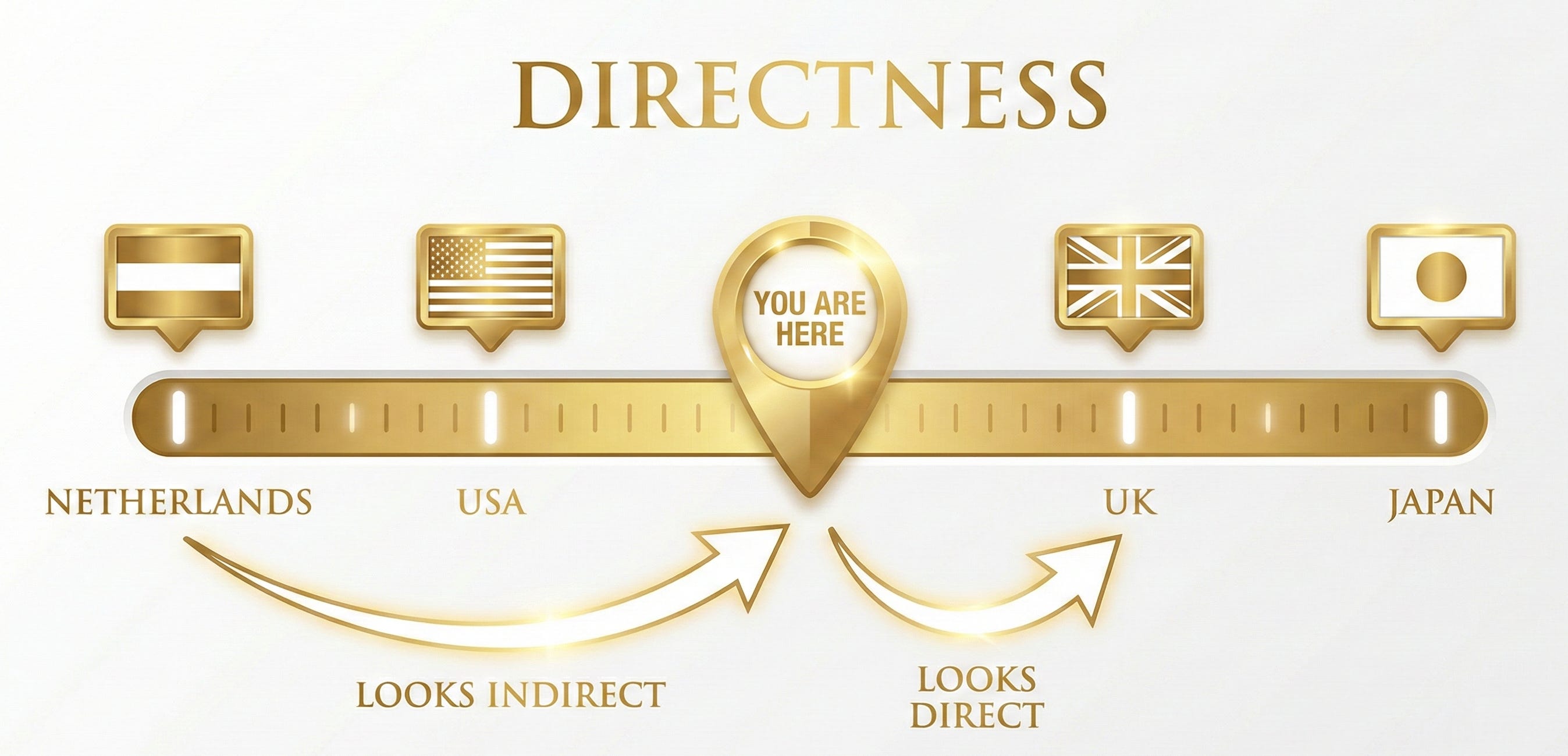
Here is the most critical concept for the modern leader: Relativity. A country’s position on these scales is irrelevant in isolation. It only matters relative to you.
The UK is “High Context” compared to the US. But place a Brit in a room with a Japanese team, and suddenly the Brit is the “Low Context” loudmouth. You don’t need to memorize the absolute coordinates of every nation. You just need to know: Are they to the left or right of me?
Your Breakthrough Roadmap
You are not just building a company; you are building an organism that must survive in diverse ecosystems. Here is your four-step execution plan:
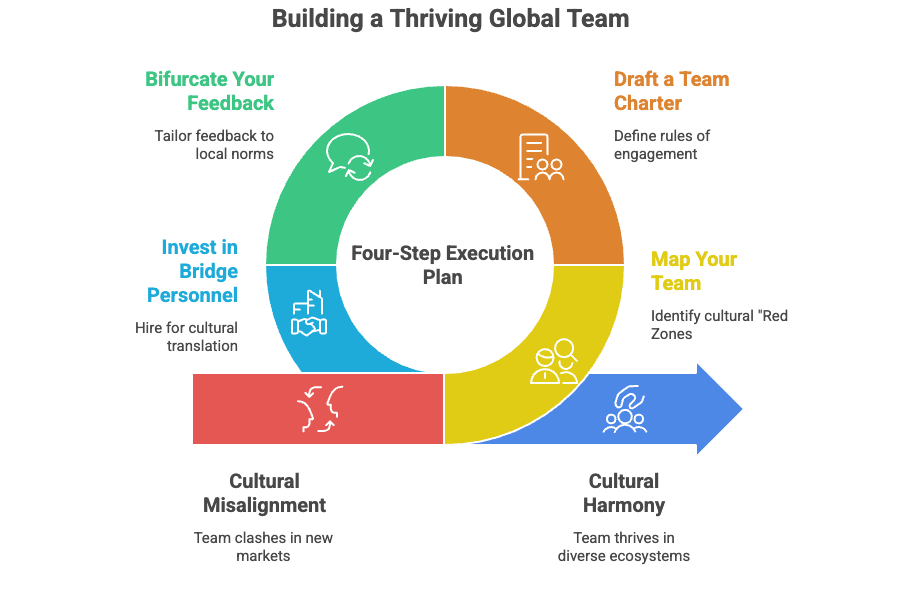
Map Your Team, Not Just Your Market Before you launch in a new country, map your leadership team against the local culture on the 8 scales. Identify the “Red Zones”—areas where your default style is the polar opposite of the local norm.
Draft a “Team Charter” Do not try to mimic the local culture (you will fail). Instead, create an explicit protocol. “In this team, we disagree openly, but we implement decisions as a unit.” Define the rules of engagement so culture is a choice, not an accident.
Bifurcate Your Feedback When managing a global team, separate performance reviews from relationship building. For your direct reports in hierarchical cultures, use formal settings for critique. For egalitarian teams, keep it fluid and constant.
Invest in “Bridge” Personnel Follow Spotify’s lead. Don’t just hire for skills; hire for cultural “translation.” Find local leaders who have lived in your HQ country, or expats who have deeply integrated into the local market. They are the glue that prevents your global empire from cracking.
Watch: Manufacturing Culture
See the tangible differences in execution when a global giant adapts its manufacturing to local realities. Watch how Tesla’s Berlin and Shanghai factories differ in output and style The differences: Berlin Tesla Model Y Performance v Shanghai Gigafactory Long Range
Relevance: This video provides a rare, physical comparison of how different cultural manufacturing philosophies (German precision vs. Chinese speed) manifest in the final product of a global brand.