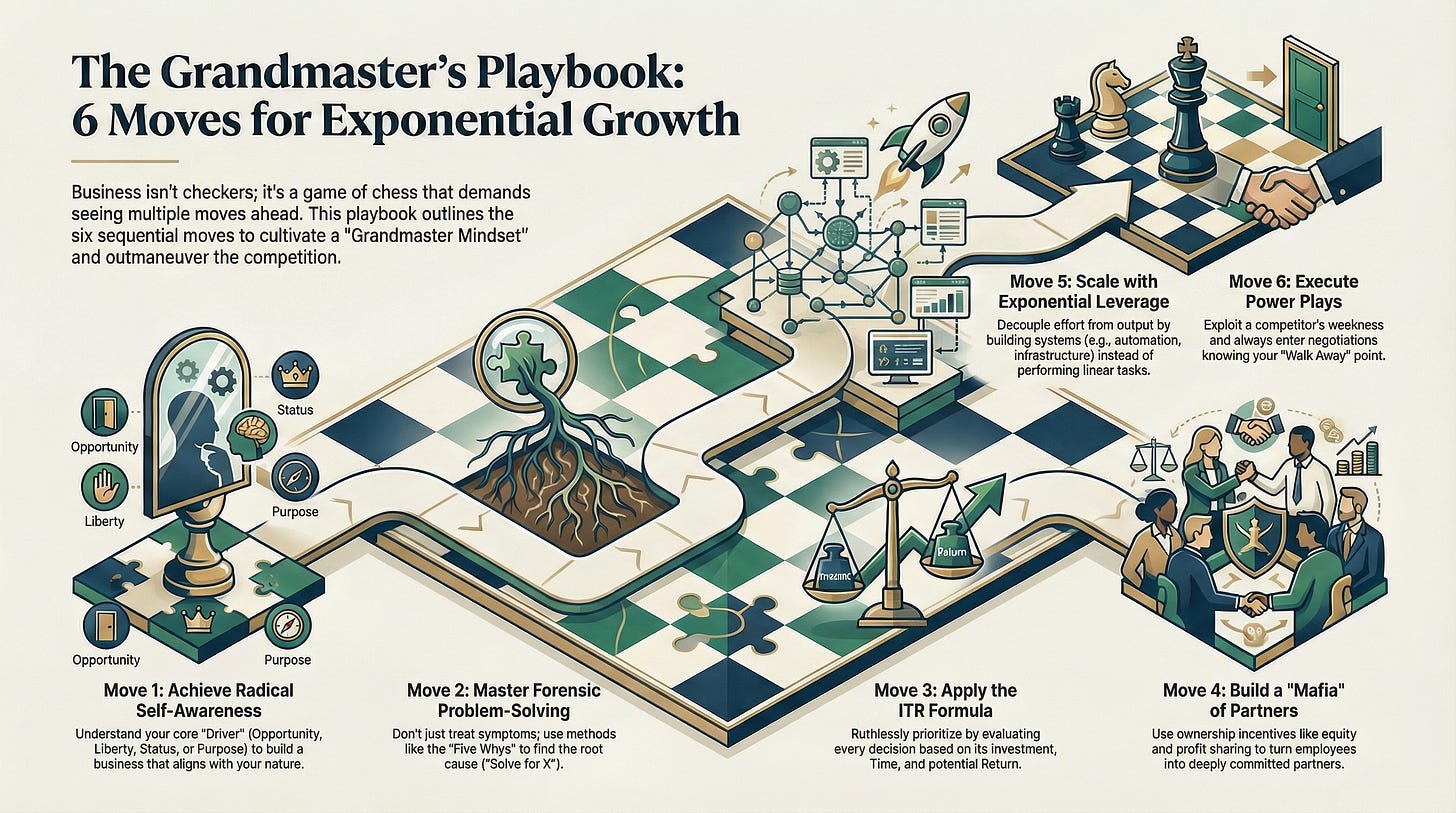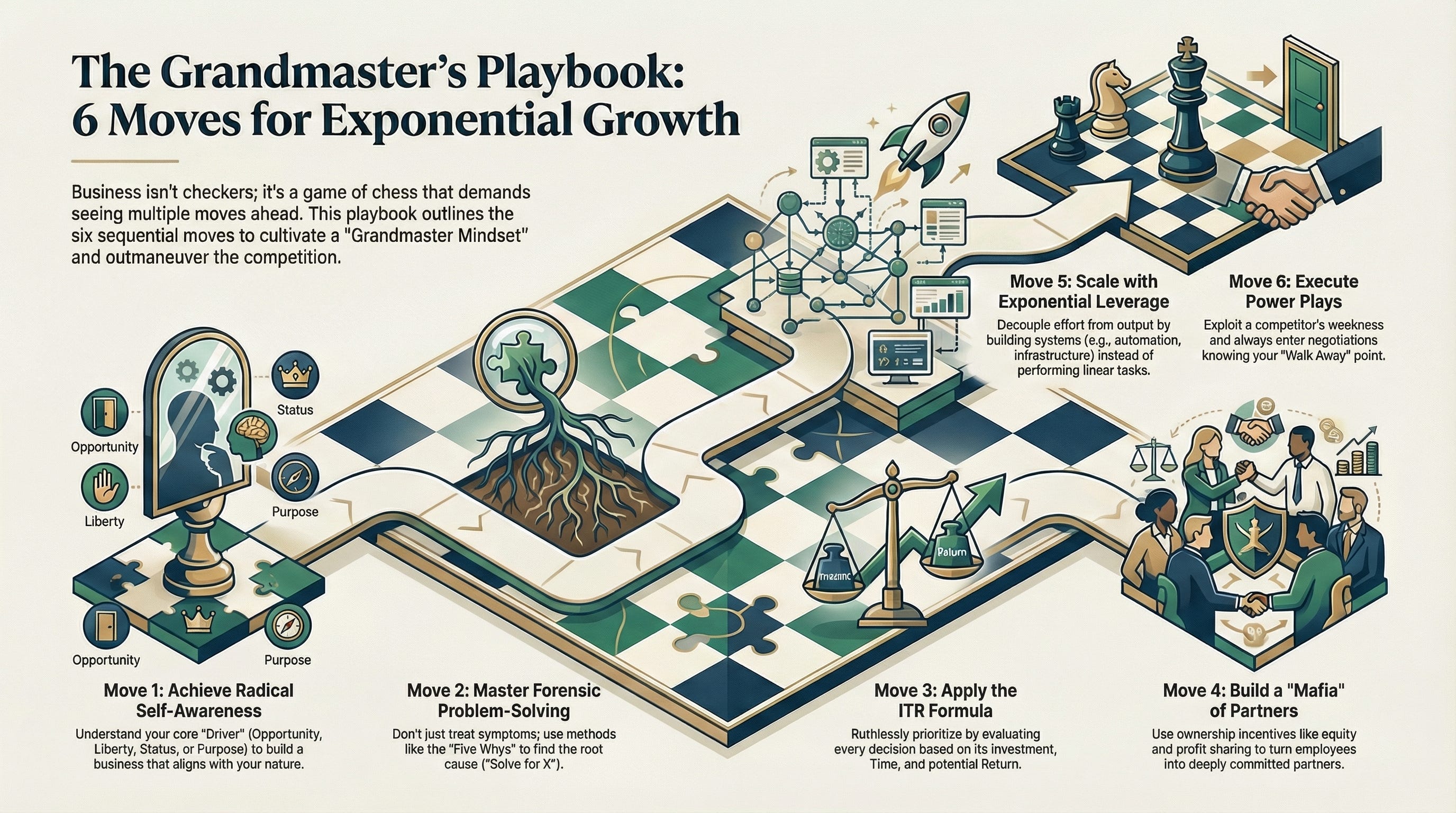
The Grandmaster’s Playbook
How to Outthink, Outmaneuver, and Outlast the Competition

Why This Matters Now - In a market defined by rapid obsolescence and algorithmic disruption, the margin for error has vanished. The only surviving competitive advantage is the ability to execute complex strategic sequences while your competitors are still reacting to yesterday’s news.

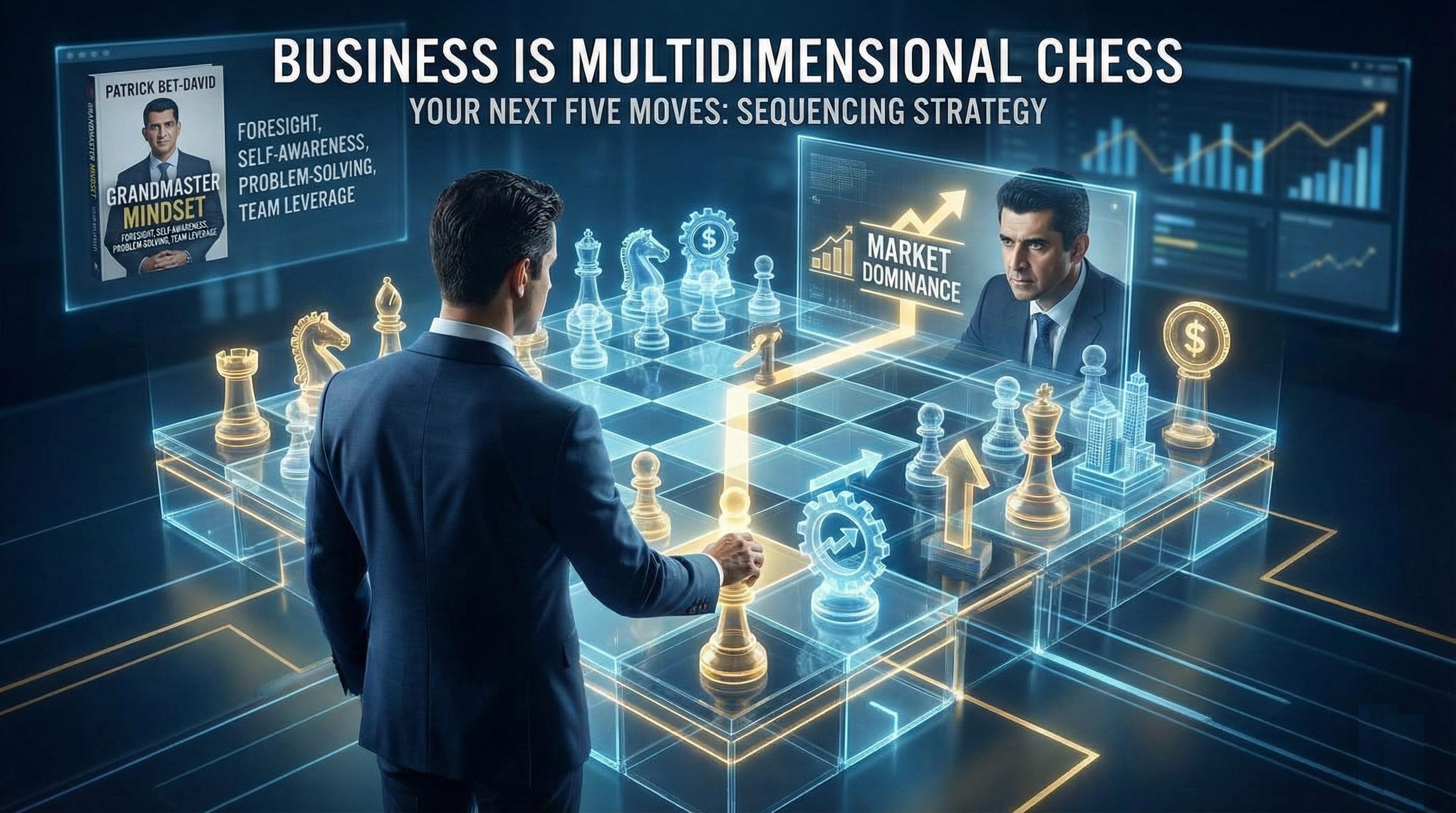
Business is not a game of checkers where you merely react to the piece directly in front of you. It is a multidimensional game of chess requiring high-level strategy, psychological mastery, and the ability to see around corners. While average players react to market shifts, grandmasters engineer them.
Patrick Bet-David, author of Your Next Five Moves, posits a fundamental truth: successful strategy is about sequencing. It is the ability to look at a decision and ask, “If I do this, what happens next? And then what?” This is the “Grandmaster Mindset.”
However, thinking ahead is only the beginning. To truly scale, you must combine this foresight with radical self-awareness, forensic problem-solving, and the leverage of a high-performance team.
Move 1: Radical Self-Awareness
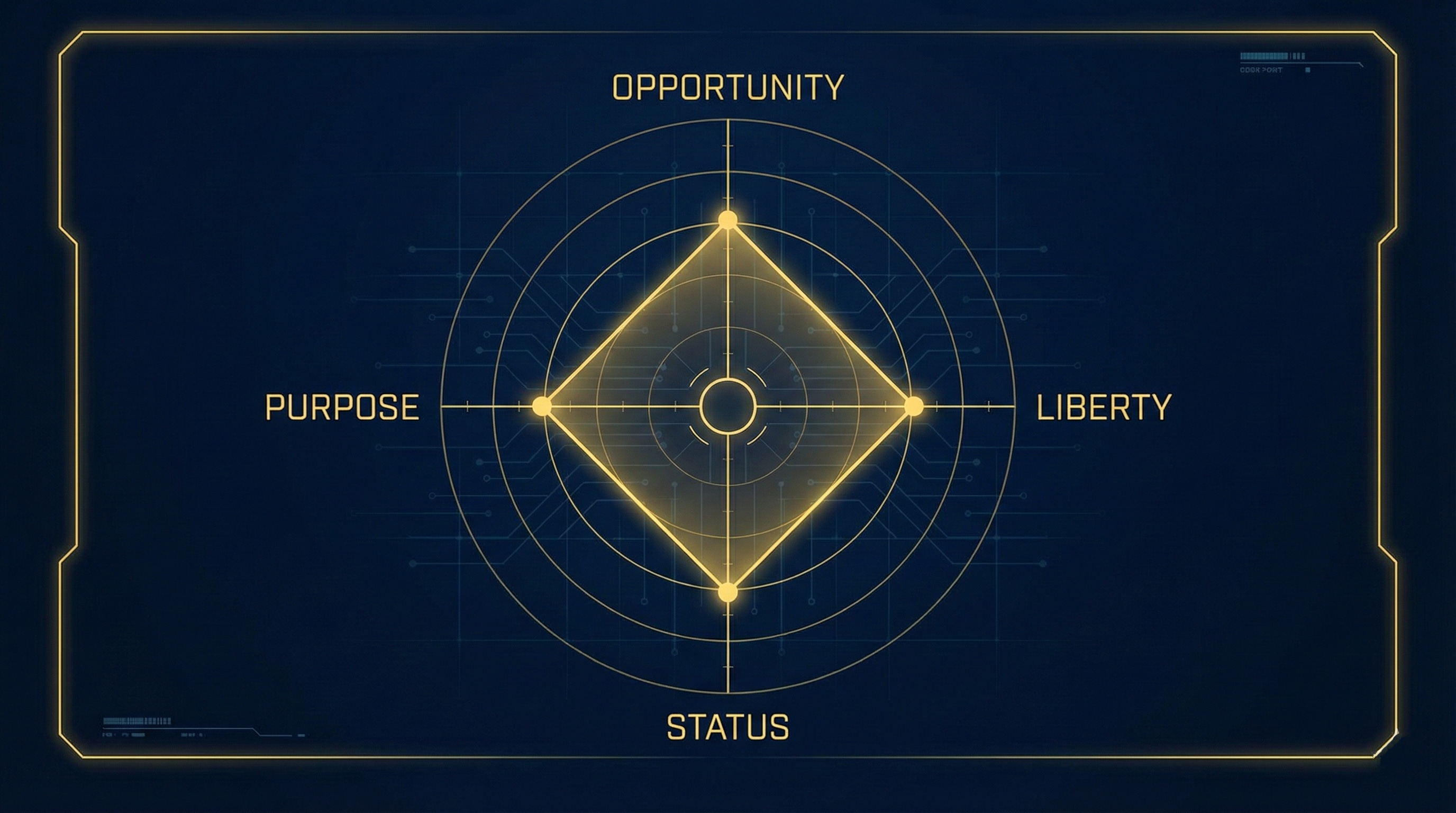
You cannot design a winning strategy until you understand the engine driving the vehicle. Most entrepreneurs fail because they build a business that contradicts their core nature. They chase “Opportunity” when they value “Liberty,” or they chase “Status” when they value “Purpose.”
Data from the Harvard Business Review indicates that a lack of self-awareness in leadership is a primary driver of organizational dysfunction. To correct this, you must identify your “Driver.”
The Four Drivers:
Opportunity: You are motivated by financial freedom and building wealth.
Liberty: You prioritize independence and control over your time.
Status: You are driven by recognition, legacy, and rank.
Purpose: You are compelled by a mission to change the world.
Consider Kevin Plank, the founder of Under Armour. Plank’s driver was clearly a mix of Opportunity and Status; he wanted to defeat the giant that was Nike. He didn’t just want to sell shirts; he wanted to change how athletes felt on the field. This clarity allowed him to bet everything—including maxing out his credit cards to the limit—because his internal driver aligned perfectly with the massive risks required to displace a market leader. He wasn’t looking for a lifestyle business; he was looking for war.
Watch how Kevin Plank discusses the grit and “burn the boats” mentality required to build a global brand: Kevin Plank on the relentless mindset behind Under Armour
Move 2: Solve for X (Forensic Problem Solving)
When revenue dips or morale sinks, the amateur leader panics and tries to patch the symptom. They throw money at marketing or host a team lunch. The grandmaster stops, looks at the data, and digs for the root cause. This is called “Solving for X.”
Jensen Huang, CEO of NVIDIA, is the ultimate practitioner of this. When NVIDIA was struggling in its early years, Huang didn’t just try to make faster graphics cards for gamers. He “Solved for X” by realizing the fundamental problem was limited computing architecture. He bet the entire company on CUDA, a platform that allowed GPUs to solve complex problems beyond graphics. This wasn’t a product fix; it was a fundamental architectural shift that laid the groundwork for the AI revolution twenty years later. He endured years of market skepticism because he knew he had solved the correct variable.
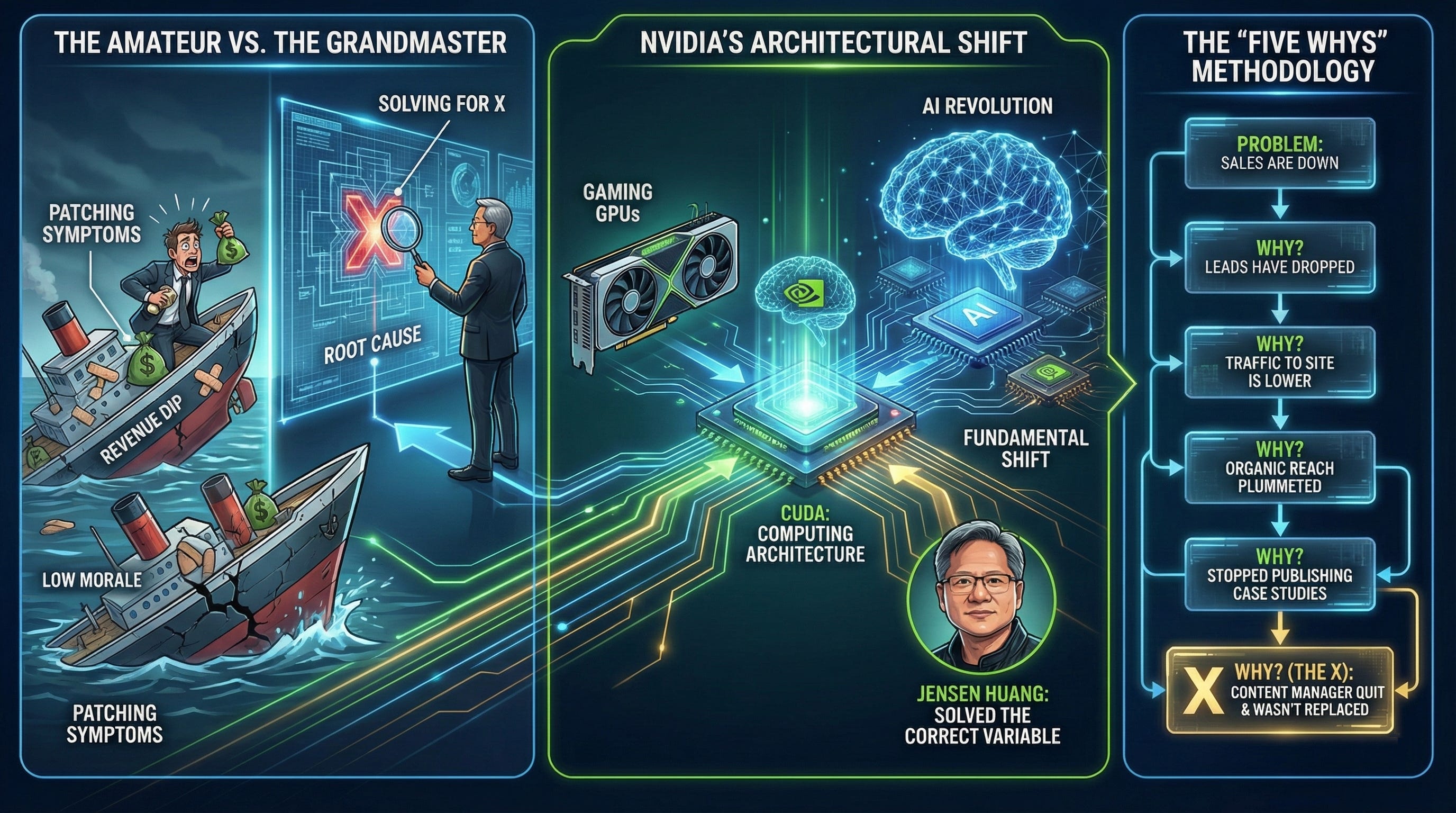
The “Five Whys” Methodology: To find X, you must drill down.
Problem: Sales are down.
Why? Leads have dropped.
Why? Traffic to the site is lower.
Why? Our organic reach plummeted.
Why? We stopped publishing case studies.
Why? (The X): The content manager quit three months ago and wasn’t replaced.
Watch Jensen Huang discuss his vision for the future of computing and AI infrastructure: Jensen Huang’s 2026 CES Keynote on the future of AI
Move 3: The Investment Time Return (ITR) Formula
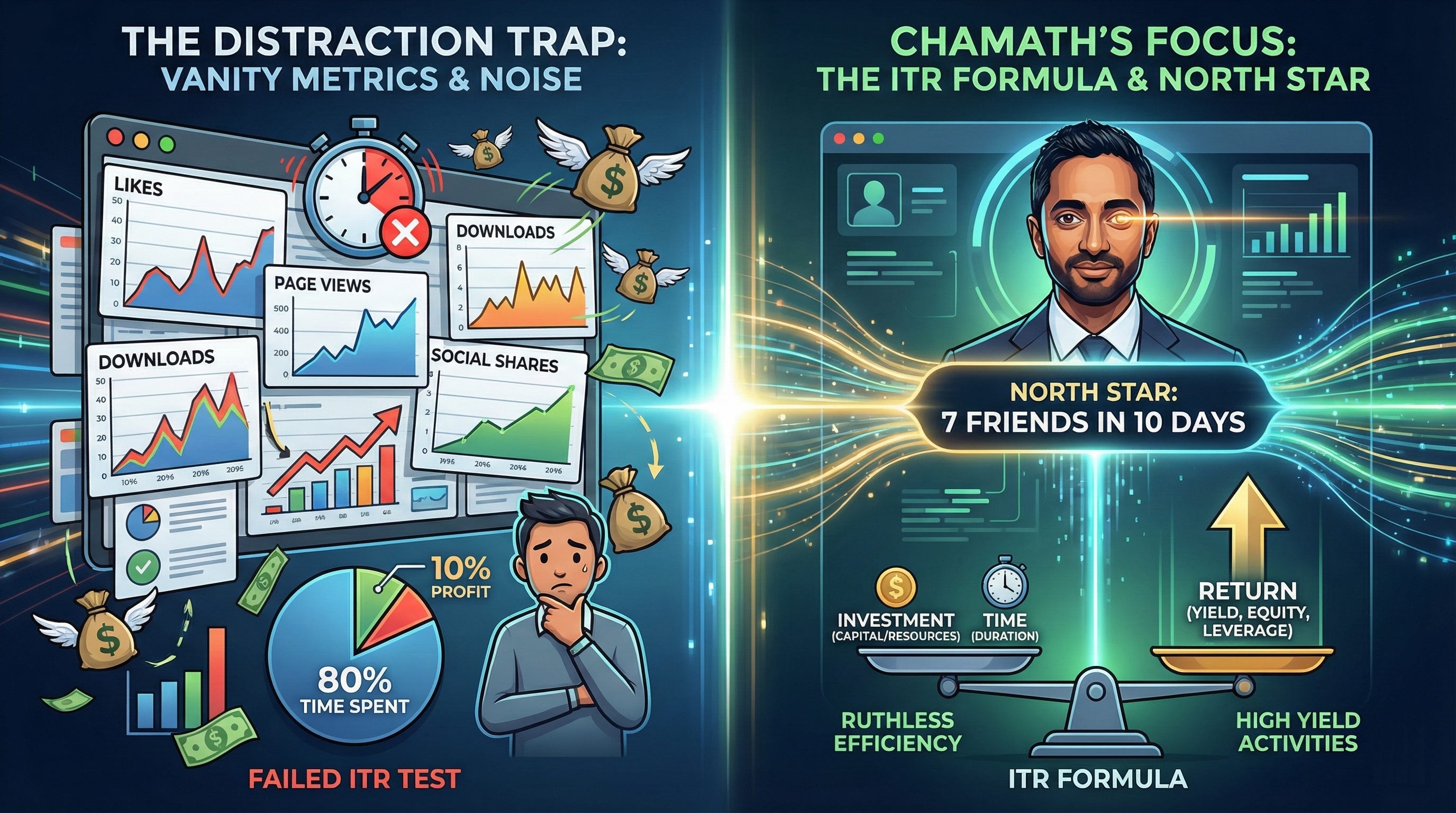
Every decision has a price tag, not just in dollars, but in focus. Chamath Palihapitiya, the venture capitalist behind Social Capital, operates with a ruthless efficiency regarding capital and time. His success at Facebook wasn’t about guessing; it was about rigorous application of resources to the highest yield activities.
Palihapitiya famously ignored “vanity metrics” and focused his team on a single, proven lever for growth: getting a user to seven friends in ten days. Everything else was noise. This is the ITR formula in action; if the investment of time didn’t directly impact that core metric, it was discarded.
To master the ability to reason, apply the ITR formula to every major pivot:
Investment: Capital and resources required.
Time: Duration until implementation and maturity.
Return: Financial yield, brand equity, or strategic leverage.
If you are spending 80% of your time on a product line that delivers 10% of your profit, you have failed the ITR test.

Watch Chamath Palihapitiya break down the “North Star” metrics that drive massive scale: Chamath Palihapitiya on the growth principles that built Facebook
Move 4: Building the “Mafia” (Culture and Compensation)
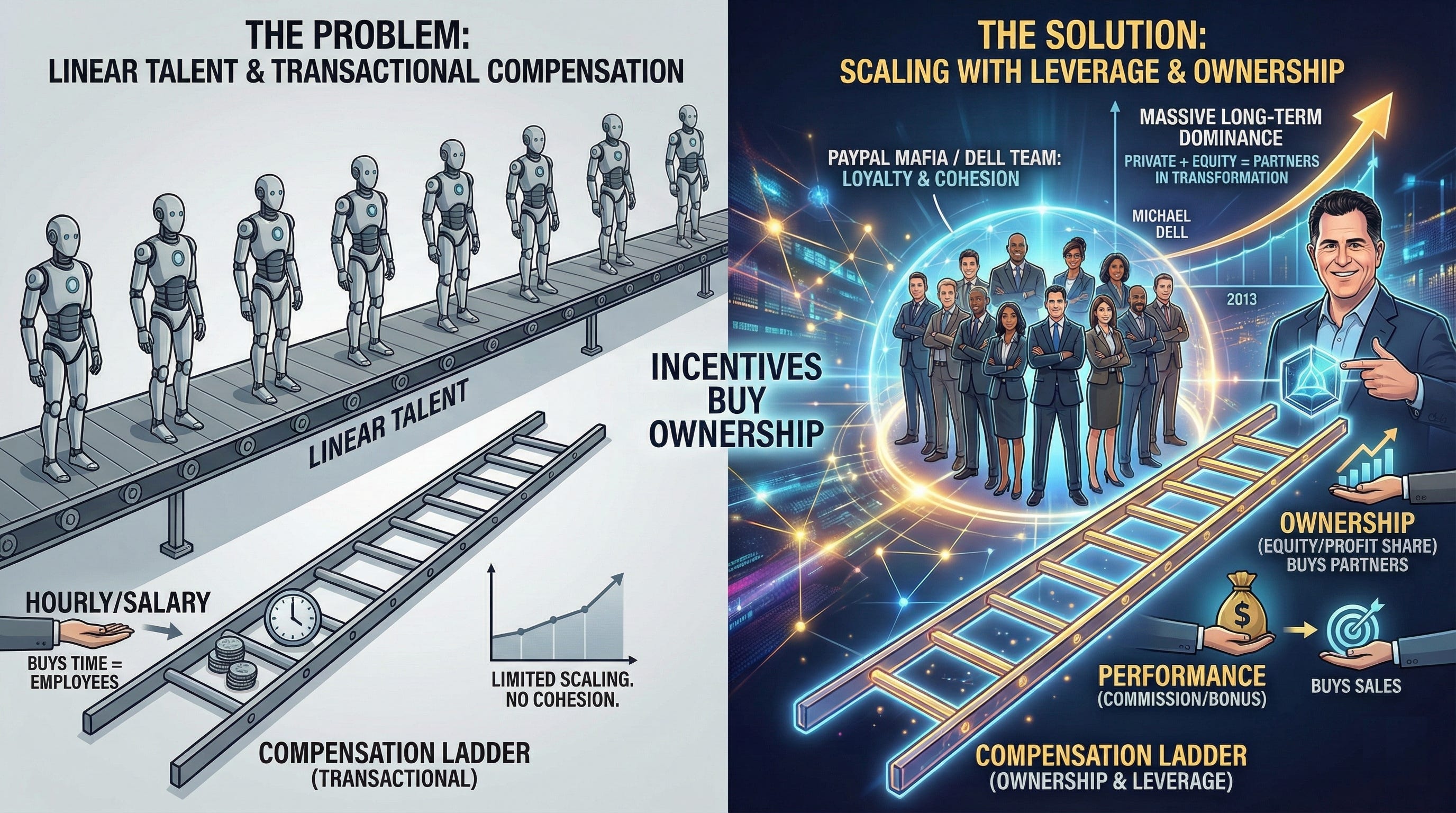
You cannot scale exponentially with linear talent. You need a team that operates with the loyalty and cohesion of a “family” or, as PayPal founder Peter Thiel put it, a “Mafia.”
This requires a shift in how you view compensation. Salaries buy time; incentives buy ownership.
The Compensation Ladder:
Transactional: Hourly/Salary. (Gets you employees).
Performance: Commission/Bonus. (Gets you sales).
Ownership: Equity/Profit Share. (Gets you partners).
Michael Dell understood this when he took Dell Technologies private in 2013. He needed a team that wasn’t focused on quarterly earnings reports but on a long-term restructuring of the company. By realigning the ownership structure, he turned his key executives into partners in the transformation, allowing them to make painful short-term decisions that led to massive long-term dominance in the server and cloud infrastructure space.
Watch Michael Dell explain the strategic advantage of taking a company private to focus on long-term value: Michael Dell on the strategy of going private
Move 5: Scaling with Leverage (Linear vs. Exponential)
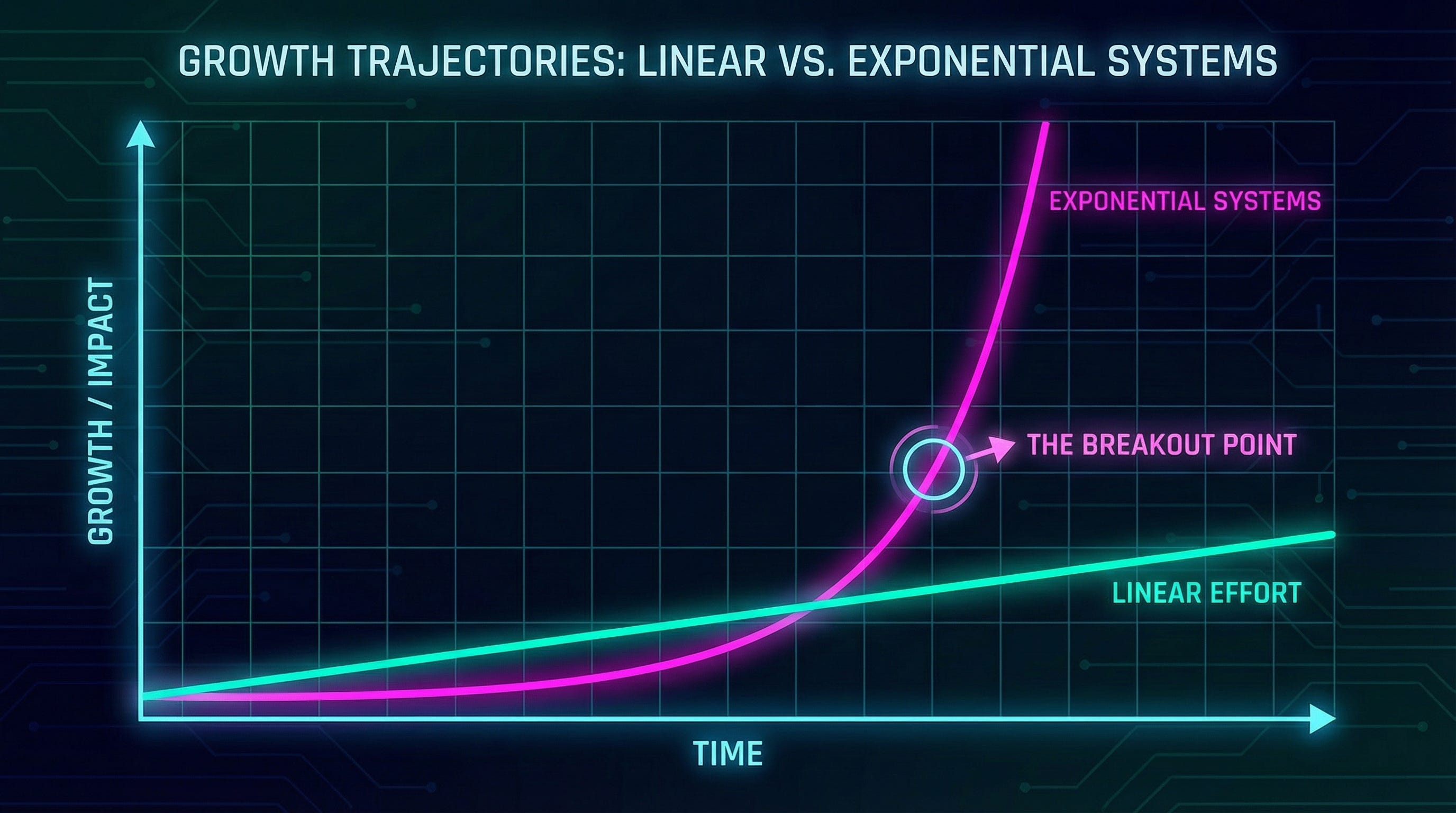
The trap of the “solopreneur” is linear growth. You work an hour; you get paid for an hour. To reach the grandmaster level, you must decouple effort from output.
Linear Tasks: Answering emails, manual data entry, personal sales calls. Exponential Systems: Automated email sequences, AI-driven CRM management, training a sales manager who trains ten agents.
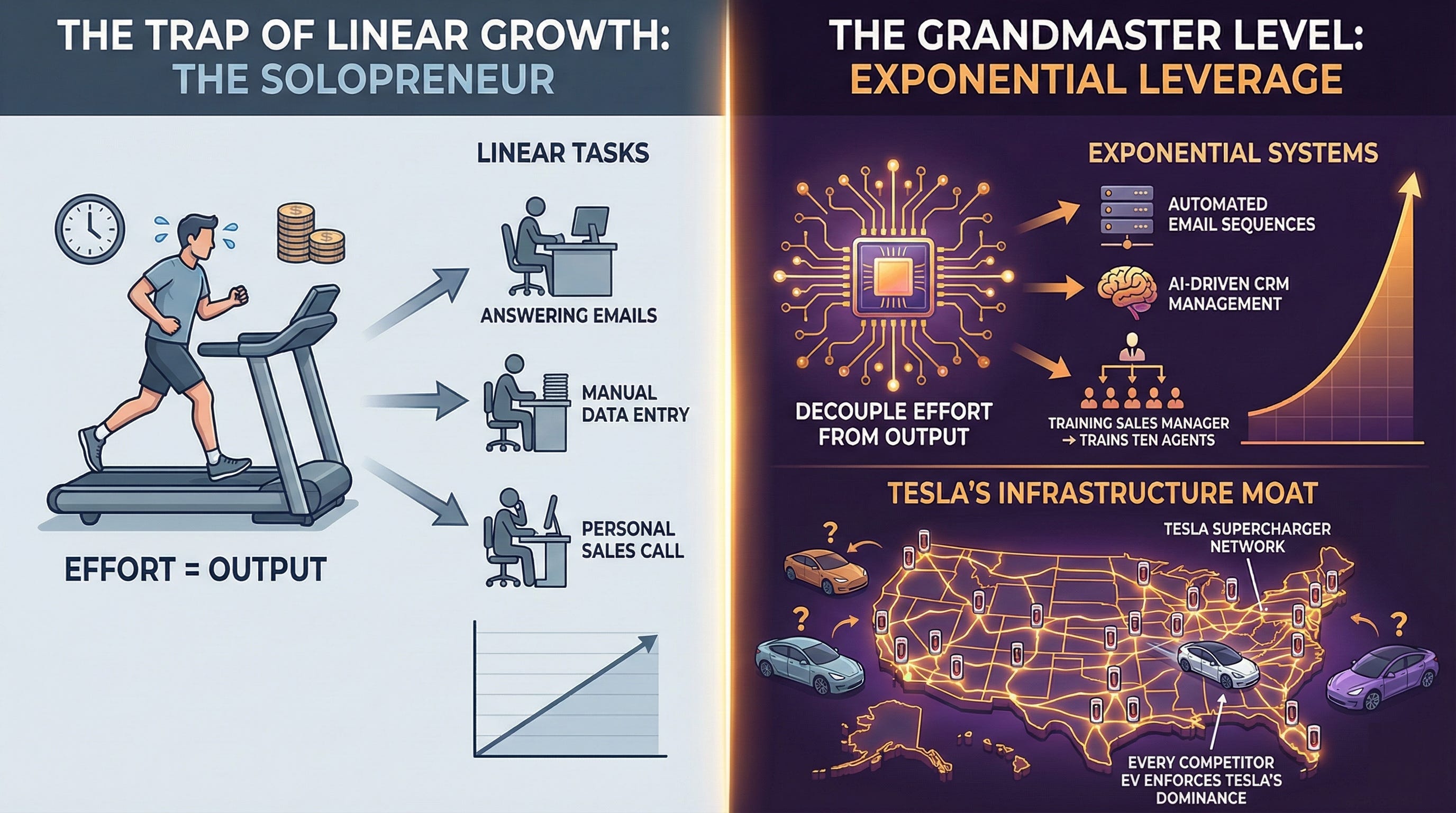
Tesla provides the ultimate example of exponential leverage. They did not just build electric cars; they built the Supercharger network. This infrastructure is a leverage play. Every time a competitor sells an EV, the customer still looks at Tesla’s charging network with envy. Tesla leveraged infrastructure to create a defensive moat that competitors are struggling to cross a decade later.
Move 6: Power Plays and Negotiation
Sometimes, the market is crowded, and standard growth is too slow. This is when you deploy a “Power Play.” This involves identifying a competitor’s weakness (usually their size, speed, or arrogance) and exploiting it to disrupt the narrative.
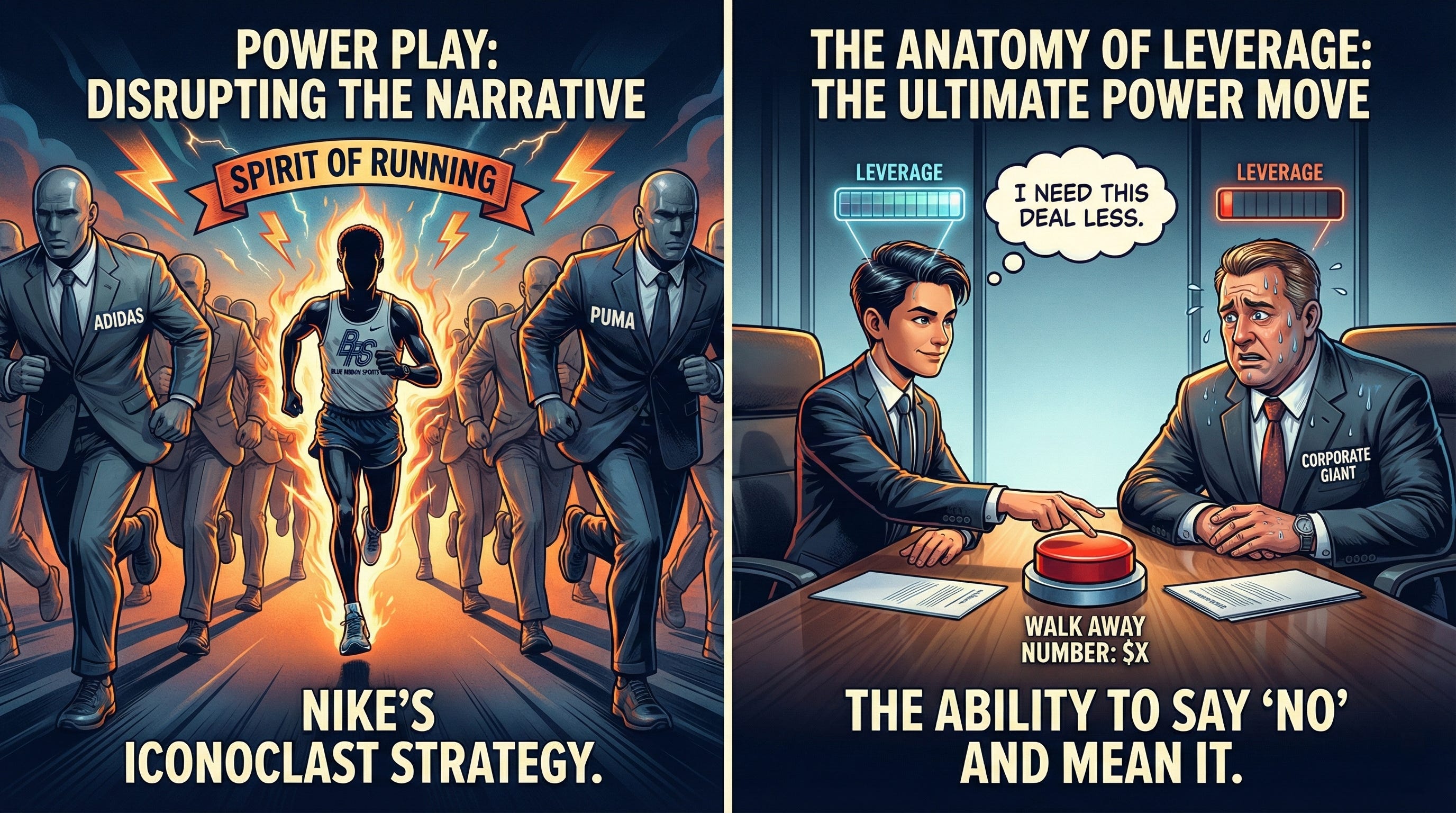
When Nike was a scrappy upstart called Blue Ribbon Sports, they couldn’t outspend Adidas or Puma. Instead, Phil Knight engaged in a power play by signing athletes who were rebels and iconoclasts, aligning the brand with the “spirit” of running rather than the “business” of shoes.
The Anatomy of Leverage: In any negotiation, leverage belongs to the person who needs the deal less. As many top dealmakers demonstrate, the ability to say “No” and mean it is the ultimate power move. Before entering a negotiation, identify your “Walk Away” number. If you don’t have one, you have already lost.
Intrapreneurship: The Internal Grandmaster
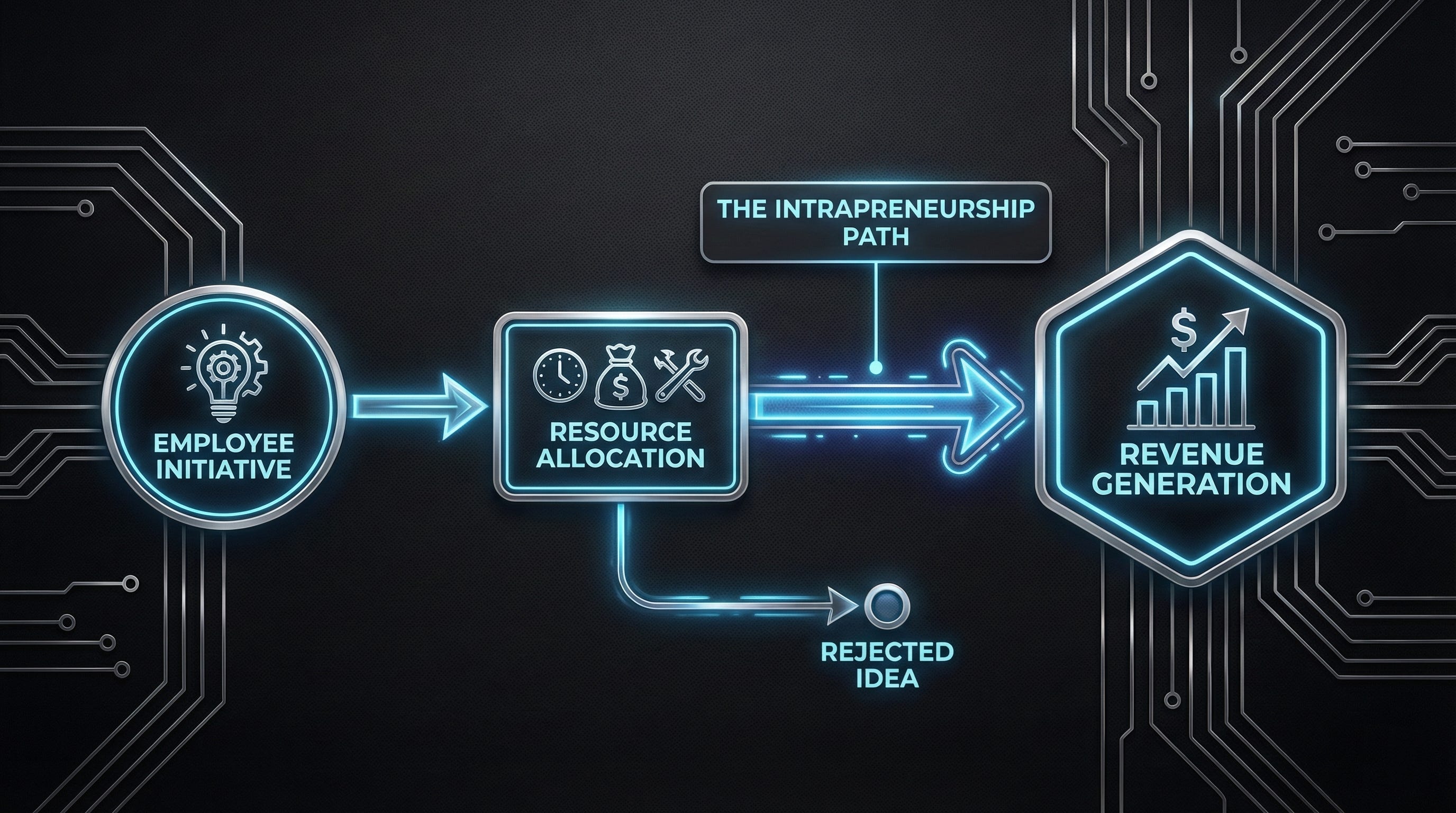
Not everyone needs to be the CEO to be a grandmaster. The “Intrapreneur” is an employee who treats their role as a standalone business. They don’t ask for permission to save money; they fix the process and present the results.
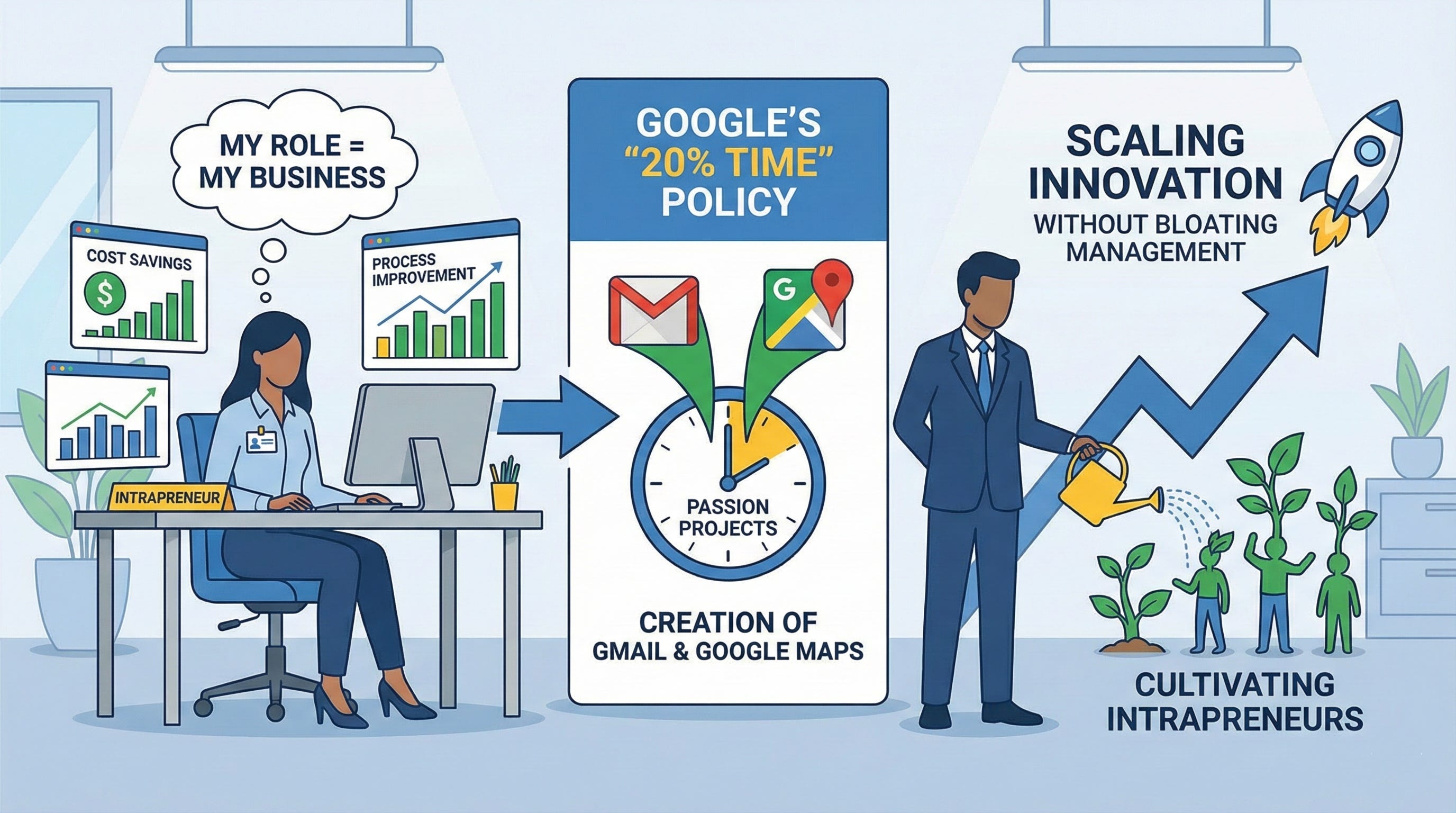
Companies like Google formalized this with “20% time,” which allowed engineers to work on passion projects. This policy led to the creation of Gmail and Google Maps. For the ambitious leader, cultivating intrapreneurs is the secret to scaling innovation without bloating management.
Your Breakthrough Roadmap
You have the theory; now execute the moves. Here is your four-step plan to shift from reactionary to strategic:
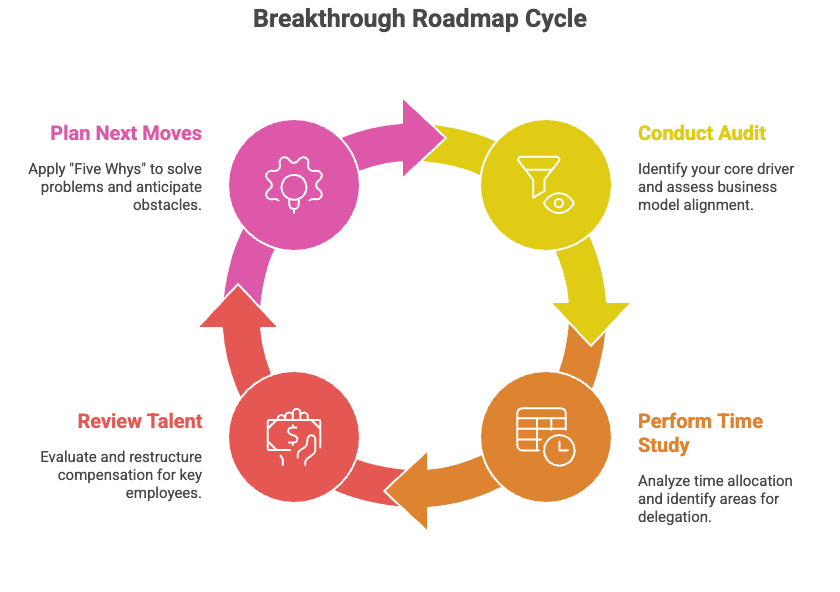
The Audit (48 Hours): Identify your Driver (Opportunity, Liberty, Status, Purpose). Be ruthlessly honest. If your current business model conflicts with your driver, map out a 12-month pivot plan immediately.
The Time Study (1 Week): Track every hour you work for five days. Categorize tasks as “Linear” or “Exponential.” If less than 20% of your time is spent on Exponential activities (systems, strategy, leadership), delegate or automate two Linear tasks immediately.
The Talent Review (1 Month): Review your top three key employees. Does their compensation plan offer them a path to wealth? If not, restructure their incentives to align with company growth benchmarks.
The Next Five Moves (Quarterly): Before your next leadership meeting, write down your current biggest problem. Apply the “Five Whys” to find the root cause. Then, map out the next five sequential steps to solve it, anticipating the obstacles at each stage.