

The Hidden Power of Failure
How Embracing Errors Fuels Unstoppable Success

Why This Is Worth Reading - In a landscape where 90% of ventures falter, understanding how to harness mistakes separates the resilient from the regretful. This guide equips you with proven strategies drawn from global icons, transforming setbacks into your greatest assets. Master these principles, and you'll build a life of purpose-driven growth that endures any challenge.
Failure strikes without warning, yet it reveals the core of who you are. Every leader worth their salt has faced it head-on—not as a defeat, but as the raw material for dominance. Consider the relentless drive behind Richard Branson's empire: Virgin Group's early stumbles in aviation taught him to pivot with precision, turning near-bankruptcies into a fleet spanning oceans. Mistakes demand you confront your purpose, stripping away illusions to forge something unbreakable. They test your resolve, but only those who extract the lesson emerge stronger, ready to lead with unyielding clarity.

You err because you act. Bold moves—launching a product, negotiating a deal, or chasing a vision—invite miscalculations. Stagnation is the true enemy; it robs you of progress while fear whispers excuses. Data underscores this: around 20% of businesses collapse in their first year, often from untested assumptions. Yet those who push forward prove their mettle. Airbnb's founders, scraping by selling custom cereal boxes during a cash crunch, didn't retreat; they refined their model, scaling to a global powerhouse. Action breeds errors, but errors breed mastery when you refuse to cower.
At the heart of every setback lies untapped potential. A botched presentation sharpens your delivery; a failed investment hones your instincts. Pause amid the chaos and demand: What truth does this reveal? Dwelling on blame wastes energy; mining for insight builds empires. Sara Blakely, creator of Spanx, endured countless prototype rejections before reshaping an industry—each "no" clarified her path to billions. This extraction process isn't optional; it's the forge where leaders are tempered.

To command your growth, follow this disciplined framework:
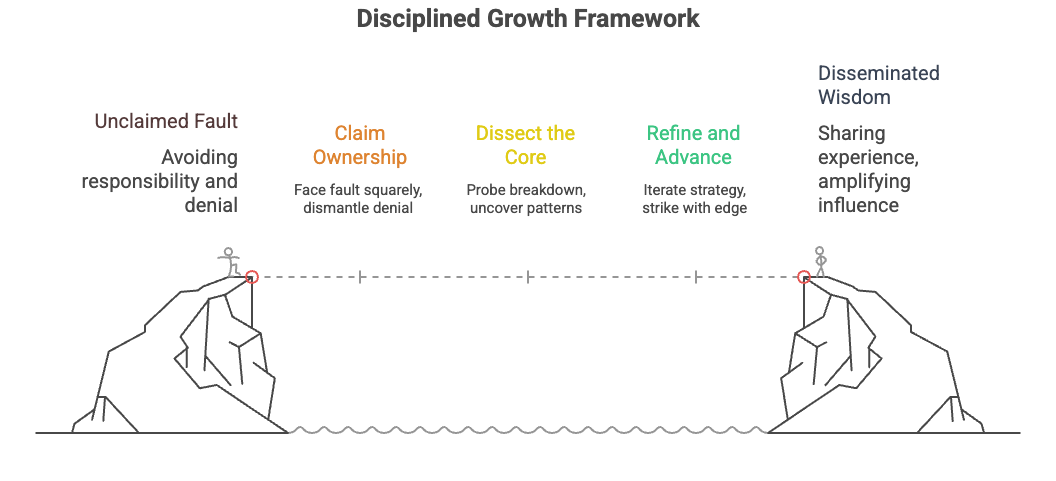
Claim Ownership: Face the fault squarely, no deflections. This act alone shifts power back to you, dismantling denial.
Dissect the Core: Probe the breakdown—insufficient research, impulsive choices, or hidden risks? Precision here uncovers patterns.
Refine and Advance: Apply the gained knowledge ruthlessly. Iterate your strategy and strike again, armed with superior edge.
Disseminate the Wisdom: Voice your experience—in boardrooms, writings, or dialogues. This amplifies your influence while shielding others from similar pitfalls.
Global brands embody this cycle. 3M's accidental adhesive flop birthed Post-it Notes, a staple in offices worldwide. Slack emerged from a gaming project's collapse, redirecting efforts to revolutionize team communication. Uber navigated regulatory battles and early user distrust by adapting swiftly, now dominating ride-sharing. These triumphs stem not from perfection, but from deliberate evolution through error.
The numbers paint a stark picture of what's at stake. Nearly half of all businesses don't survive five years, with cash flow mismanagement dooming 82% of failures. Market misalignment claims another 35%, highlighting the cost of ignoring feedback. Yet, for those who learn, the rewards compound.
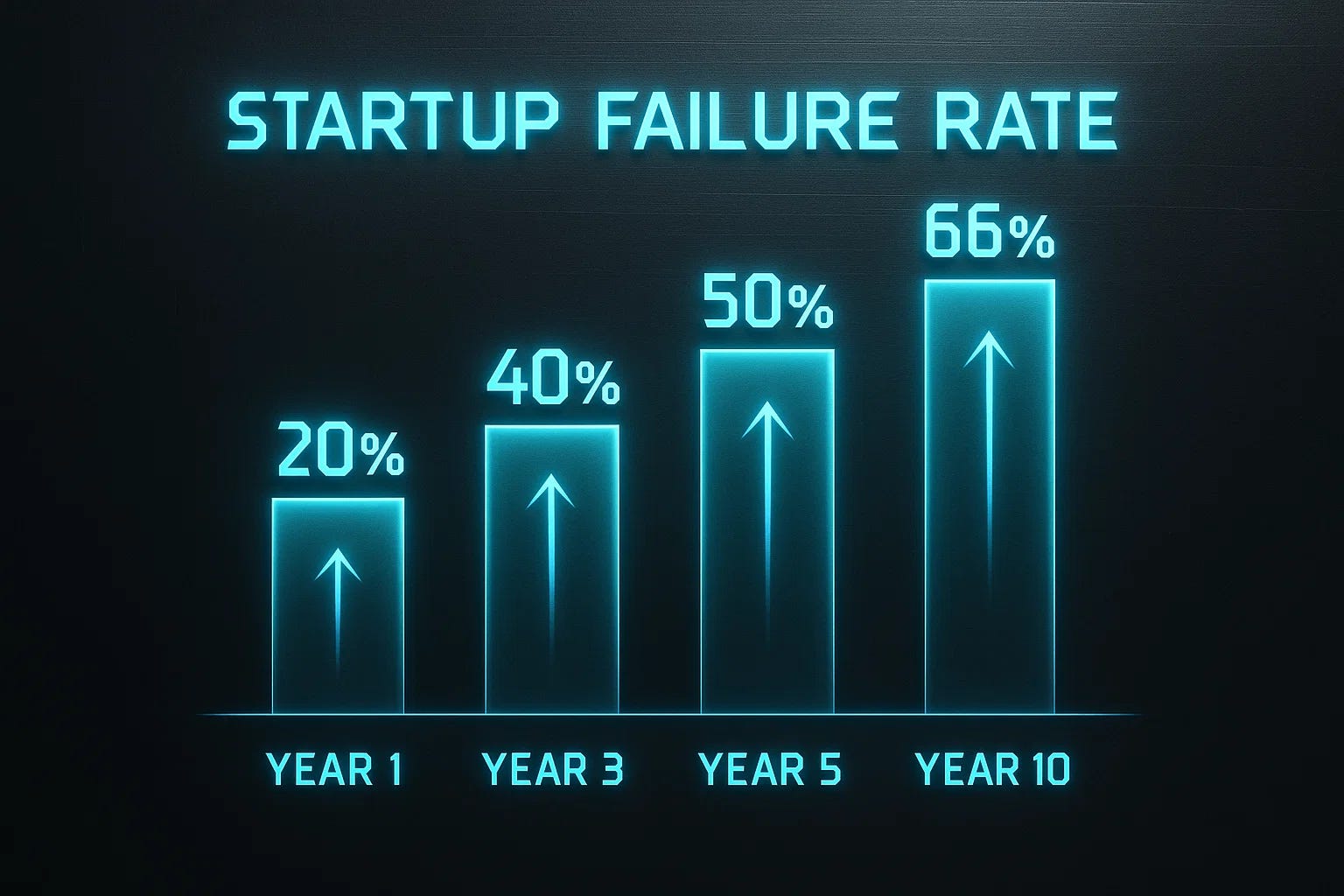
Diving deeper, the anatomy of failure reveals actionable truths. No demand for the offering? That's a signal to realign with real needs. Competition overwhelming? Time to innovate fiercely. Watch this TED-Ed animation on overcoming mistakes, viewed over 2 million times, for a visual breakdown of resilience in action:
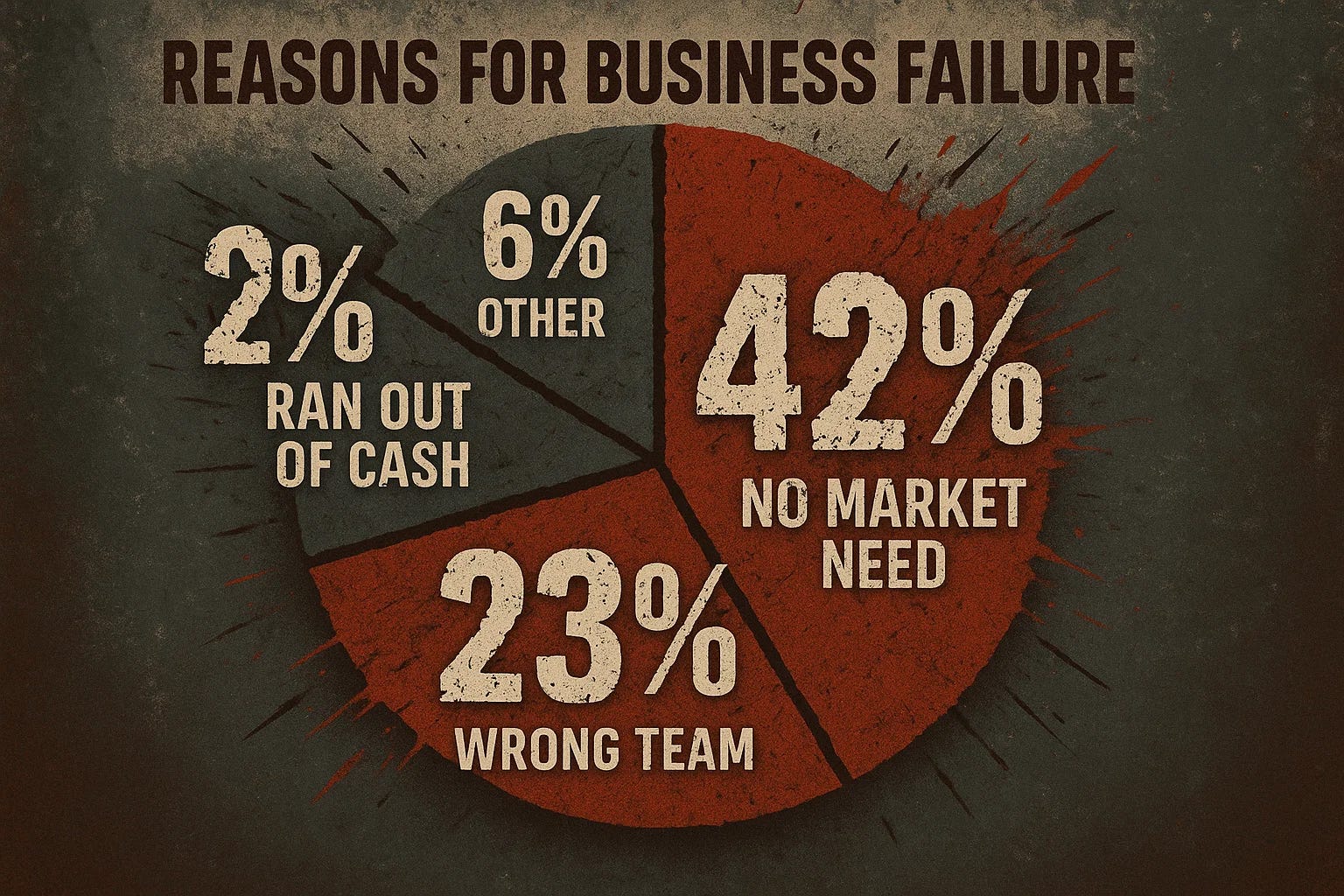
History brims with breakthroughs born from blunders. Alexander Fleming's contaminated lab dish yielded penicillin, saving millions. These aren't anomalies; they're the rule for those attuned to opportunity. In today's arena, where 90% of startups perish, the survivors treat errors as intel, not indictments. Branson himself credits aviation mishaps for Virgin's customer-first ethos, proving that purpose-aligned reflection turns peril into power.
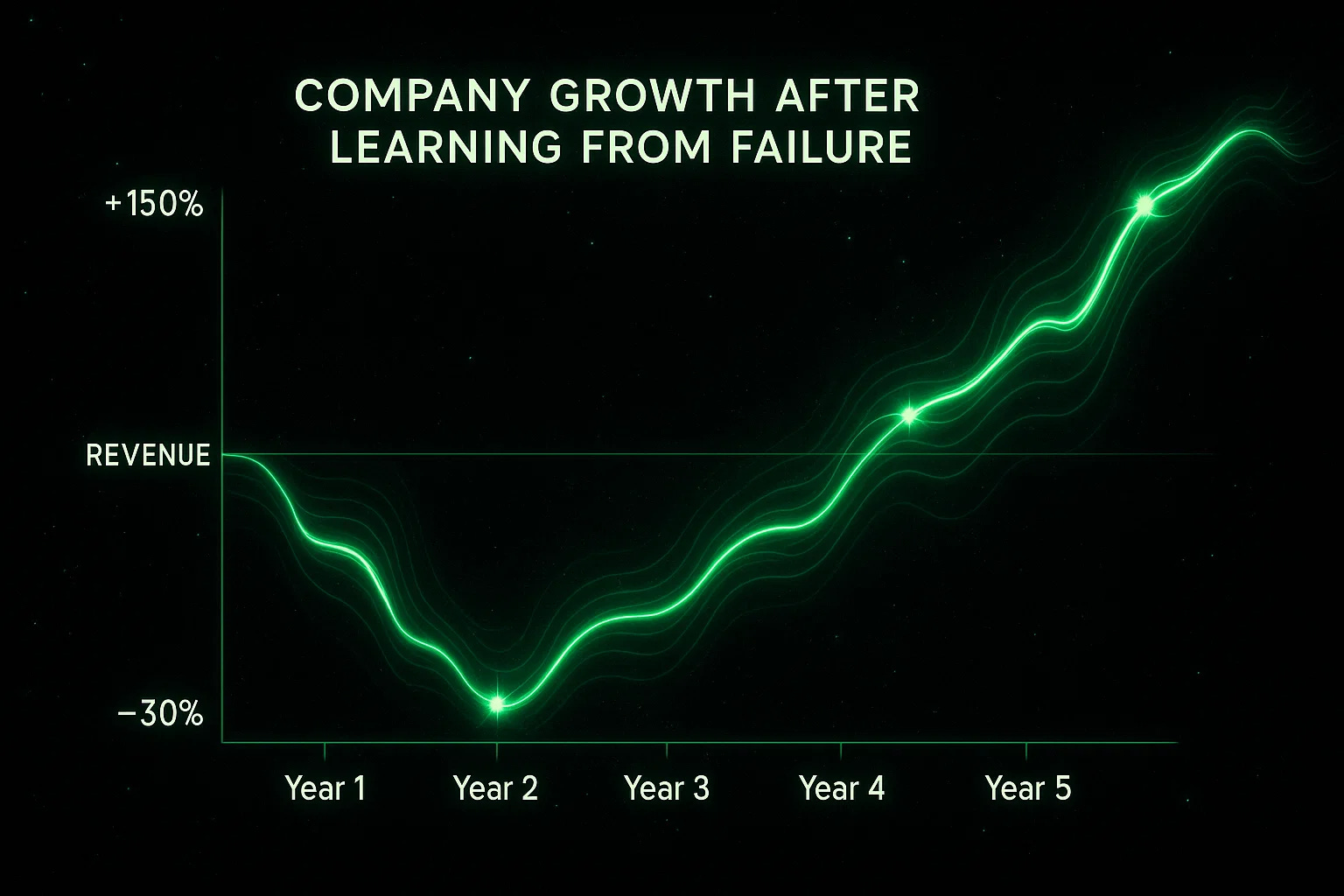
To deepen this, explore Diana Laufenberg's TED Talk on learning through mistakes, with millions of views:
It reinforces how educators and leaders alike thrive by embracing imperfection.
You stand at the threshold of transformation. Failure isn't your foe—it's your forge. Rise now and wield it.
Seize Your Edge: A Four-Step Mastery Protocol
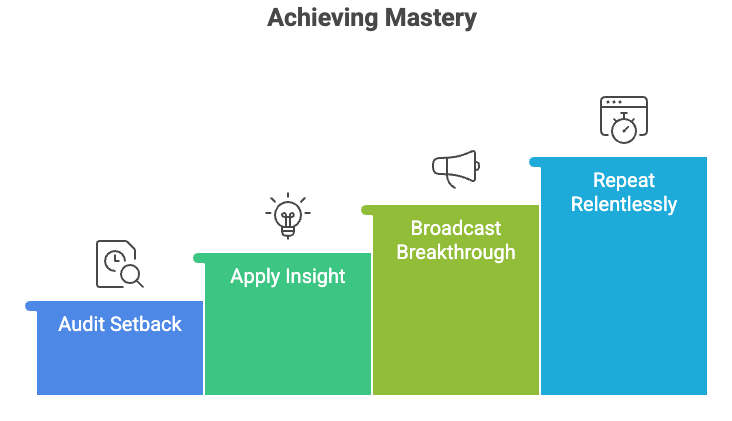
Audit Your Last Setback: Today, document one recent error in detail—what triggered it, and what one lesson it demands?
Apply the Insight Immediately: Select a current challenge and integrate that lesson; track the shift within a week.
Broadcast Your Breakthrough: Share the story with a trusted circle or online—watch how it inspires and strengthens your network.
Repeat Relentlessly: Make this ritual weekly. Over time, you'll cultivate an unbreakable core, turning every stumble into supremacy. Act now—your legacy awaits.
Ken, this might be one of the most important pieces I’ve read in a while—not just because of the topic, but because of the way you approached it. Too often when people talk about failure, they either romanticize it (“fail fast, fail often”) or avoid it altogether as if acknowledging it makes them weak. What you’ve done here is neither. You’ve treated failure with the seriousness it deserves—naming it as the raw material of transformation, not the scarlet letter of defeat.
What really stayed with me is how you positioned action as the doorway to error. That’s profound. The only reason we stumble is because we dared to step. You reminded me that stagnation, comfort, and indecision may feel safe, but they slowly atrophy the muscle of courage. Bold action, even when it leads to mistakes, is evidence of life being lived at full volume. And it’s only in that space that real mastery can be forged.
Your examples prove it’s not theory—it’s a pattern that repeats across history:
Richard Branson taking Virgin to the edge of collapse, only to turn near-failures into a global empire.
Airbnb selling cereal boxes just to survive, then refining their vision into a billion-dollar ecosystem.
Sara Blakely staring down rejection after rejection, turning each “no” into fuel until she reshaped an entire industry.
These aren’t anomalies—they’re archetypes. They show us that greatness is built less on uninterrupted wins and more on relentless adaptation.
The line that hit hardest for me: “Dwelling on blame wastes energy; mining for insight builds empires.” That distinction alone could change the way people lead. Because failure isn’t just an external event—it’s also an internal reckoning. Do we spiral into shame and excuses, or do we dissect it, extract the lesson, and integrate it into who we’re becoming?
Your four-step framework—Claim, Dissect, Refine, Disseminate—belongs on the wall of every boardroom. Why? Because it’s a ritual for turning chaos into clarity. Imagine if leaders made this their weekly discipline: naming one mistake, analyzing it without ego, applying the lesson immediately, and then sharing it with others. The ripple effect would be enormous. Teams wouldn’t just recover from missteps; they’d grow stronger and more united because of them.
What I also loved was how you tied in examples of accidental innovation—Post-it Notes born from a “failed” adhesive, Slack rising from the ashes of a gaming flop, Fleming’s contaminated dish giving us penicillin. These stories remind us that the future isn’t shaped by perfection but by the willingness to see possibility in the rubble.
And maybe that’s the real gift of failure: perspective. It strips away illusions, forces us to see what’s real, and teaches us resilience that no textbook or TED Talk can ever fully capture. As you said, “failure isn’t your foe—it’s your forge.” That line alone is worth meditating on.
For me, the deeper takeaway is this: failure is inevitable, but regret is optional. Regret comes when we stop, when we shrink, when we let the sting of a mistake convince us to never try again. But when we stay in motion, keep iterating, and keep extracting the gold from the rubble, failure transforms from something we fear into something we can trust.
Ken, thank you for writing this. It’s more than a post—it’s a manifesto for resilience. And in a world where 90% of ventures stumble and half of businesses collapse in five years, your words are a lifeline for anyone standing in the ruins wondering if they should get back up. The answer, as you’ve so powerfully shown, is yes. Get up. Refine. Advance. Share. Repeat.
Because in the end, failure doesn’t define us. How we respond does.
It's taken time for me to see past some failures but now they are the best lessons. As Thomas Edison says, "I have not failed. I've just found 10,000 ways that won't work." - The lesson from my last startup was to figure out the unknown unknowns and find on blue oceans. Anther advantage over time is how so many people have crossed our path, so we understand a better fit for colleagues and have one or two we can tap when the time is right.