

The Invisible Curriculum
Mastering the Unwritten Laws of High-Stakes Entrepreneurship

Why This Matters Now - It is 11 PM on a Thursday. Your lead investor just called to say the round is dead: 48 hours before payroll. Your co-founder is suggesting bankruptcy. The textbook answer doesn’t exist. What you do in the next 72 hours will determine whether your company survives or becomes a cautionary tale.
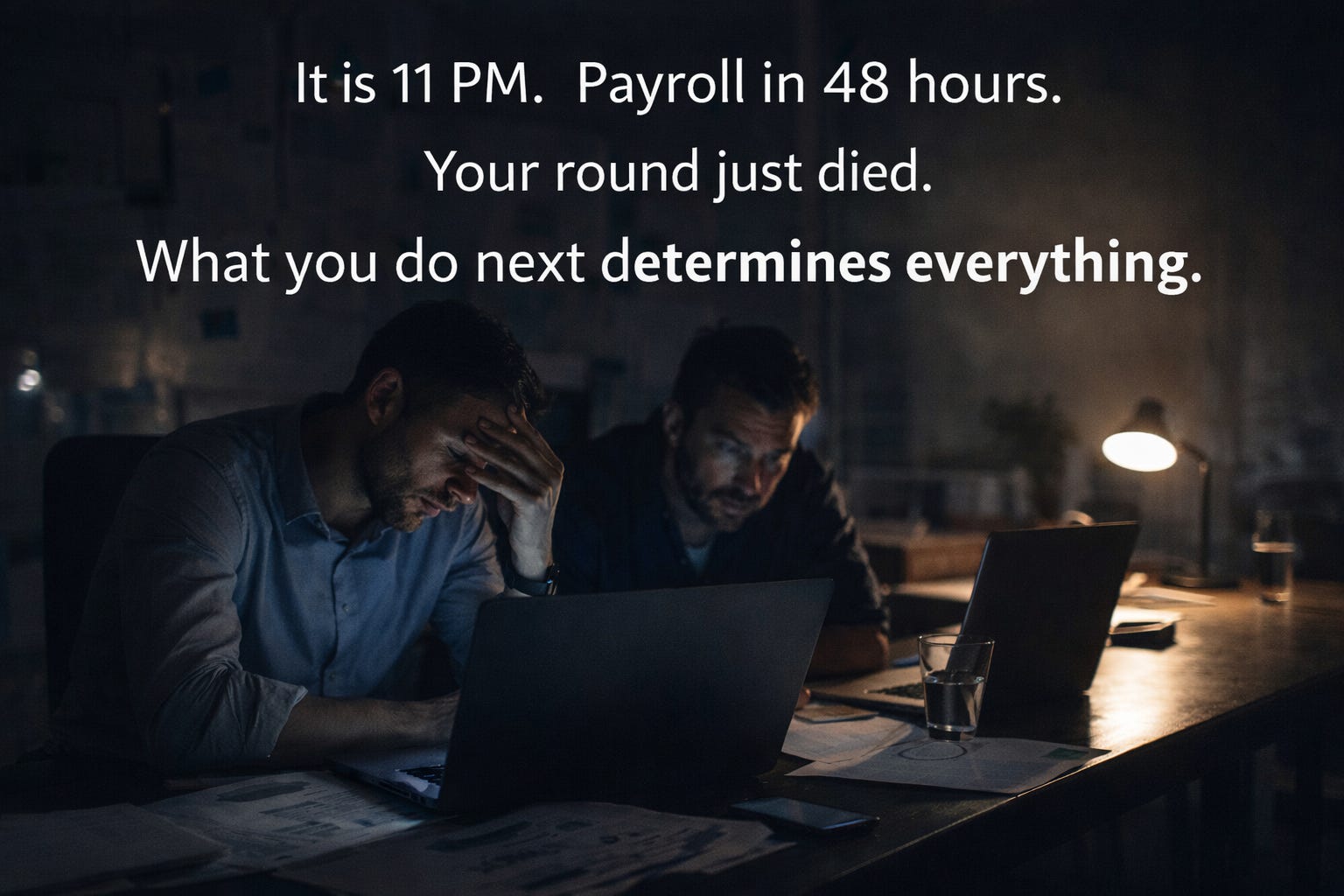
This is not an article about tactics. It’s about the invisible skills that decide outcomes when tactics stop working. While an MBA provides the vocabulary of business, it rarely prepares a founder for the psychological and relational mechanics of a crisis. To build a company that lasts, you must master what we call the Invisible Curriculum: a set of high-stakes competencies that cannot be graded, only forged through the volatile process of building.
The Invisible Curriculum isn’t a mindset. It’s not hustle. It’s a small set of situational instincts that only reveal themselves under pressure: how you tell stories, metabolize failure, read rooms, pivot without panic, hire for trajectory, and design systems that survive you.
Lesson 1: Narrative Capital as a Survival Mechanism
Data informs, but stories sell. For a Series A founder, narrative is not just marketing; it is a strategic asset used to attract talent and command premium pricing. When a product is indistinguishable from its competitors, the narrative becomes the product.
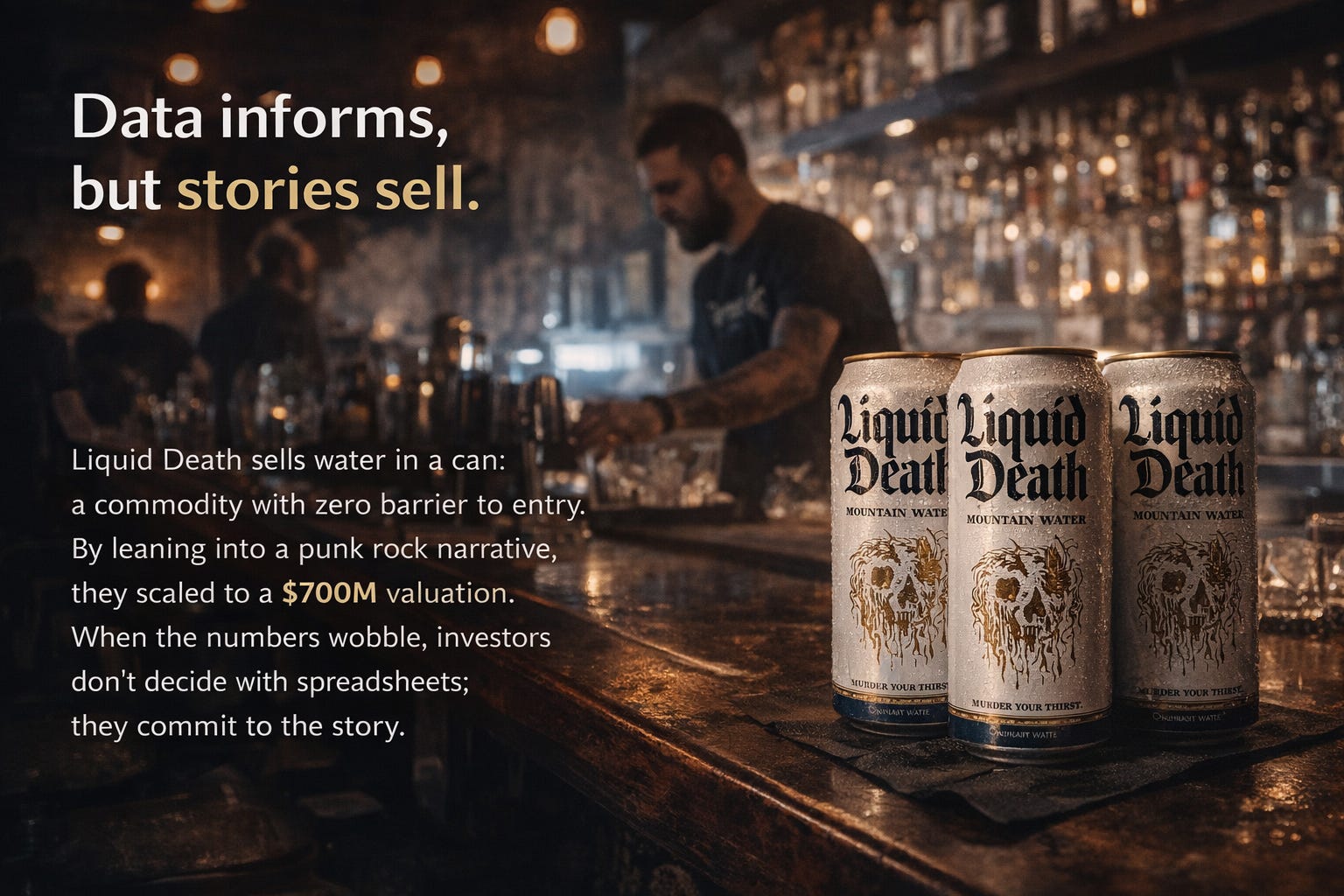
Consider Liquid Death. On paper, the company sells water in a can: a commodity with virtually zero barrier to entry. Yet, by leaning into a punk rock narrative, they scaled to a $700 million valuation. They didn’t sell hydration; they sold an identity. Narrative capital compounds: it lowers customer acquisition costs (CAC), raises forgiveness during mistakes, and buys time during pivots. During a crisis, investors rely on the story they already believe about you to decide whether to extend their support or withdraw. When the numbers wobble, investors don’t decide with spreadsheets; they decide with the story they’ve already committed to.

But a compelling story only works if you survive long enough to tell it. That requires a relationship with failure that most people never develop.
Lesson 2: The Failure Data Set
In entrepreneurship, failure is a primary source of data. Melanie Perkins, founder of Canva, was rejected again and again by investors before securing her first round. Each “no” was an opportunity to refine the pitch deck until the logic was bulletproof.
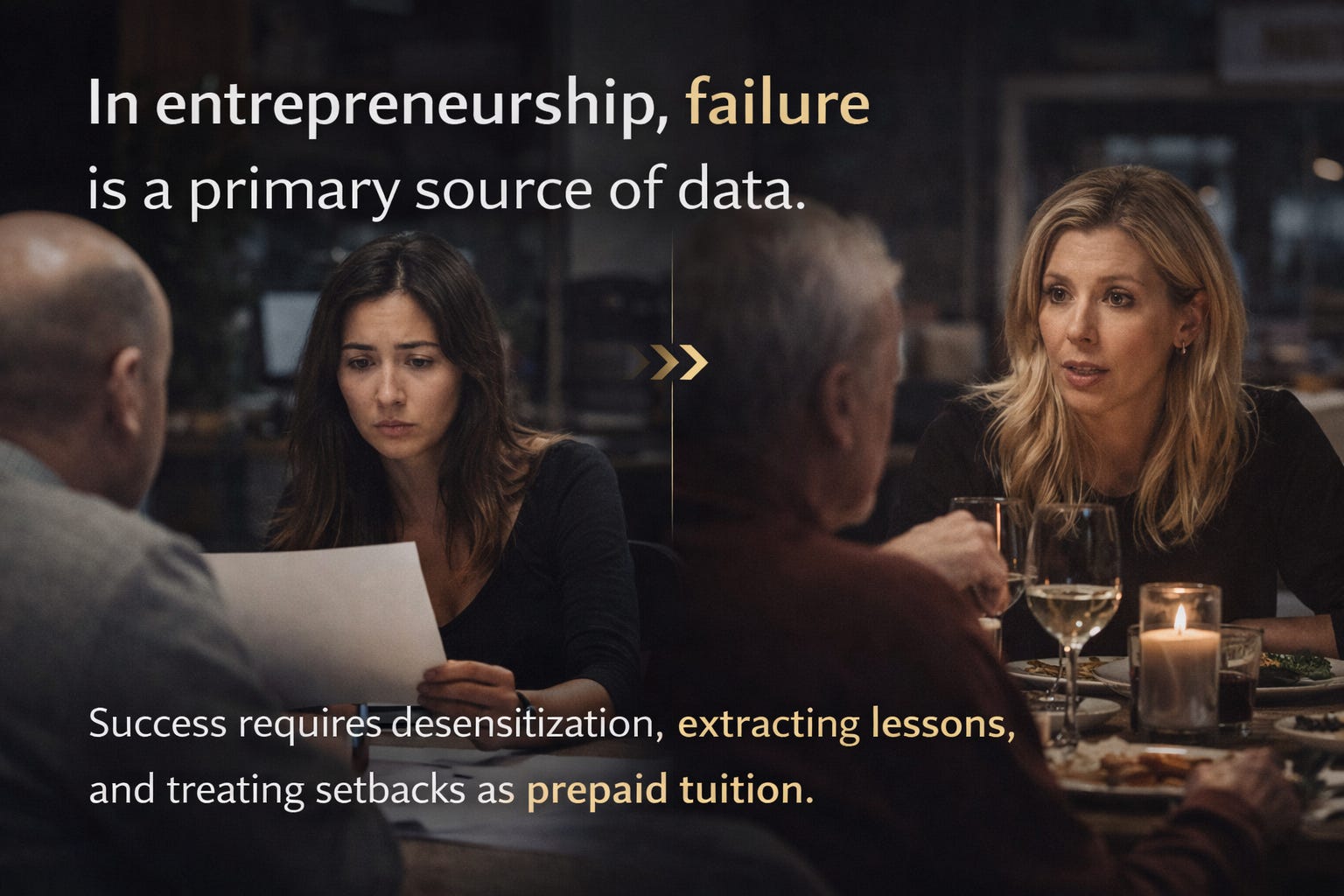
This is Lesson Two of the Invisible Curriculum: Desensitization. Sara Blakely’s father famously asked his children every night at dinner: “What did you fail at today?” By the time she was pitching Spanx, rejection was just a data point. However, the danger isn’t failing too often; it’s failing without extracting a transferable lesson before your morale collapses. Success requires the speed to process a loss and the emotional distance to treat it as prepaid tuition.
Watch how Melanie Perkins navigated the early rejections and the strategic pivot that led to Canva’s global dominance: [
Lesson 3: Presence and the “One-Minute Read”
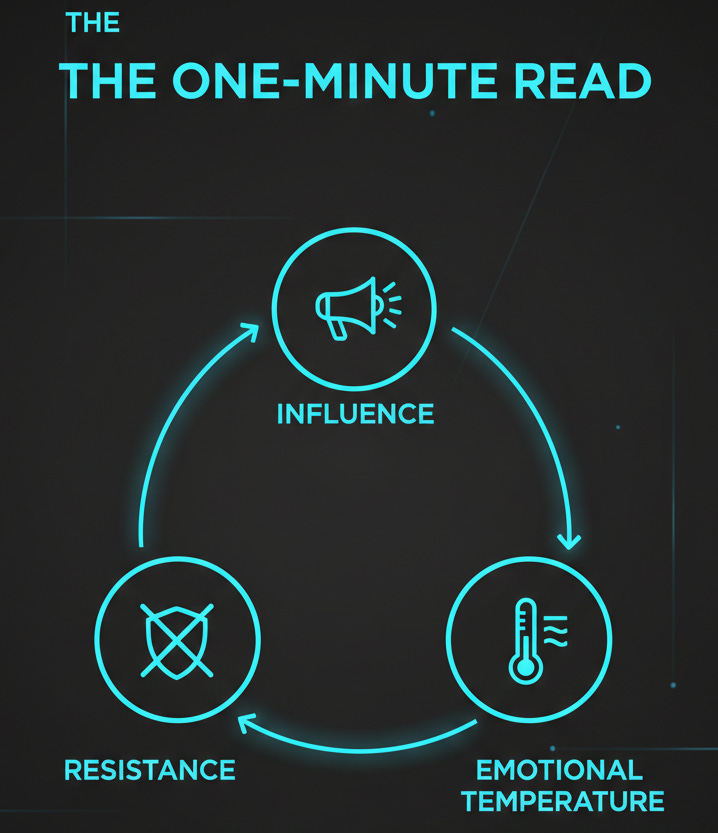
A study published in the Harvard Business Review (Goleman, 1998) found that emotional intelligence is a significantly stronger predictor of leadership success than technical IQ alone. In high-stakes environments, this manifests as “Presence.” Presence is the ability to execute a 3-Second Read of a room, then confirm and calibrate it with a One-Minute Read.
Within the first sixty seconds of entering a negotiation, an effective founder identifies:
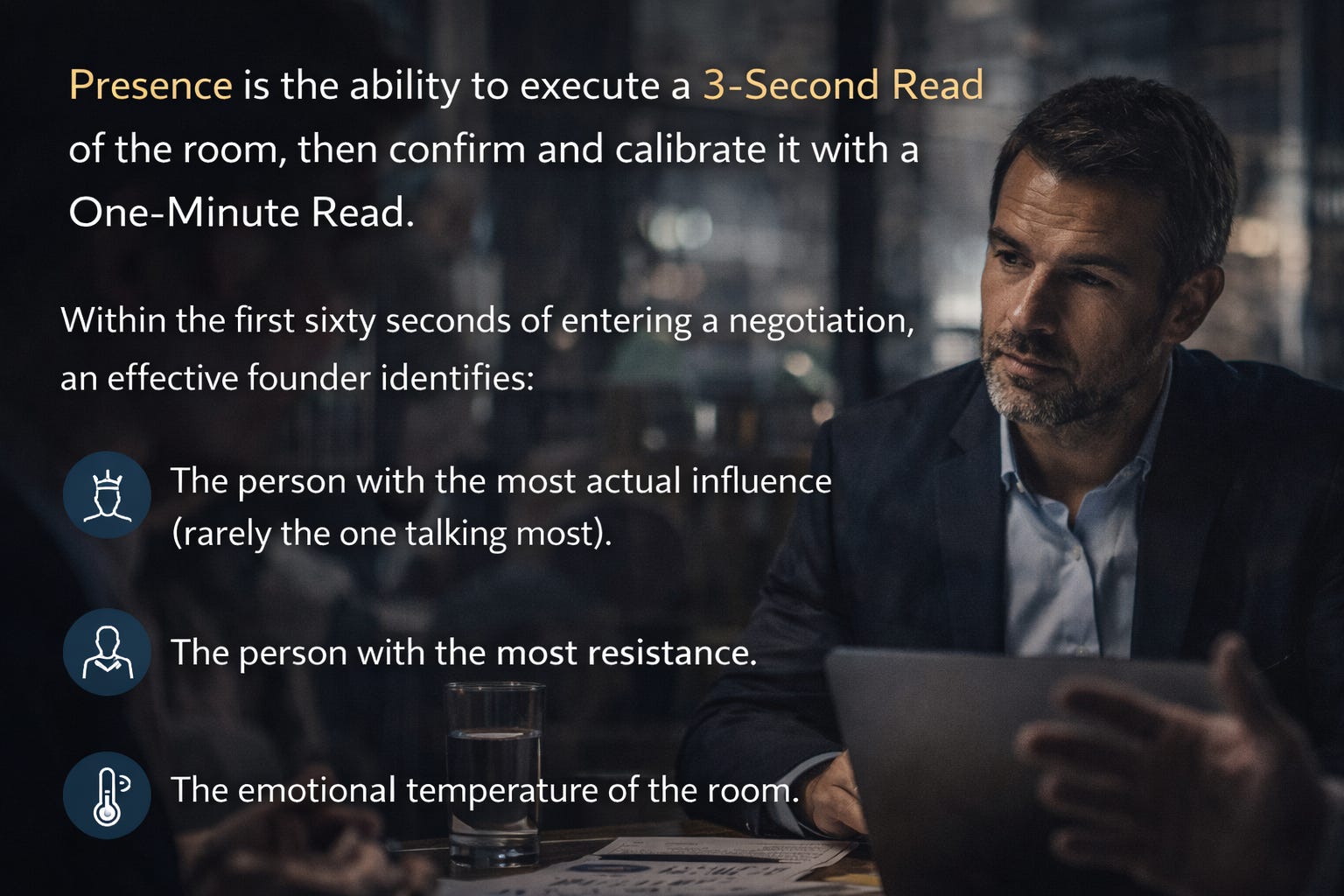
The person with the most actual influence (rarely the one talking most).
The person with the most resistance.
The emotional temperature of the room.
If you cannot identify these three things immediately, slow your speech. The fastest way to regain presence is to reduce velocity. Barbara Corcoran bets on founders who can “take a hit” and keep their composure. Maintaining a steady vocal cadence under fire signals to investors that you are a safe pair of hands for their capital.
Lesson 4: The Strategic Pivot (Burbn to Instagram)
A pivot is a calculated response to market feedback, not a random change of direction. Many founders confuse “persisting” with “stubbornness.” Kevin Systrom initially launched Burbn, a cluttered check-in app. The data showed that users ignored most features but loved the photo filters. Systrom had the clarity to strip away everything else, rebranding as Instagram.
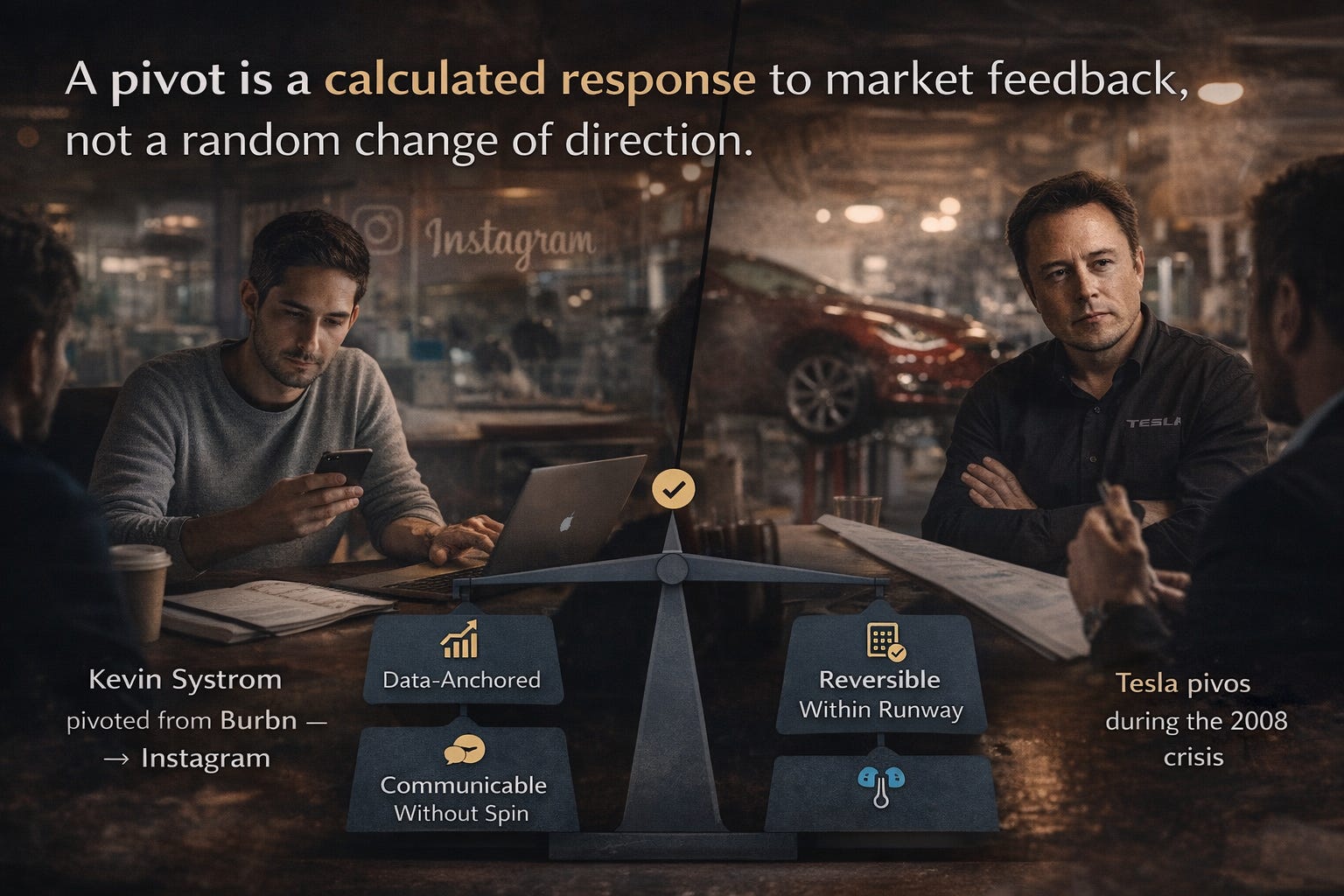
A pivot is only strategic if it is data-anchored, reversible within your runway, and communicable without spin. Tesla provided a masterclass in this during the 2008 financial crisis. The pivot was not just a heroic gamble; it was anchored in runway math, financing reality, and the proof that demand existed if they could survive long enough to ship.
Watch how Stewart Butterfield navigated the high-stakes pivot from a failed video game to the communication giant Slack.
Lesson 5: Slope Over Y-Intercept
Your business is only as strong as its ability to evolve. When hiring, the most dangerous mistake is hiring for “Y-Intercept” (where someone is today) rather than “Slope” (the rate at which they learn).
Slope shows up as question quality. High-slope people ask better questions every 30 days. Low-slope people ask the same ones with more confidence. A “Slope” hire will rapidly outpace the needs of the company, while a flat learning curve hire becomes a legacy liability within eighteen months.
Corollary: The Brilliant-Jerk Tax
A toxic high performer isn’t additive; they are a multiplier on friction. Protecting the culture requires removing these individuals before they tax the entire team’s productivity. As Daymond John emphasizes, if a team member lacks resourcefulness, the most effective move is a swift exit.
Lesson 6: The Architect’s Shift
Even the right team cannot compensate for a founder who refuses to let go of the controls. Scaling is the transition from Subject Matter Expert to Systems Designer. Nike’s explosive growth wasn’t driven by Phil Knight’s ability to sell shoes; it was driven by his shift toward designing a global supply chain and a marketing engine that could operate without his daily input.
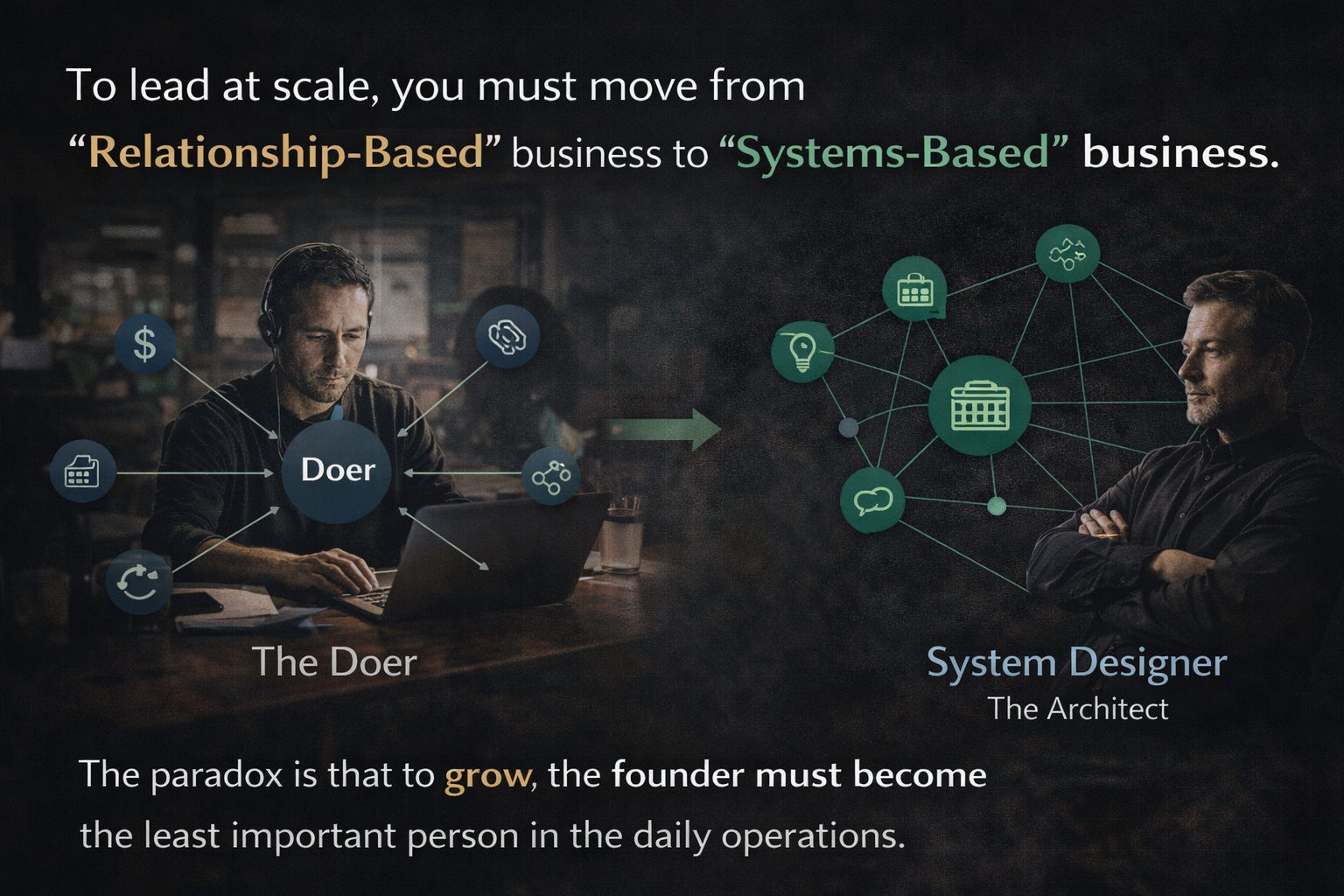
The paradox is that to grow, the founder must become the least important person in the daily operations. Most founders do not resist systems because they do not understand them; they resist them because systems make them replaceable. To lead at scale, you must move from “Relationship-Based” business to “Systems-Based” business.
Lesson 7: Tactical Recovery
This transition requires a cognitive shift impossible under chronic stress. According to the Raichle Lab (2001), the brain’s most creative problem-solving - the Default Mode Network - occurs when it is not focused on a specific task.
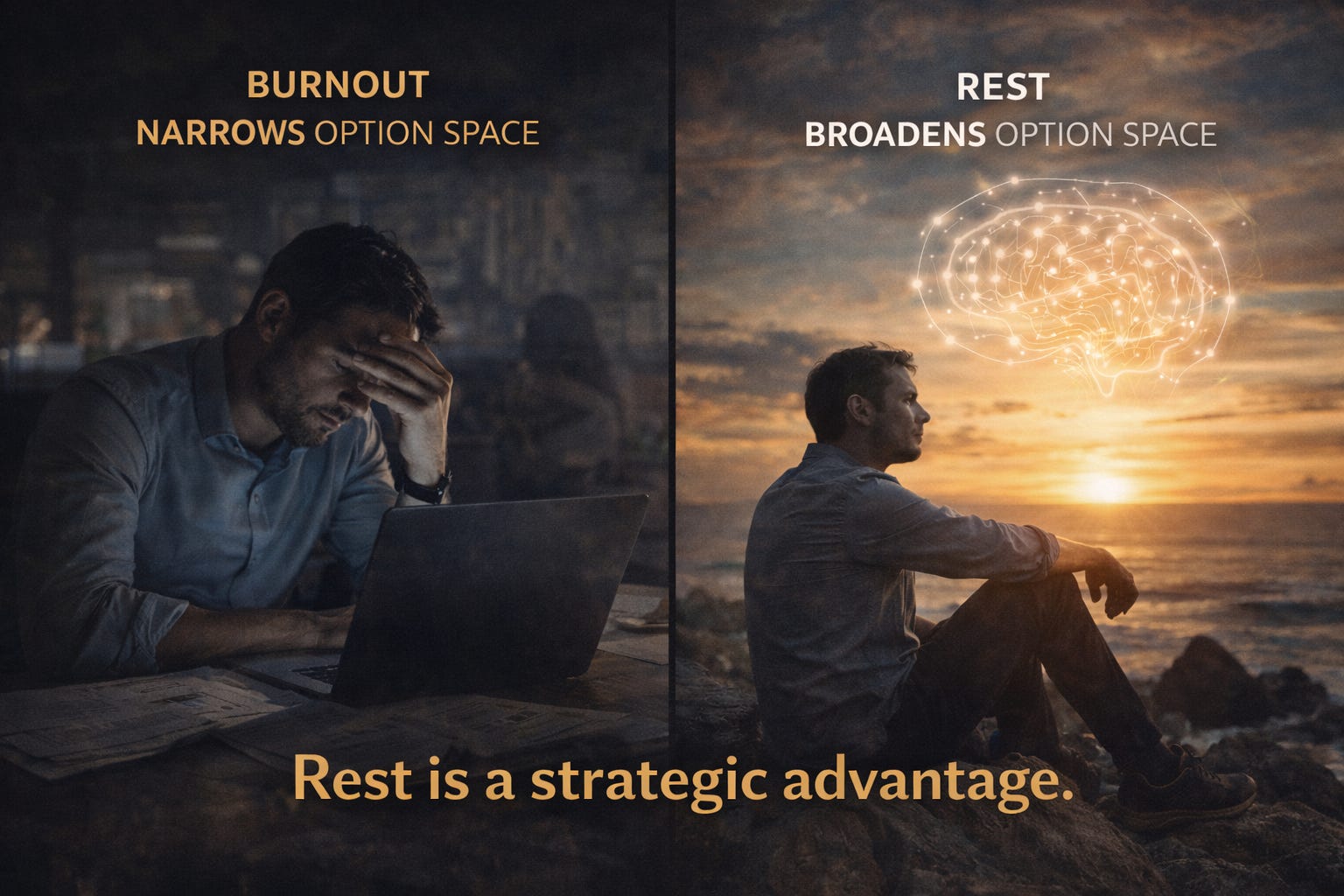
Burnout doesn’t just reduce energy; it narrows option space. Tired founders choose familiar solutions, not correct ones. Research from Yale (Arnsten, 2009) shows that chronic stress weakens the prefrontal cortex’s ability to make complex decisions. Rest is strategic leverage, not self-care.
Watch Mark Cuban discuss how he manages his time and maintains strategic focus in the high-intensity world of business.
Your Breakthrough Roadmap
Execute these four micro-actions within the next 48 hours. If you do not do these within this window, you will not do them at all. Crisis has a short attention window.
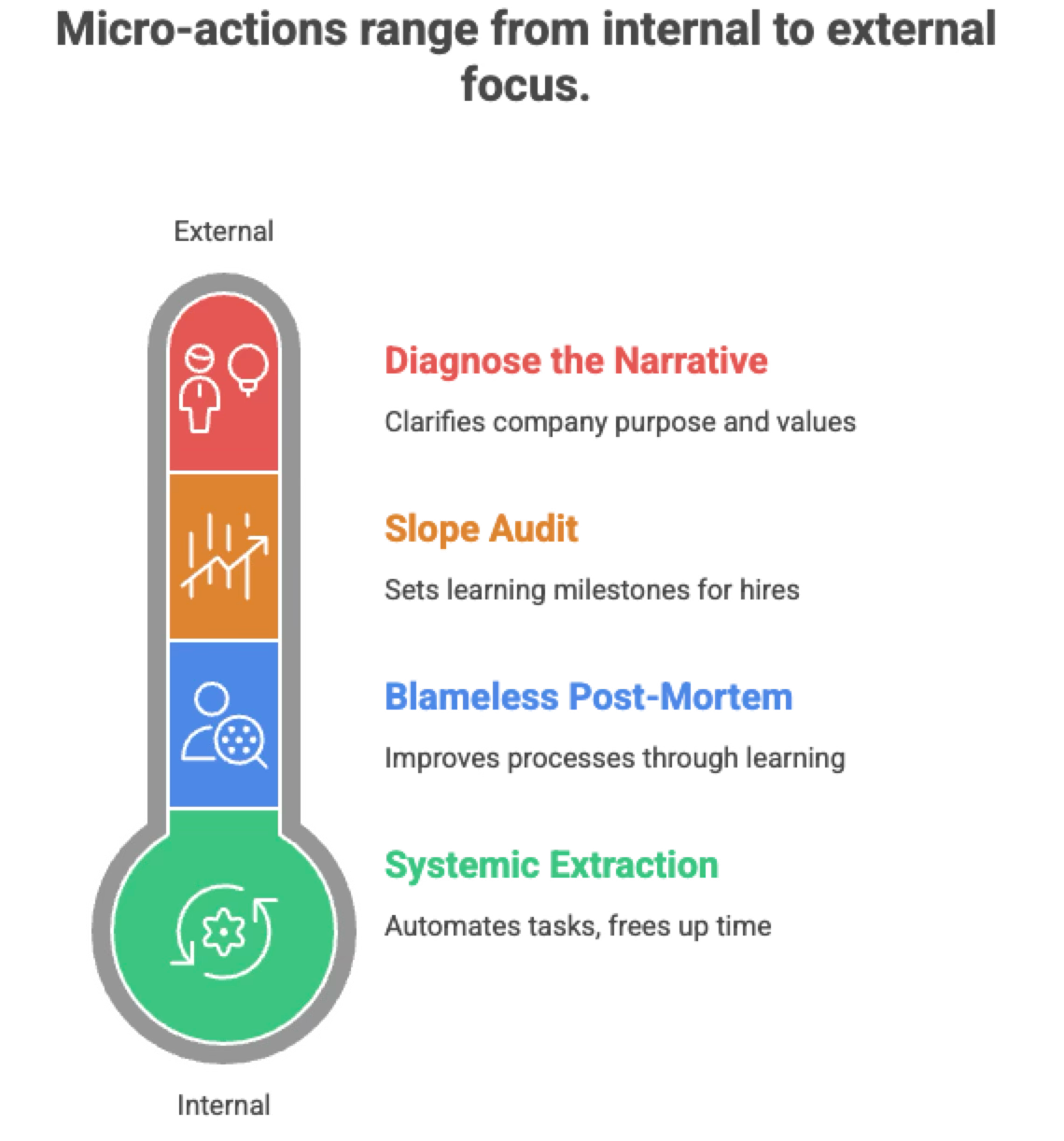
1. Diagnose the Narrative
Open a blank document. Write one sentence that answers: Why does this company exist beyond making money? If you cannot write a compelling answer in under 30 seconds, your narrative is too weak to scale. Call your longest-tenured customer today to find the emotional hook you’ve missed.
2. The “Blameless Post-Mortem”
Identify the biggest failure your team had this month. Schedule a 20-minute meeting tomorrow. Ask: “What was the systemic cause of this, and what data did we gain?” Update one Standard Operating Procedure (SOP) based on this answer.
3. The “Slope” Audit
Review your last three hires. On a scale of 1 to 10, rate their “Rate of Learning” over the last 90 days. If anyone is a 5 or below, set specific learning milestones for them today. If they miss them twice, you are looking at a role mismatch, not a motivation problem.
4. Systemic Extraction
Identify one recurring task that currently requires your approval. Create a written SOP for it. Delegate it today with the instruction: “Do not ask me for permission on this again unless the criteria change.”
The path to building a legacy is paved with the lessons the classroom could not teach. You already know what to do. The Invisible Curriculum doesn’t reward intelligence. It rewards execution under pressure. Step out of the engine and finally fly the plane.