


Why This Matters Now - The marketplace is drowning in noise, and clarity is the new currency for exponential growth. Your ability to articulate value instantly is not just a marketing tactic; it is the defining factor between obscurity and legacy. Seize this moment to simplify your message and command the attention your vision deserves.
The most significant error ambitious companies make is positioning themselves as the protagonist in their brand story. You see it everywhere: websites plastered with “award-winning,” “market-leading,” and “innovative solutions.” This approach is fundamentally flawed. Donald Miller’s Building a StoryBrand framework reveals a simple, powerful truth: your customers are already the heroes of their lives. They are not looking for another hero to admire. They are desperately looking for a guide to help them win their battles.
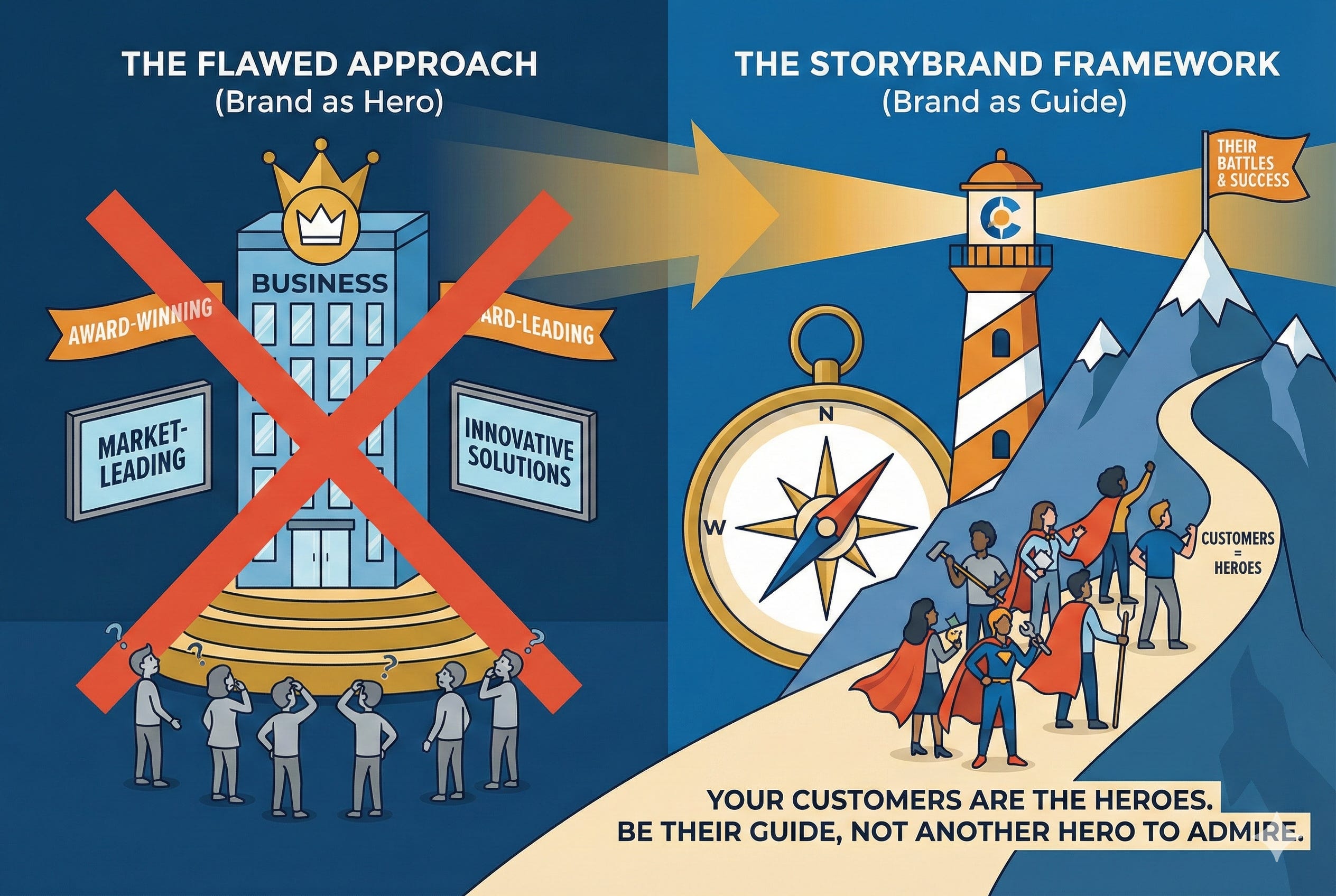
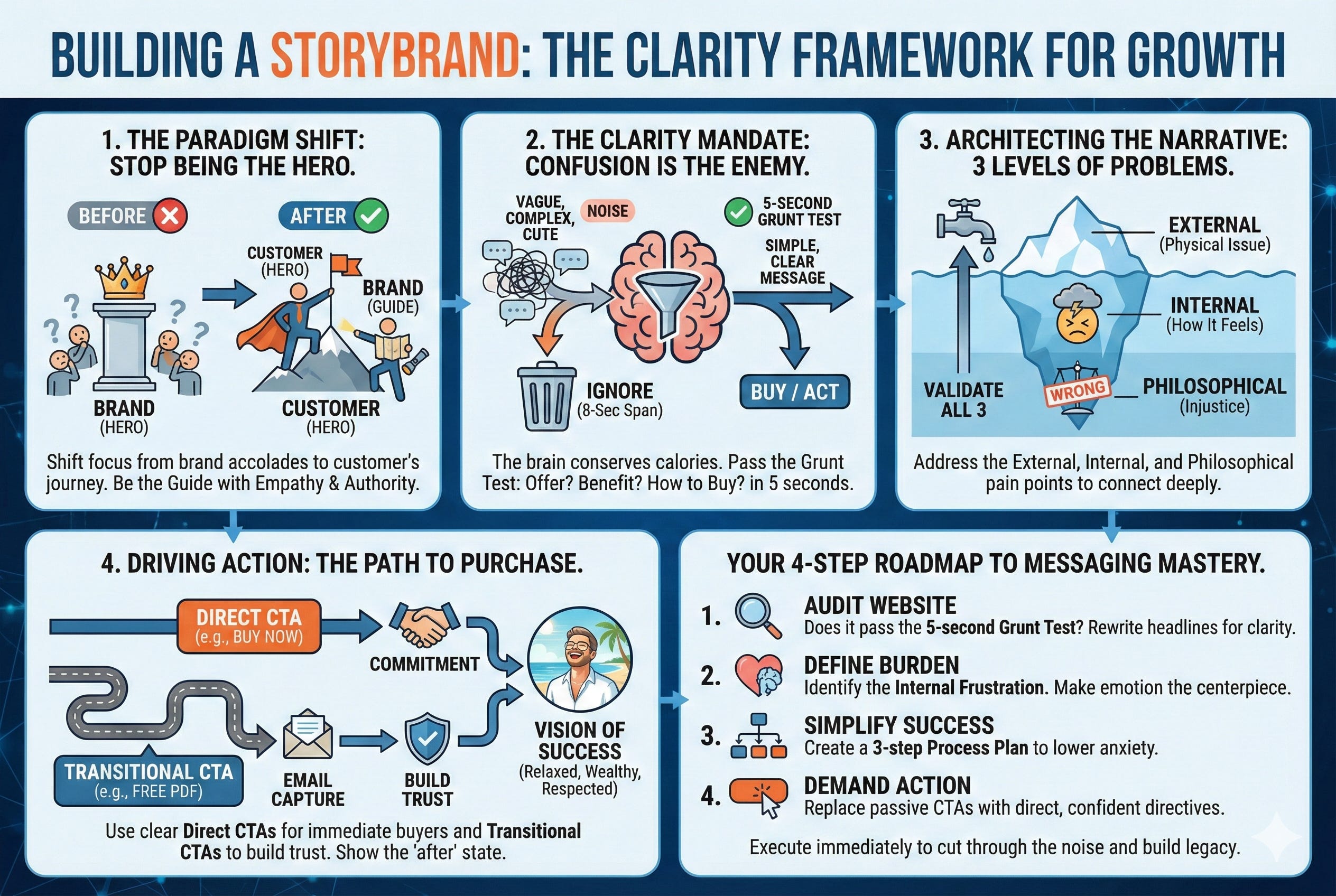
To build a brand that resonates, you must shift the spotlight entirely off yourself and onto your customer’s journey. Think of it this way: if your customer is Luke Skywalker, your brand is Yoda. You are the Guide who has already conquered the challenge and now possesses the wisdom, empathy, and authority to equip the hero with a plan for success.
Global powerhouses understand these principles implicitly. Nike does not build campaigns around its shoe technology; it celebrates the athlete’s struggle and triumph. Reshma Saujani, founder of Girls Who Code, doesn’t focus on her organization’s accolades but on the transformation of young women gaining the skills to build the future. When you define your brand by the transformation you provide—helping an “anxious beginner” become a “confident pro”—you create a narrative that is irresistible.
The Clarity Mandate: Confusion Is the Enemy
The human brain is a survival mechanism designed to conserve calories. In an era where the average human attention span has reportedly dropped to a mere eight seconds, your marketing is fighting a losing battle against cognitive filtering. If your message is vague, complex, or overly “cute,” the brain identifies it as noise and tunes it out.
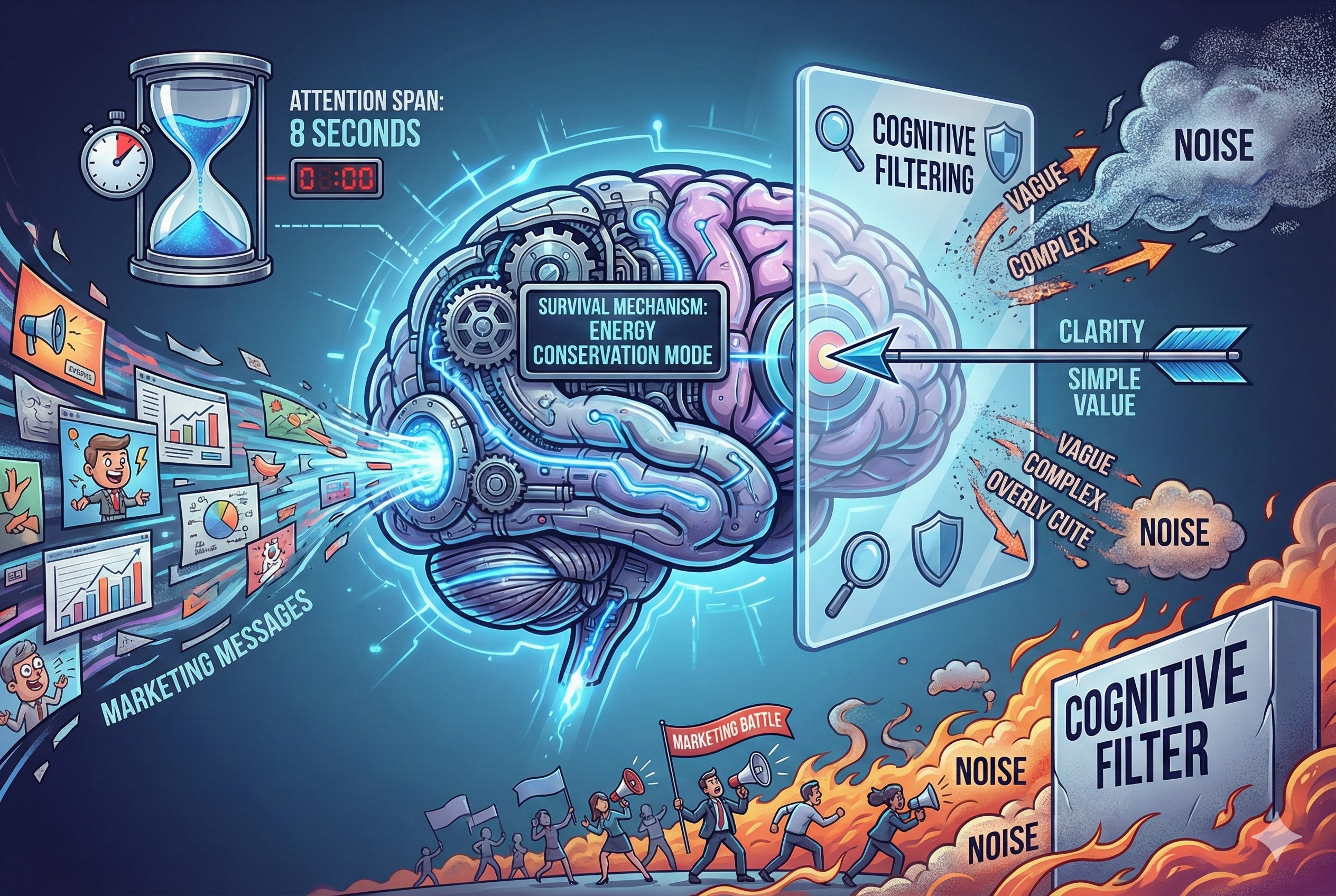
Clarity is not a bonus; it is a requirement for survival. As Miller states, “If you confuse, you lose.” Your marketing materials must pass the “Grunt Test.” Could a caveman look at your website for five seconds and immediately “grunt” the answers to three fundamental questions: What do you offer? How will it make my life better? What do I need to do to buy it? If a prospect has to burn too much mental energy decoding your message, they will simply click away to a competitor who makes it easy.
Watch how Donald Miller explains the “Grunt Test” and why your website might be failing it right now.
Architecting the Narrative: The 3 Levels of Problems
A compelling brand story does more than state what you sell; it articulates the deep-seated frustrations your customers are trying to resolve. Most businesses stop at solving the External Problem, the tangible physical issue, such as a leaky pipe or an unorganized closet. But customers buy solutions to solve an Internal Problem—how that external issue makes them feel. They feel stressed, incompetent, or overwhelmed.
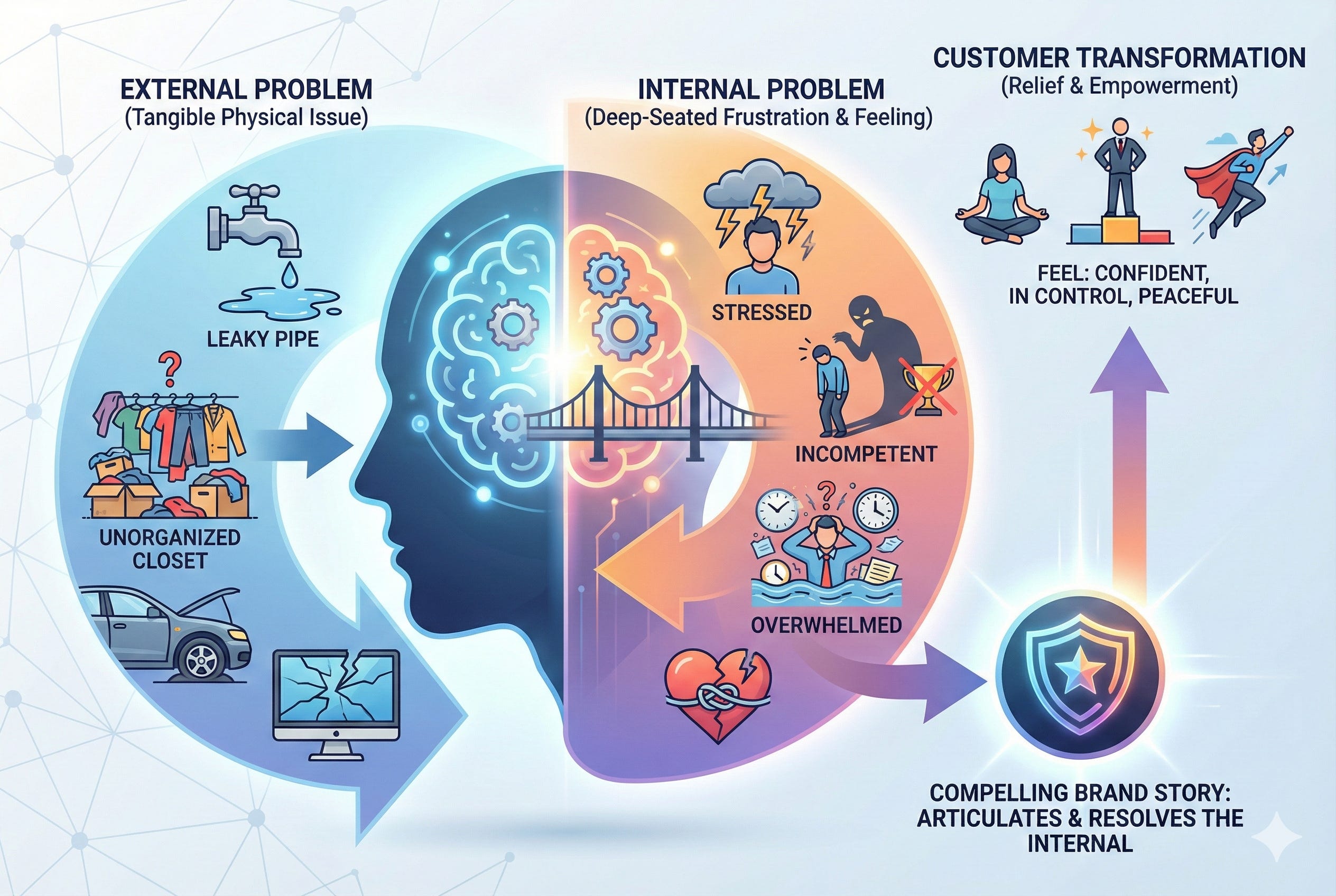
The most iconic brands take a deeper approach by addressing a Philosophical Problem, emphasizing why it is deemed "wrong" for their customers to endure such injustice. When Sara Blakely invented Spanx, she wasn’t just fixing visible panty lines (external); she was addressing the self-consciousness women felt in certain outfits (internal) and championing the belief that women shouldn’t have to suffer in uncomfortable undergarments to feel confident (philosophical). By identifying and validating all three levels of pain, you connect with your audience on a profound emotional level that transcends a transactional relationship.
Driving Action: The Path to Purchase
A story without a clear call to action is just noise. Customers are inherently anxious about making a purchase; they are waiting for you to lead. Do not be passive. You need a clear, direct Call to Action (CTA) like “Buy Now” or “Schedule a Call” that tells them exactly what to do next. For those not yet ready to commit, offer a transitional CTA—like a free PDF checklist or a webinar—to capture their email and build trust over time, reinforcing your role as the Guide without forcing a commitment on the first interaction.
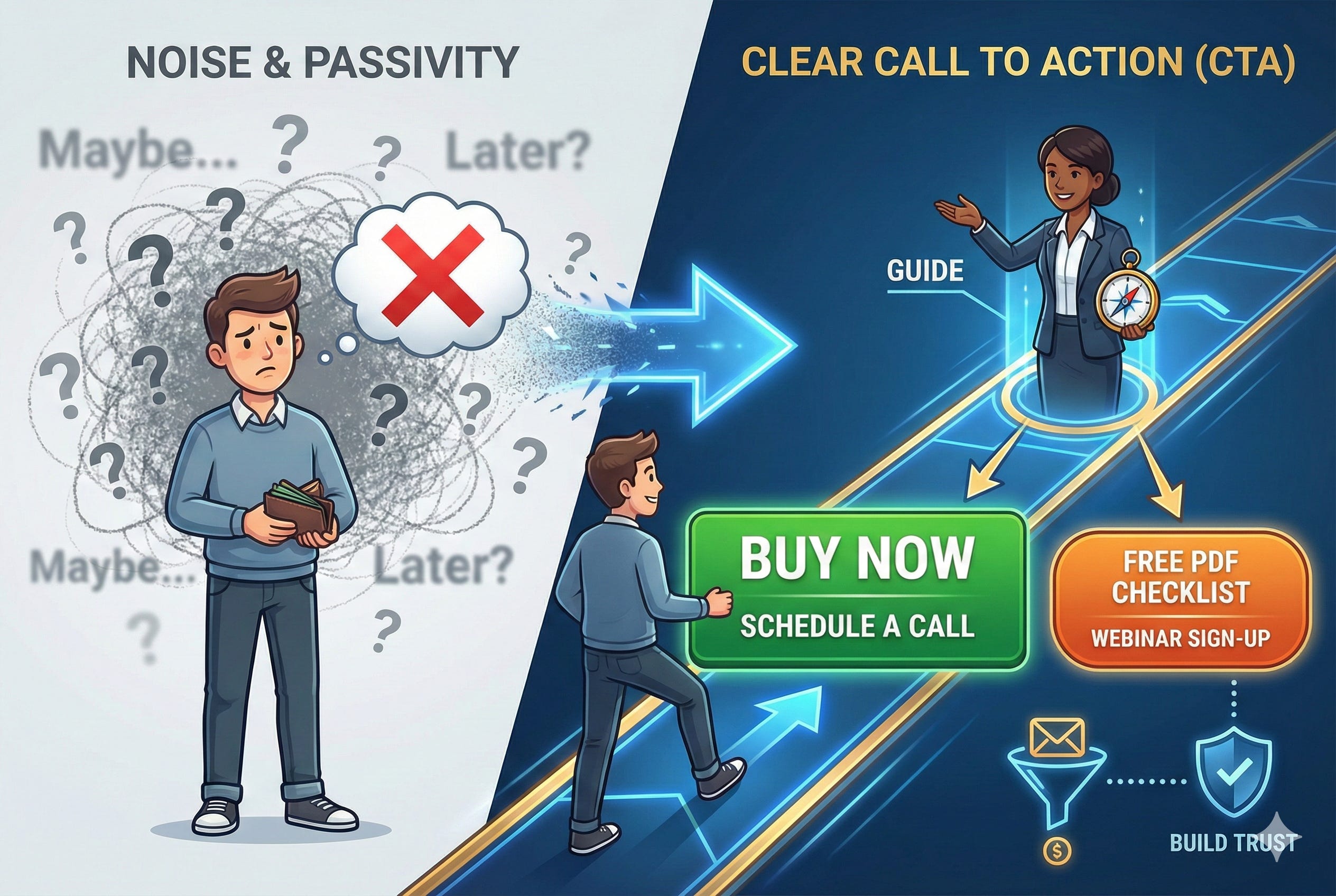
Furthermore, you must provide a concrete vision of the future. People need to see what “success” looks like. Explicitly describe—and use imagery to show—what their life will be like after they use your product. Will they be relaxed, wealthy, and respected? If you don’t define the happy ending, the customer won’t be motivated to walk toward it. Ultimately, the transformation is your true product. Your brand’s highest calling is to help your customer change who they are, moving them from an aspirational “before” state to a victorious “after” state.
See how applying these principles transforms a cluttered website into a conversion machine.
Your 4-Step Roadmap to Messaging Mastery
Don’t just read this; execute it. Here is your immediate action plan to cut through the noise and build a brand legacy.
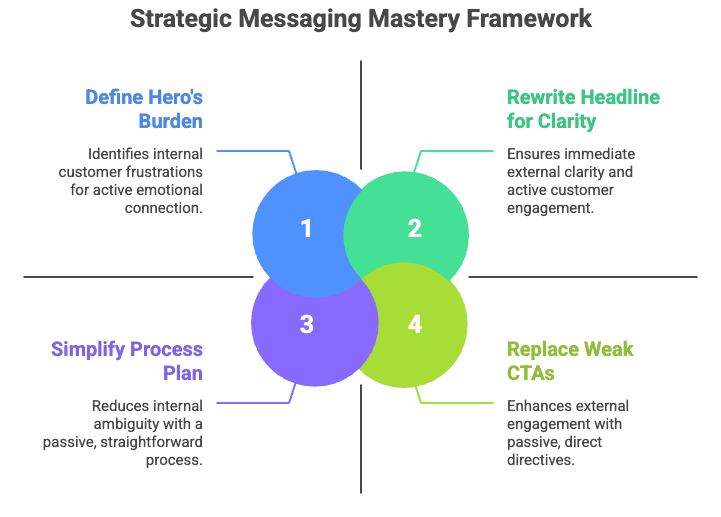
Audit Your Home Page: Open your website right now. Does it pass the 5-second Grunt Test? If a stranger can’t immediately identify what you offer, how it helps them, and how to buy it, you are losing revenue daily. Rewrite your headline for radical clarity.
Define Your Hero’s Burden: Stop selling to external problems. Identify the internal frustration your customer is feeling. Write down the specific emotion you are resolving, and make that the centerpiece of your next campaign.
Simplify the Path to Success: Customers are paralyzed by ambiguity. Create a simple, three-step “Process Plan” that bridges the gap between their current state and their desired future (e.g., 1. Schedule a Call. 2. We Build Your Plan. 3. You Watch Your Business Grow). Publish this prominently on your site to lower anxiety.
Demand Action: Replace passive, weak calls to action like “Learn More” or “Get Started” with direct, confident directives. Change your primary button to “Buy Now,” “Book a Consultation,” or “Start Your Free Trial.” Be the guide that leads with authority.
Would be extra useful to mention some tools and prompts that can help with this, such as Geminis ability to do infographics for example.
This is so important now, Ken! I'm changing my website right now, and simplifying my message and my CTA. Thanks!