

The Quiet Extinction
Four Shifts That Reverse Organizational Drift

Most businesses do not fail in public. They fade in private, then spend a long time pretending the slowdown is temporary.
At first, nothing looks especially wrong. The founder is working. The team is busy. The calendar is full enough to reassure anyone glancing in from the outside. There are meetings, updates, launches, and revised roadmaps. Plenty of movement. What is missing is lift.
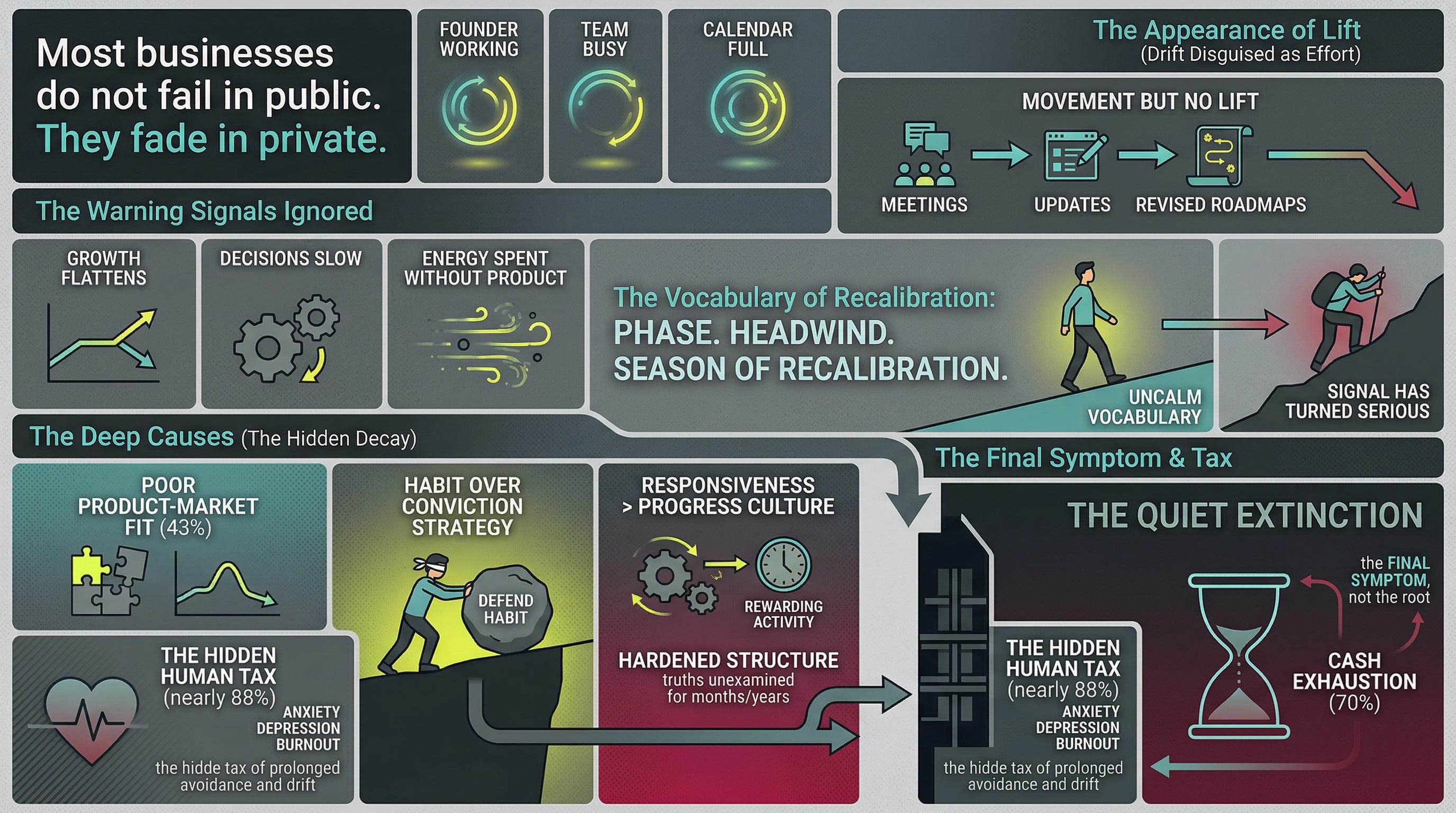
Growth flattens. Decisions take longer. Energy gets spent with less and less to show for it. Nobody calls it decline because “decline” sounds too final. Instead, the organization reaches for softer language: a phase, a headwind, a season of recalibration. The vocabulary stays calm long after the signal has turned serious. That is how drift does its best work: disguised as effort.
By the time the problem is obvious, the deeper cause has usually been in place for months. Sometimes years. The product no longer meets the demand. A strategy people defend out of habit more than conviction. A culture that rewards responsiveness because it is easy to measure, even when it produces very little. The business does not weaken because of one dramatic mistake. It weakens because important truths are left alone until they harden into structure.
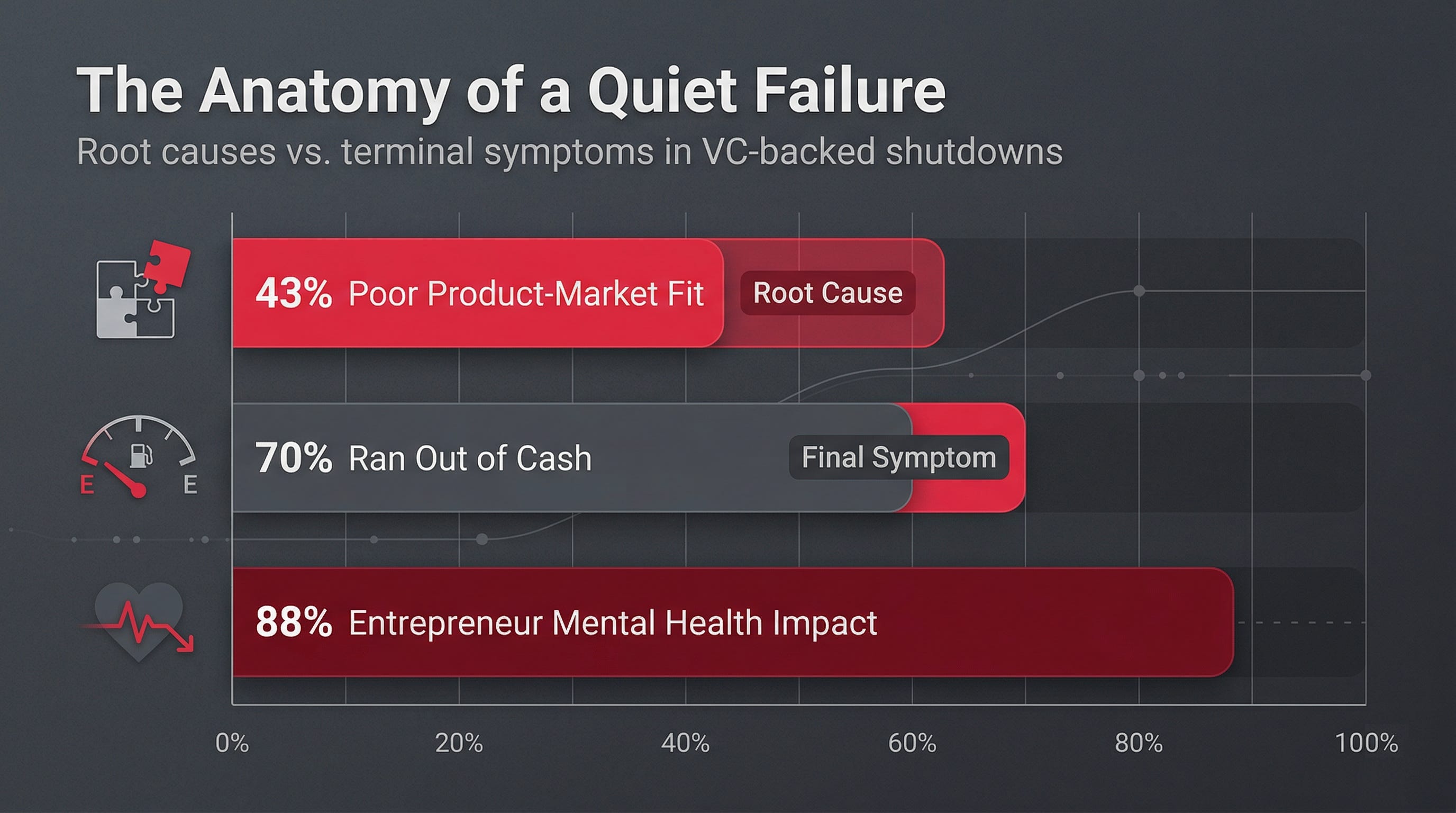
Recent analyses of hundreds of VC-backed shutdowns confirm the pattern: 43% trace back to poor product-market fit (no real demand), while 70% ultimately end with cash exhaustion as the final symptom, not the root. The human toll compounds it: nearly 88% of entrepreneurs struggle with at least one major mental health issue, whether anxiety, depression, or burnout. This is often the hidden tax of prolonged avoidance and drift.
The leaders who reverse that pattern are not always the boldest or most charismatic. More often, they are simply honest sooner. They see the problem before the story around it becomes more powerful than the problem itself. They simplify what has become bloated. They stop mistaking intensity for traction. When something is broken, they name it before it becomes part of the architecture.
1. Confront the truth everyone knows but nobody wants to name
Every stagnant organization has a center of avoidance. Sometimes it is a product slipping out of relevance. Sometimes it is a senior hire who has become a bottleneck. Sometimes it is a strategy that survives only because too many people have attached their credibility to its success.
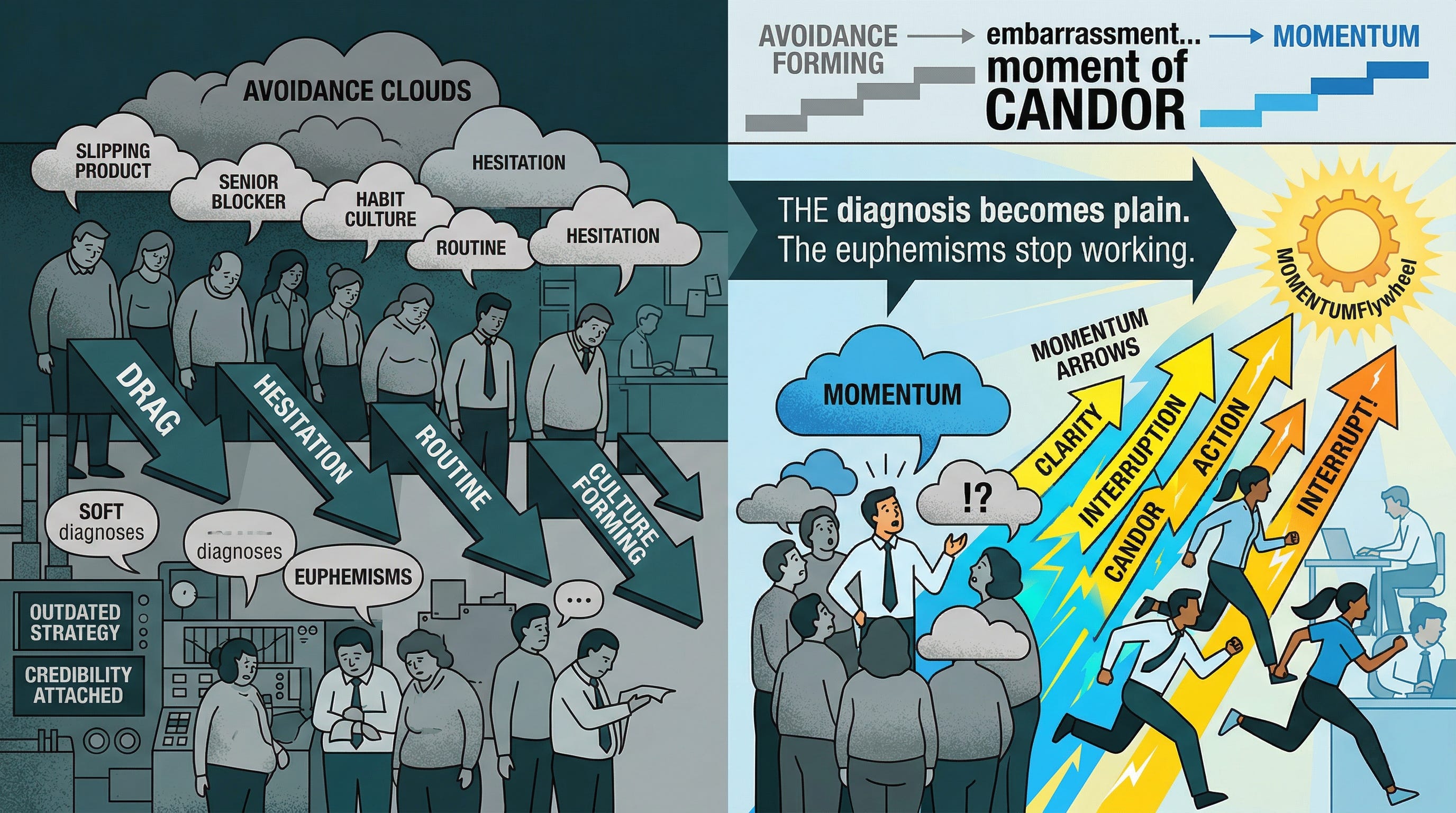
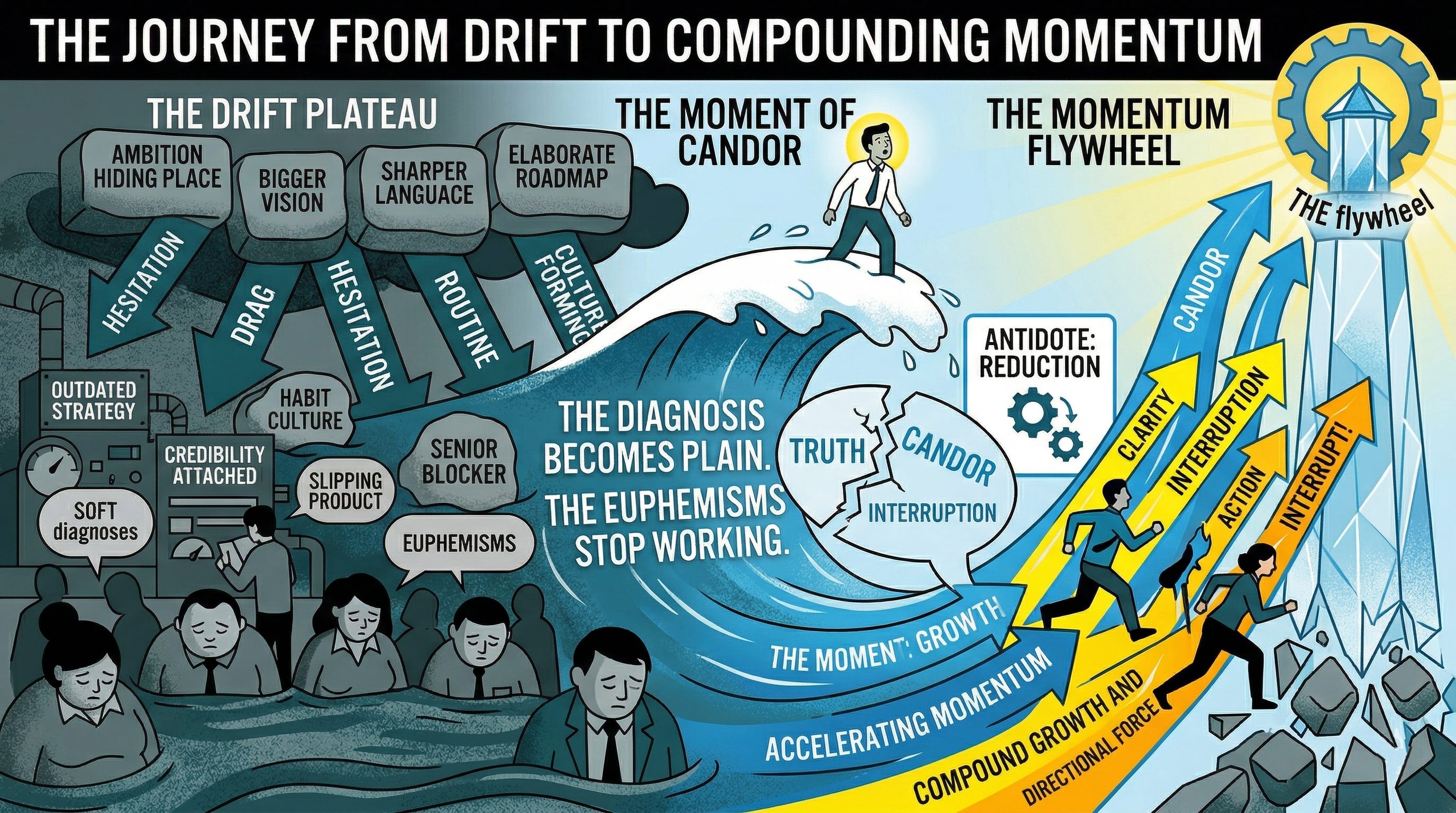
This is how hesitation turns into drag. What begins as discomfort becomes routine. Routine becomes habit. Habit becomes culture. Once a culture forms around avoidance, it is very hard to interrupt. That is why momentum so often begins with a moment that feels less like inspiration than embarrassment. Somebody finally says the thing that should have been said months earlier. The diagnosis becomes plain. The euphemisms stop working.
Tesla’s Model 3 production crisis is a useful example because it is impossible to romanticize. The company was under real strain. Delays were mounting. Automation had become part of the problem rather than the solution. Elon Musk moved closer to the breakdown instead of farther from it. He spent long stretches at the factory, challenged assumptions, and forced a return to first principles. Recovery began when the organization stopped insulating itself from reality.
That is the move most struggling businesses postpone. Not effort, but honesty. They soften the language and keep the diagnosis vague. They describe a structural problem as a temporary setback because the softer version is easier to repeat in meetings. Usually, it is also the version that keeps the problem alive. Drift begins to loosen its grip the moment candor becomes less painful than denial.
Watch Elon Musk explain the first-principles thinking that powered Tesla through production hell:
2. Make the next step small enough to become real
Ambition is useful until it becomes a hiding place. That happens more often than leaders like to admit. The vision gets bigger. The language gets sharper. The roadmap gets more elaborate. Meanwhile, the organization loses contact with what the market is actually telling it.
When people do not know what to do next, they often try to make the next move sound more important than it is. They plan. They polish. They refine the narrative. It feels serious. It may even look strategic. But in many cases, it is just delaying wearing better clothes. The antidote is reduction.
Brian Chesky and Joe Gebbia did not begin with a master plan to reinvent global hospitality. They rented out air mattresses in their apartment because they needed help paying the rent in 2007. That first move was small, practical, and slightly awkward. It forced immediate contact with the market. Either strangers would pay for the experience, or they would not. That answer mattered more than any elegant theory about the future.
This is how traction usually begins: not when the idea is complete, but when it becomes testable. Organizations in a rut often assume the answer must be large because the stakes feel large. In practice, the opposite is usually true. The next meaningful step is often unglamorous. A hard call. A stripped-down offer. A prototype with the polish removed. A direct question put to a customer instead of a committee.
The question that matters is not “what is the grand move?” It is “what is the smallest concrete action that would teach us something by the end of the day?”
Watch Brian Chesky describe how Airbnb grew from air mattresses and maxed-out credit cards into a global platform:
3. Decide what counts as progress before the day gets away from you
A full day can disappear without producing a single result that matters. That is not unusual. It is the default setting of modern work. Messages multiply. Meetings expand. Minor issues arrive dressed as major ones. A calendar fills itself if nobody defends it. By evening, everyone is tired enough to feel productive, even when the business itself has barely moved.
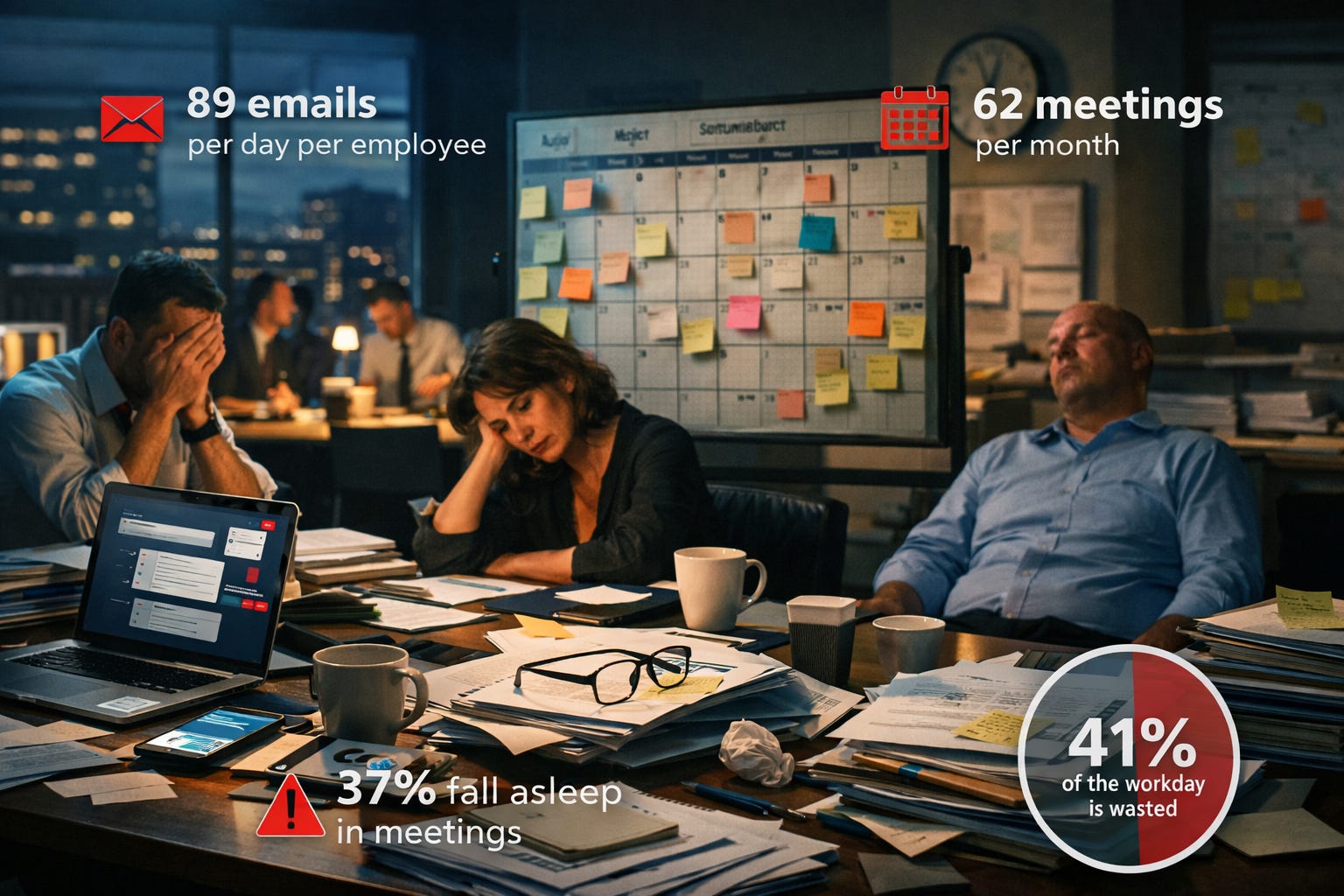
Andy Grove understood this with unusual clarity. His standard was demanding but not complicated: work should be judged by output, not by motion. The real question is not whether people are occupied. It is whether what they are doing improves the performance of the organization in a meaningful way.
That distinction becomes critical once drift has set in. If nobody defines what a win looks like today, the urgent wins by default. The inbox wins. Internal maintenance wins. Other people’s priorities win. A company can live in that mode for a long time while continuing to describe itself as hardworking. In truth, it is going in circles.
The correction is simpler than people expect. Decide, before the day begins, which outcomes would make the day count. Keep the number small. Make them concrete. Make them consequential. This is not a list designed to calm anxiety. It is a list designed to produce movement. That discipline restores morale because people stop feeling merely occupied and start feeling effective.
4. Break the habit that keeps rebuilding the same bottleneck
Most stalls are not caused by one bad decision. They are recreated by repeated behavior. The founder who refuses to delegate. The team that mistakes brainstorming for advancement. The operator who launches new initiatives to avoid finishing difficult ones. These patterns do not look fatal on their own. That is why they persist.
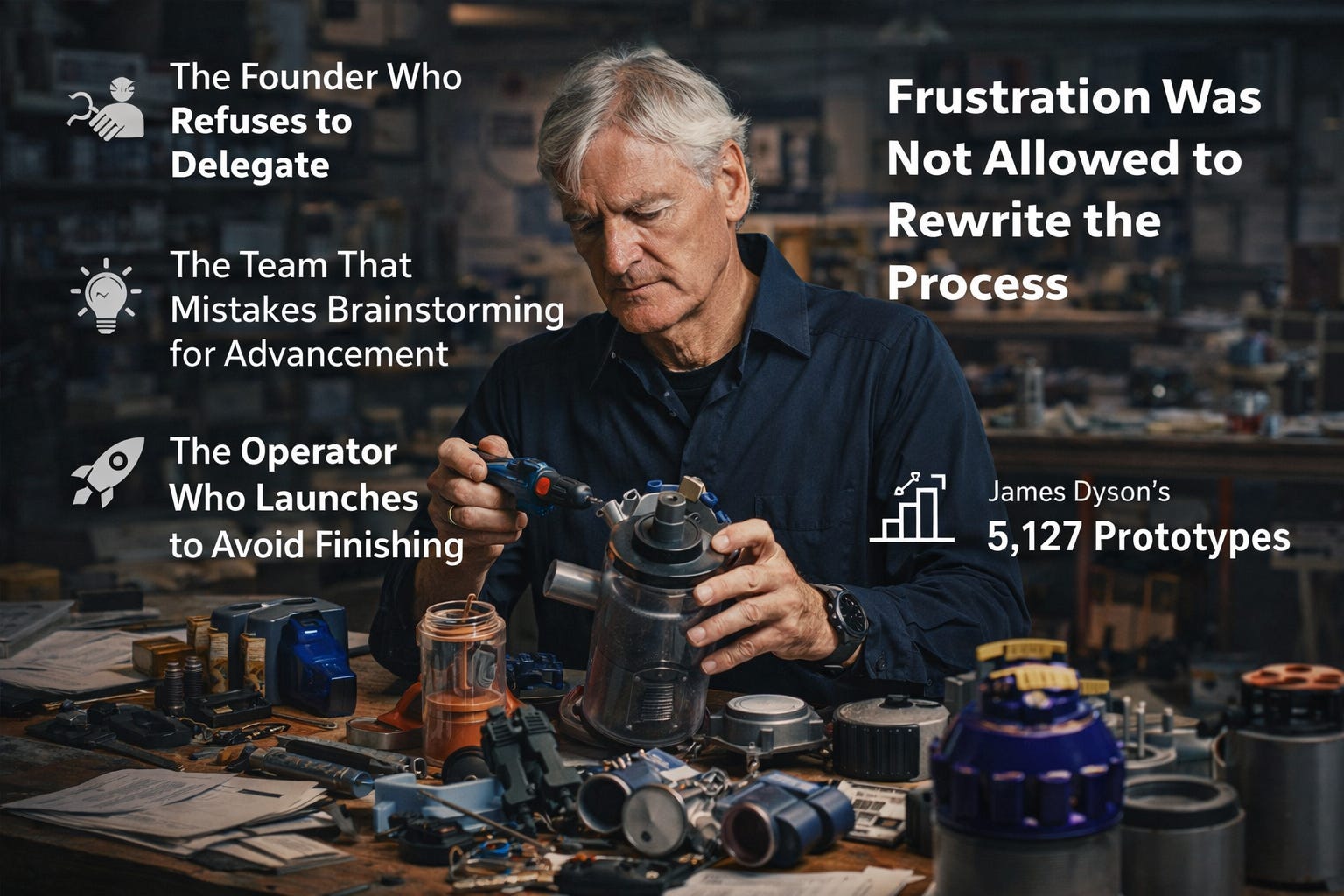
James Dyson offers a better model than most founder mythology because his story is not about brilliance. It is about disciplined repetition. He built 5,127 prototypes over several years while developing his bagless vacuum. Failure was treated as information rather than humiliation. The power was not that he avoided frustration, but that frustration was not allowed to rewrite the process.
That is where many organizations lose their footing. They interpret friction too dramatically. A weak launch becomes proof the market is closed. One bad hire becomes proof delegation does not work. Often the issue is less theatrical than that: the system is simply reproducing the same weakness through habit.
A bad habit does not need to be catastrophic to be expensive. It only needs to be consistent. Change the repeated behavior, and the organization begins to change with it. Not because the mission suddenly became more inspiring, but because the business stopped rebuilding the same obstacle every morning. Mature leadership involves less reinvention and more interruption of costly patterns.
Watch Sara Blakely explain how embracing failure as data built Spanx into a billion-dollar company:
What these shifts create together
Each of these shifts matters on its own. Together, they create something stronger than improvement. They create a flywheel. Candor removes distortion. Small actions restore contact with reality. Clear output gives effort direction. Better habits keep gains from dissolving back into old patterns.
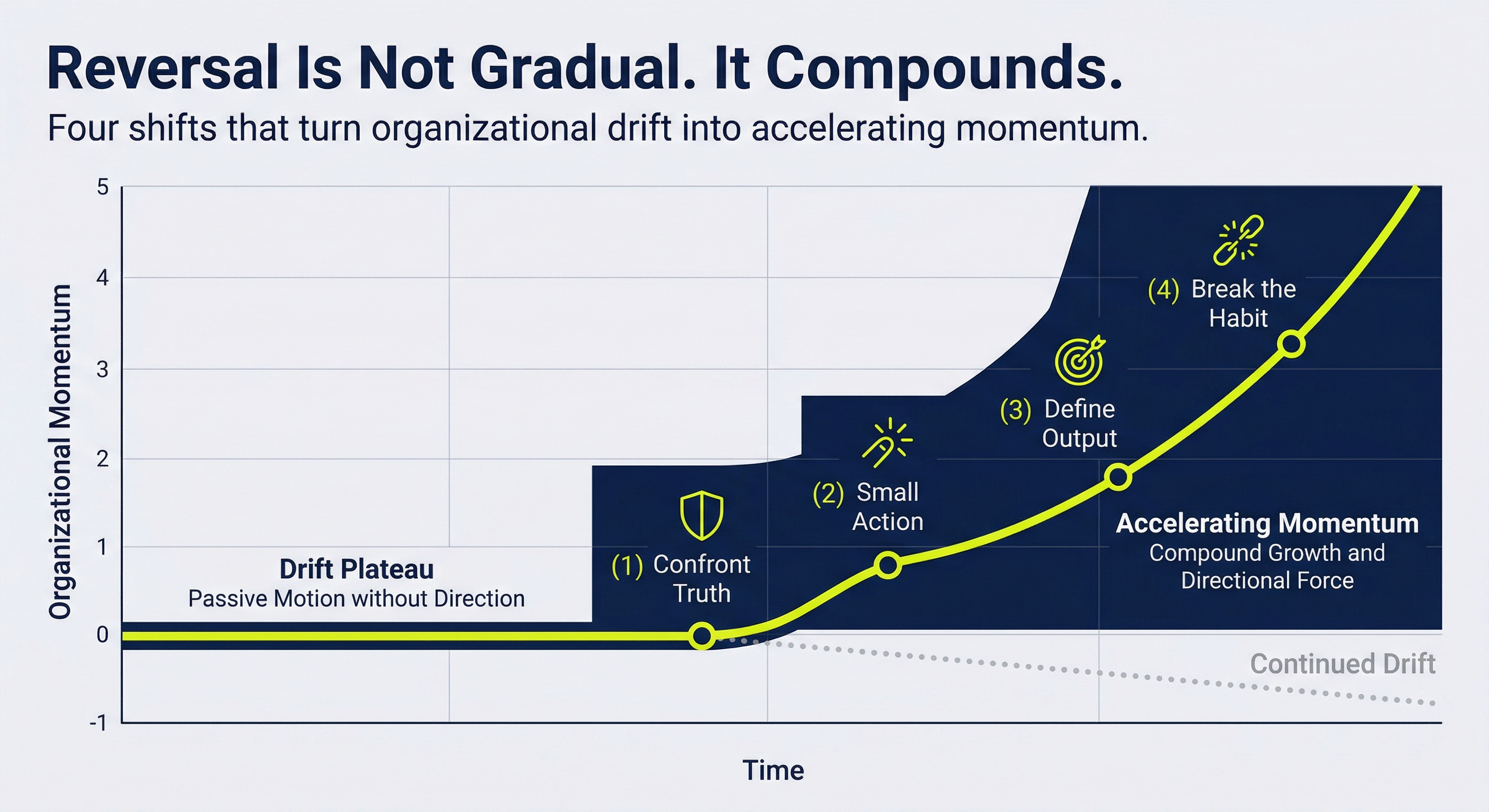
None of this guarantees success. Markets still change. Competitors still improve. Luck still has more influence than most leaders care to admit. But these shifts do something essential: they make progress less accidental.
That is the real divide between organizations that drift into slow irrelevance and those that recover their edge. Not charisma. Not mythology. Not the performance of toughness. Precision.
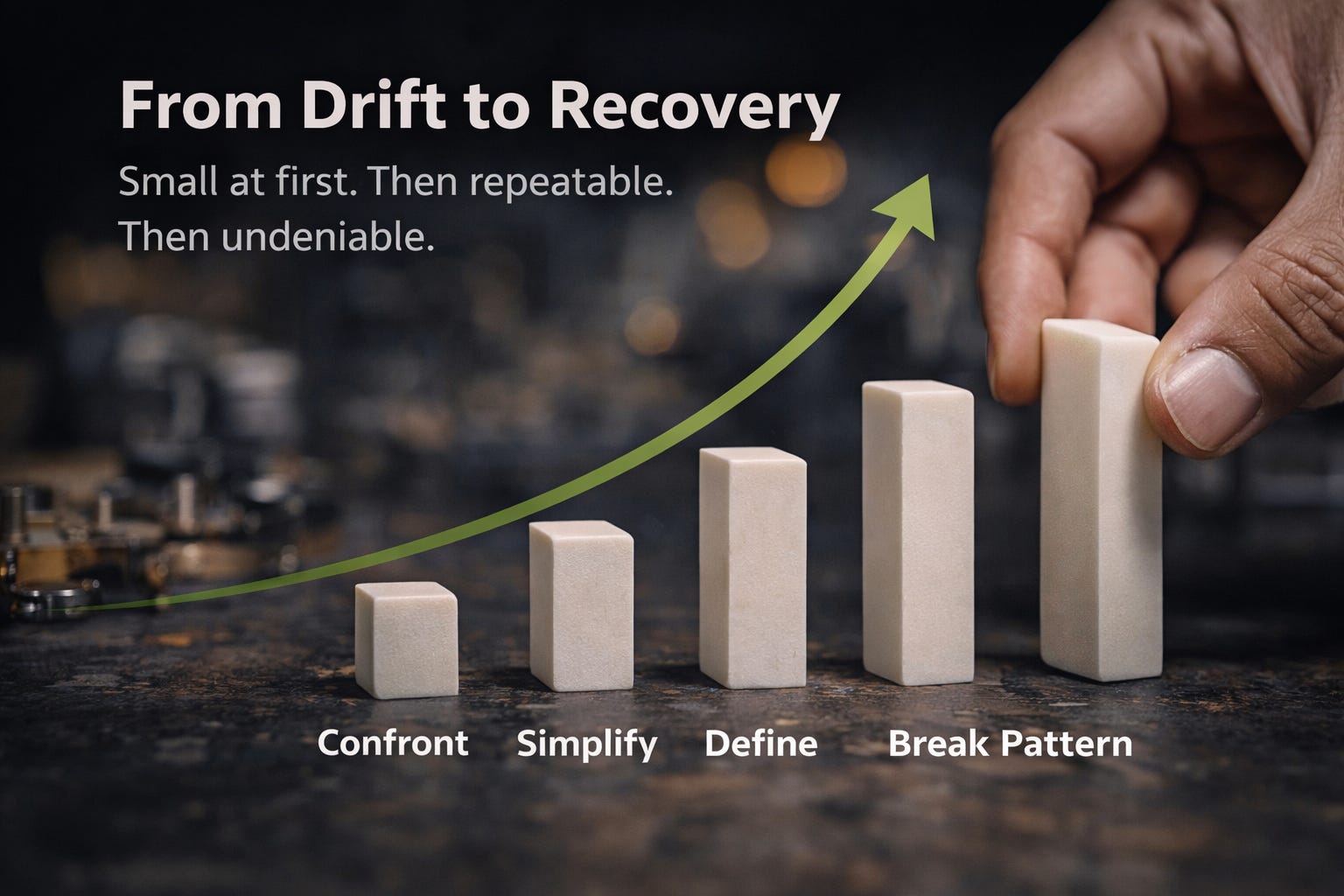
The willingness to face what is uncomfortable, shrink the next move until it becomes real, define progress before the day gets hijacked, and stop repeating the behavior that keeps the business stuck. That is how drift begins to lose its hold. Reversal starts with honest motion. Small at first. Then repeatable. Then undeniable.
The quiet extinction ends there.