

The Referral Trap
Why “Who Do I Know?” Is the Wrong Question

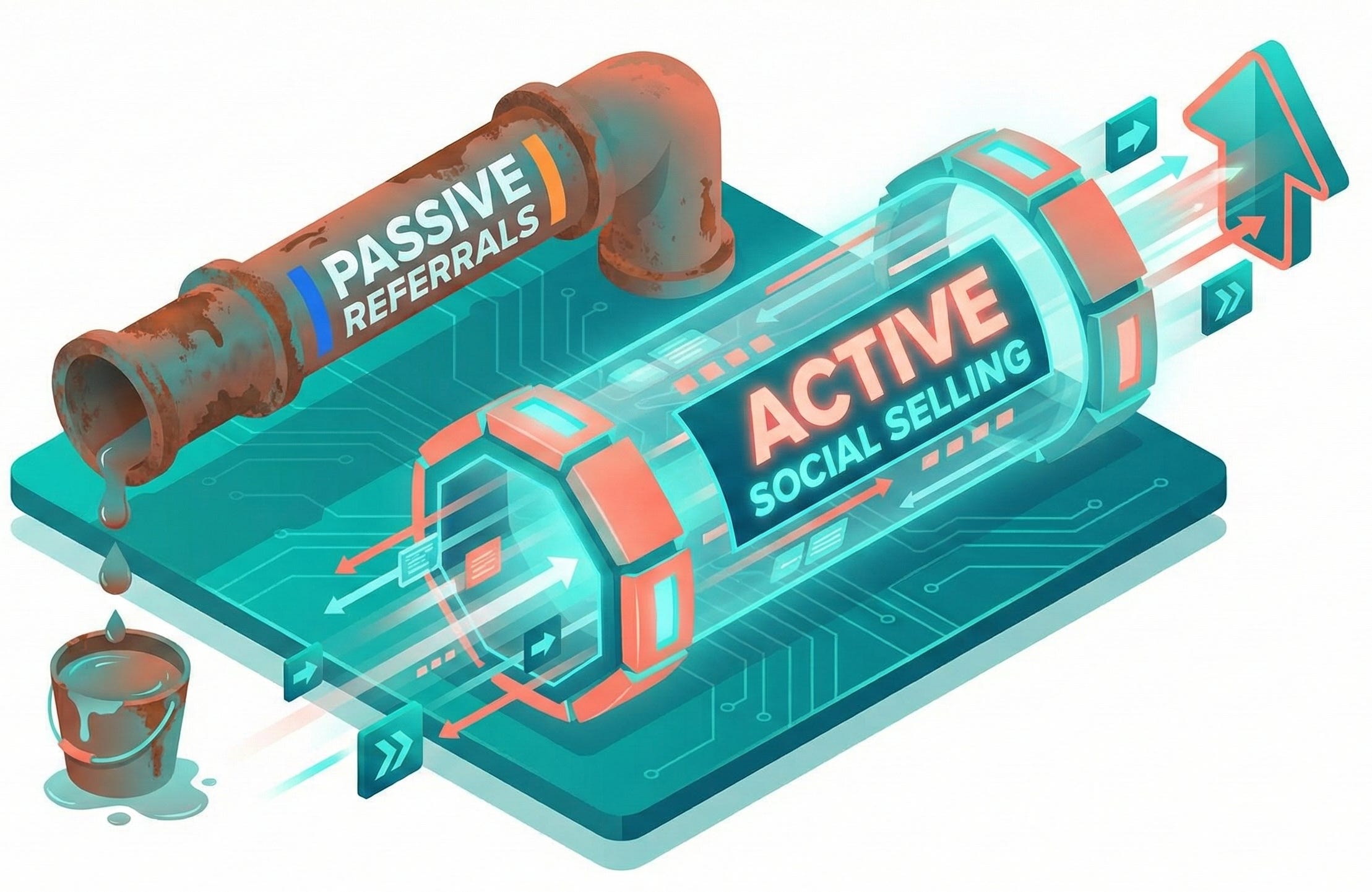
Why This Matters Now - The era of “build it and they will come” is a relic of a slower internet. In 2026, the marketplace is too noisy for passive quality to win on its own. The difference between a business that stalls and one that scales is the shift from waiting to be discovered to engineering your own demand.

For decades, the “golden rule” of consulting and B2B services was simple: do exceptional work, and the network will provide. But data from the 2025 State of Sales Report indicates a seismic shift: over 40% of high-performing founders now cite direct, social-first outreach as their primary growth driver, significantly outpacing traditional referral networks.
Waiting on referrals is a defensive strategy in an offensive game. It caps your growth at the limits of your current circle. Steven Bartlett, the youngest “Dragon” in Dragons’ Den history and host of The Diary of a CEO, argues that in the modern economy, “Attention is the asset you trade for revenue.” If you are relying solely on word-of-mouth, you are trading on an asset you do not control.

To break through, you must shift your mindset from “Who do I know?” to “Who needs to know me right now?”
Step 1: The Billboard Effect (Your LinkedIn Profile)
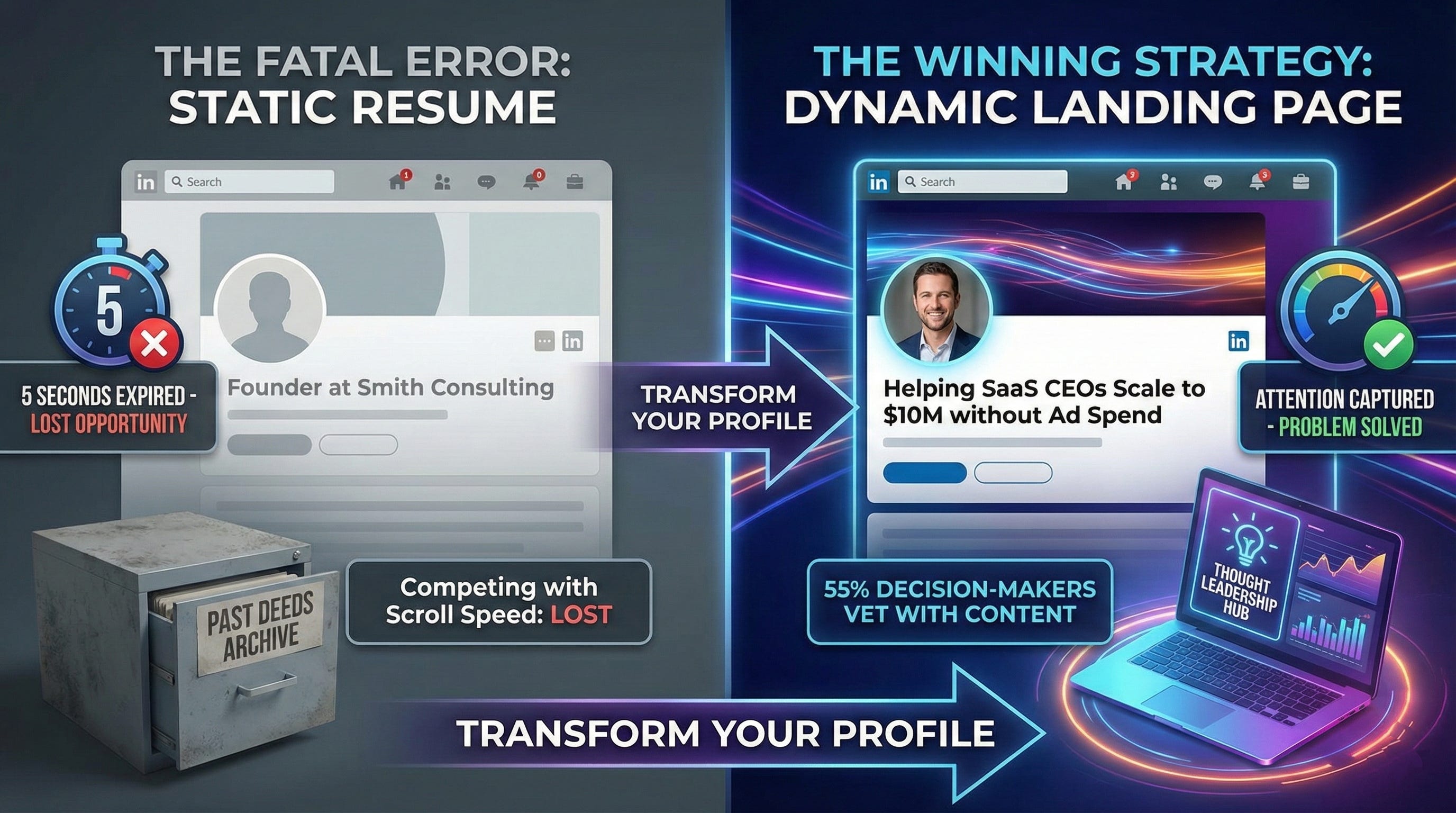
Most entrepreneurs treat their LinkedIn profile like a digital resume—a static archive of past deeds. This is a fatal error. Your profile is not a CV; it is a landing page.
“You are not competing with other businesses; you are competing with everyone’s scroll speed,” notes a leading digital strategist. This is the “Five-Second Rule” of digital attention. If a prospect lands on your profile and cannot immediately identify the problem you solve, you have lost them.
The Strategy:
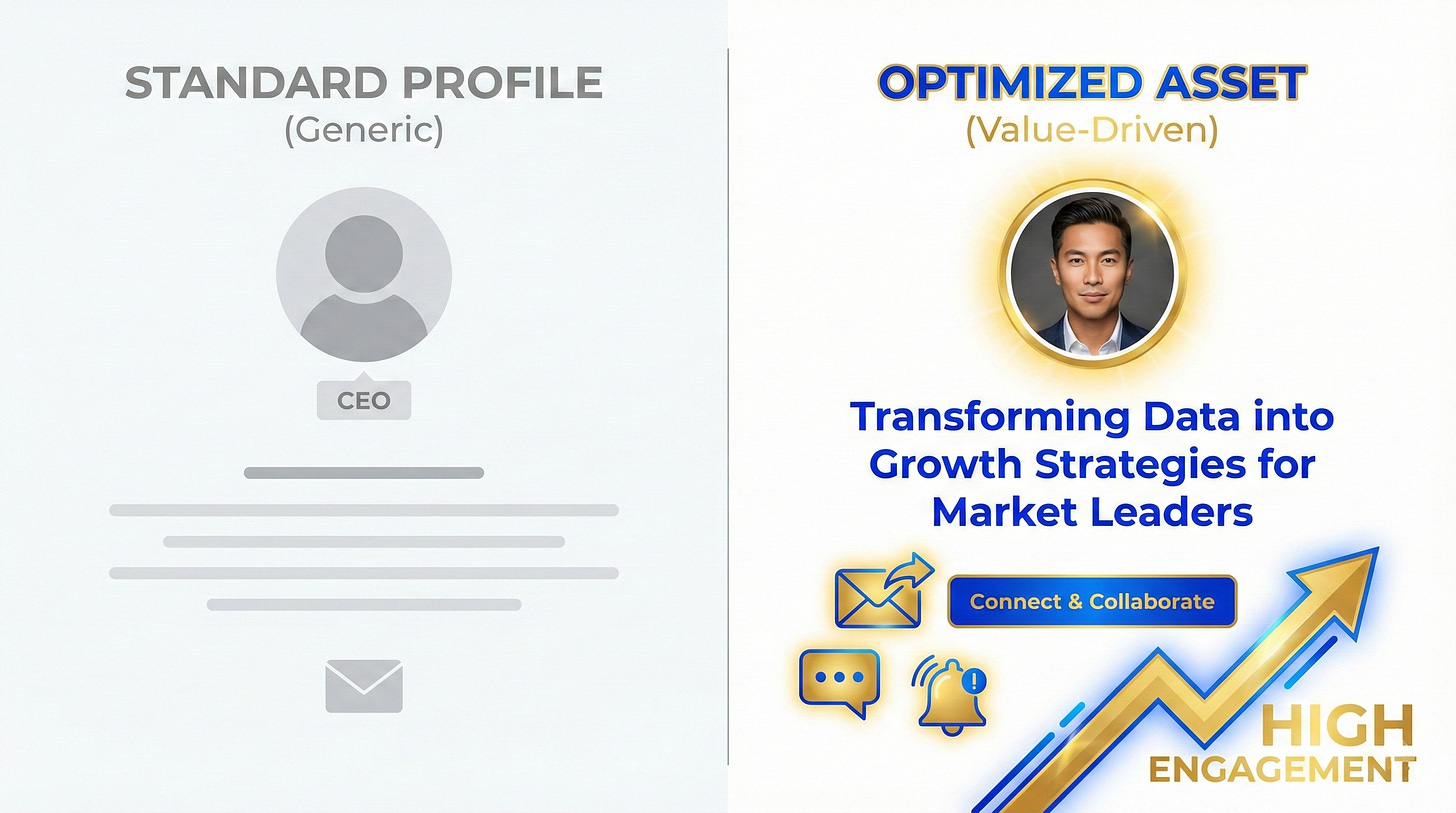
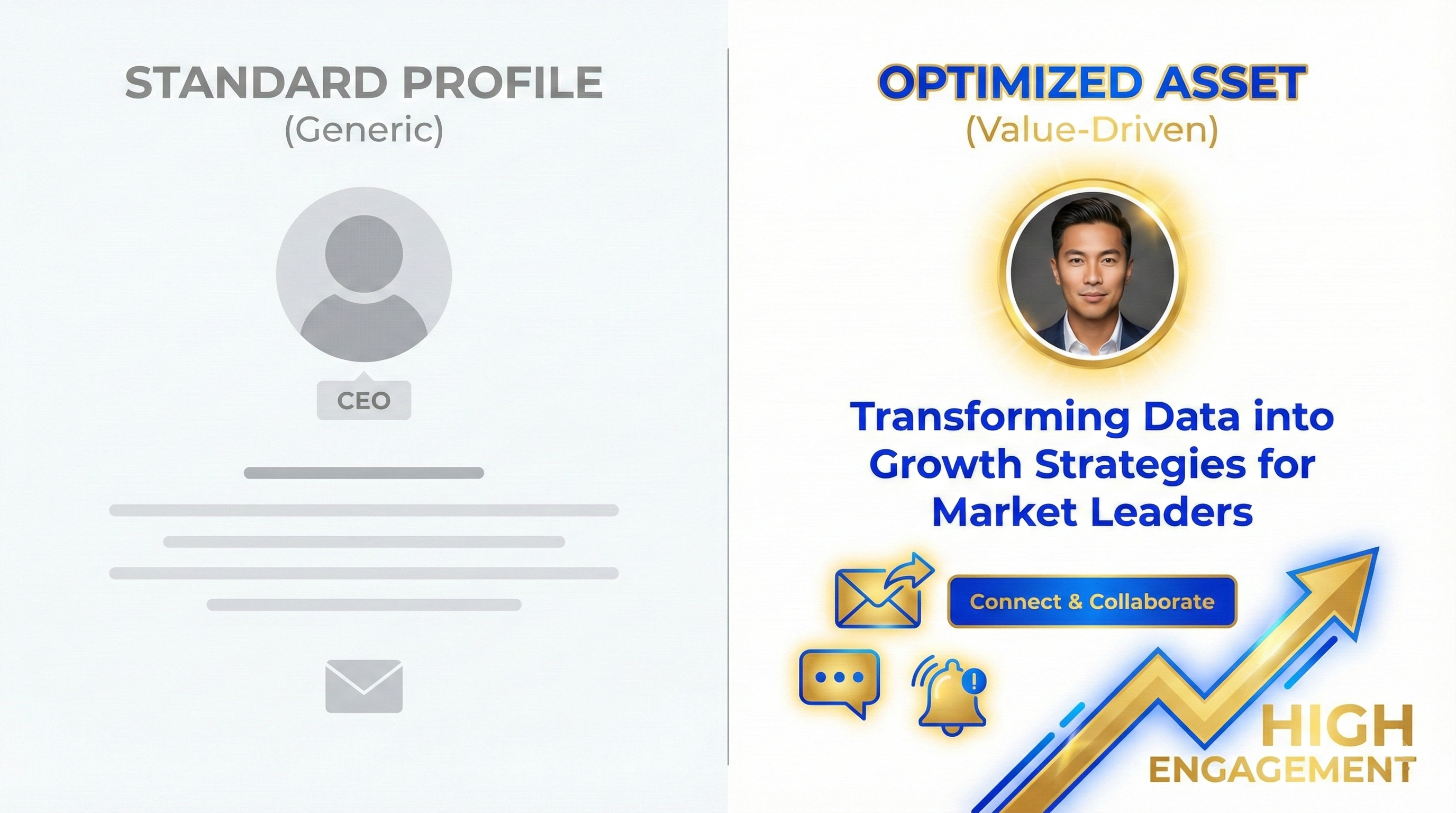
Headline: Delete your job title. Instead of “Founder at Smith Consulting,” use “Helping SaaS CEOs Scale to $10M without Ad Spend.”
The Vetting: A recent study found that 55% of decision-makers use thought leadership as a primary way to vet vendors. If your profile is empty or generic, you are invisible.
Step 2: The “Boring Business” Approach (Radical Specificity)
The impulse to cast a wide net is natural, but it is strategically unsound. Codie Sanchez, founder of Contrarian Thinking, has built a massive following by advocating for “boring businesses” and specific, unsexy niches. She argues that the riches are in the niches that others overlook.
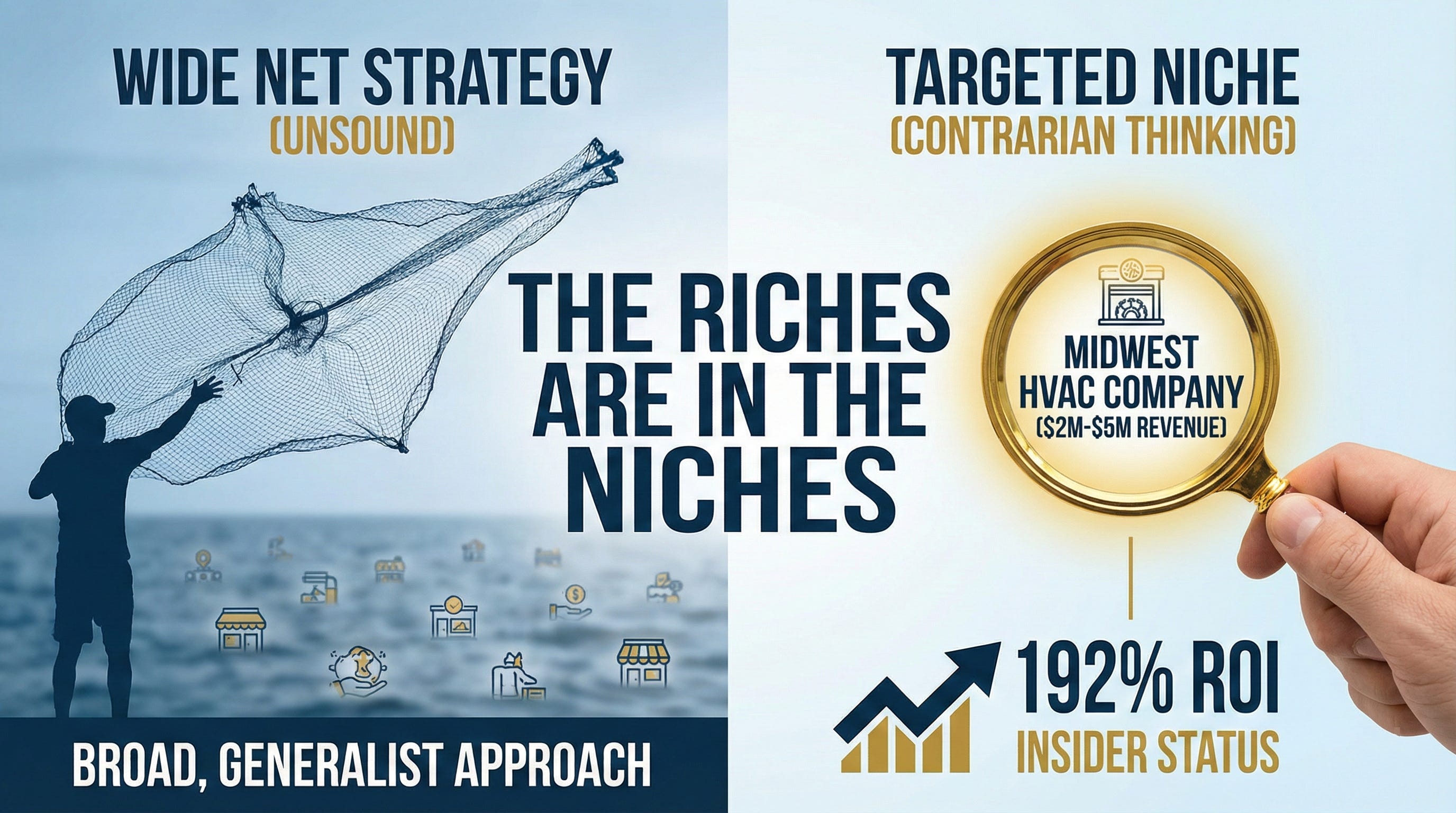
The Strategy: Don’t target “small businesses.” Target “HVAC companies in the Midwest doing $2M-$5M in revenue.”
Why it works: When you speak the exact language of a specific role in a specific industry, you stop being a vendor and start being an insider.
The Data: Targeted campaigns that address a specific vertical’s pain points see a 192% ROI over three years compared to broad, generalist approaches.
Codie Sanchez on Buying Boring Businesses and The Secret to Wealth
Step 3: The “Grand Slam” Outreach (Give, Don’t Ask)
Once you have your profile and your niche, you must cross the chasm of silence. This is where most fail—they pitch. “Hi, I’m X, I do Y, do you have 15 minutes?”
Alex Hormozi, founder of Acquisition.com and the current tactical heavyweight of business strategy, advises a different approach: The “Grand Slam Offer.” Hormozi teaches that you shouldn’t ask for a meeting; you should offer a resource so valuable that they would feel stupid saying no.
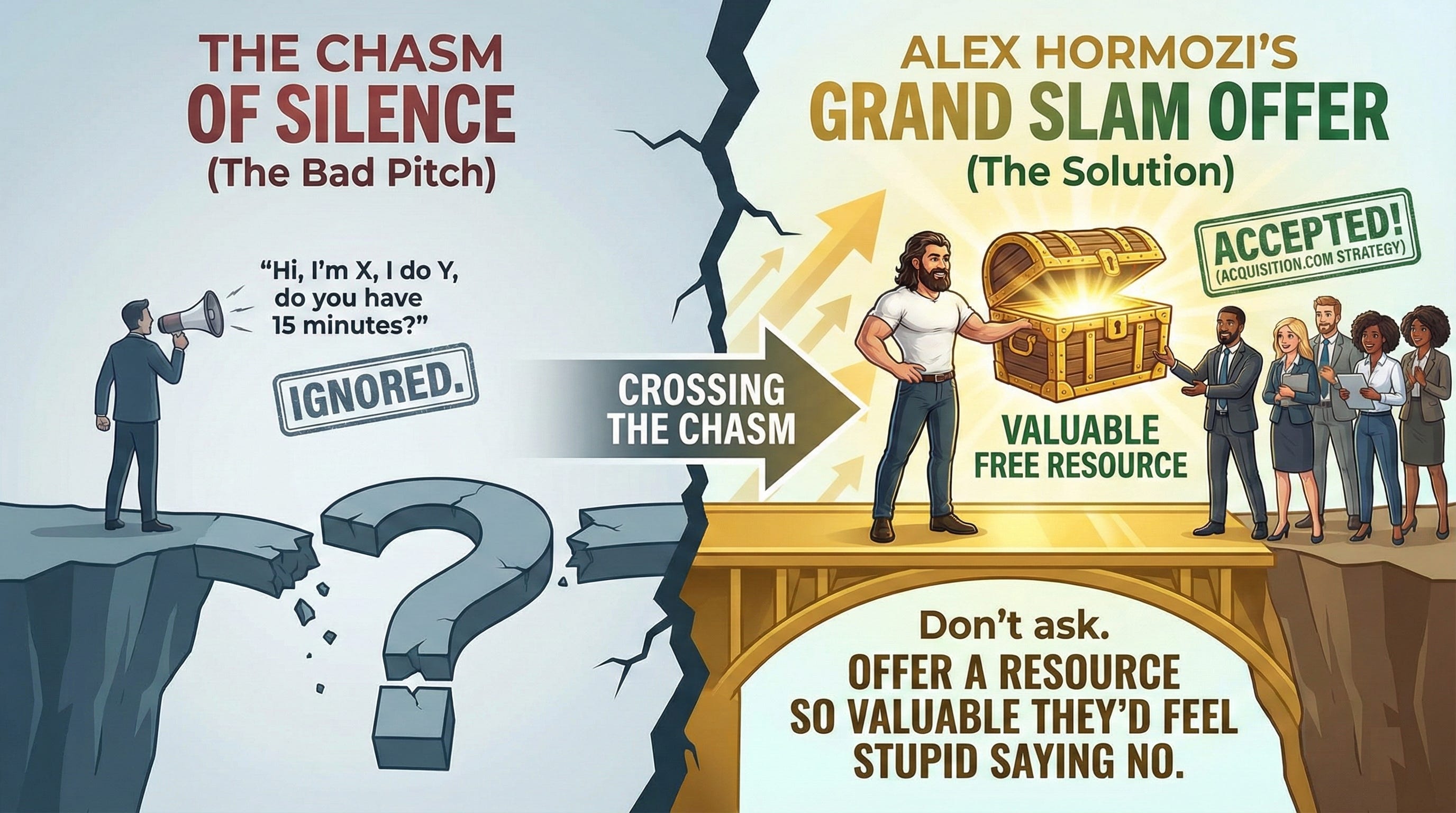
The New Rules of Engagement:
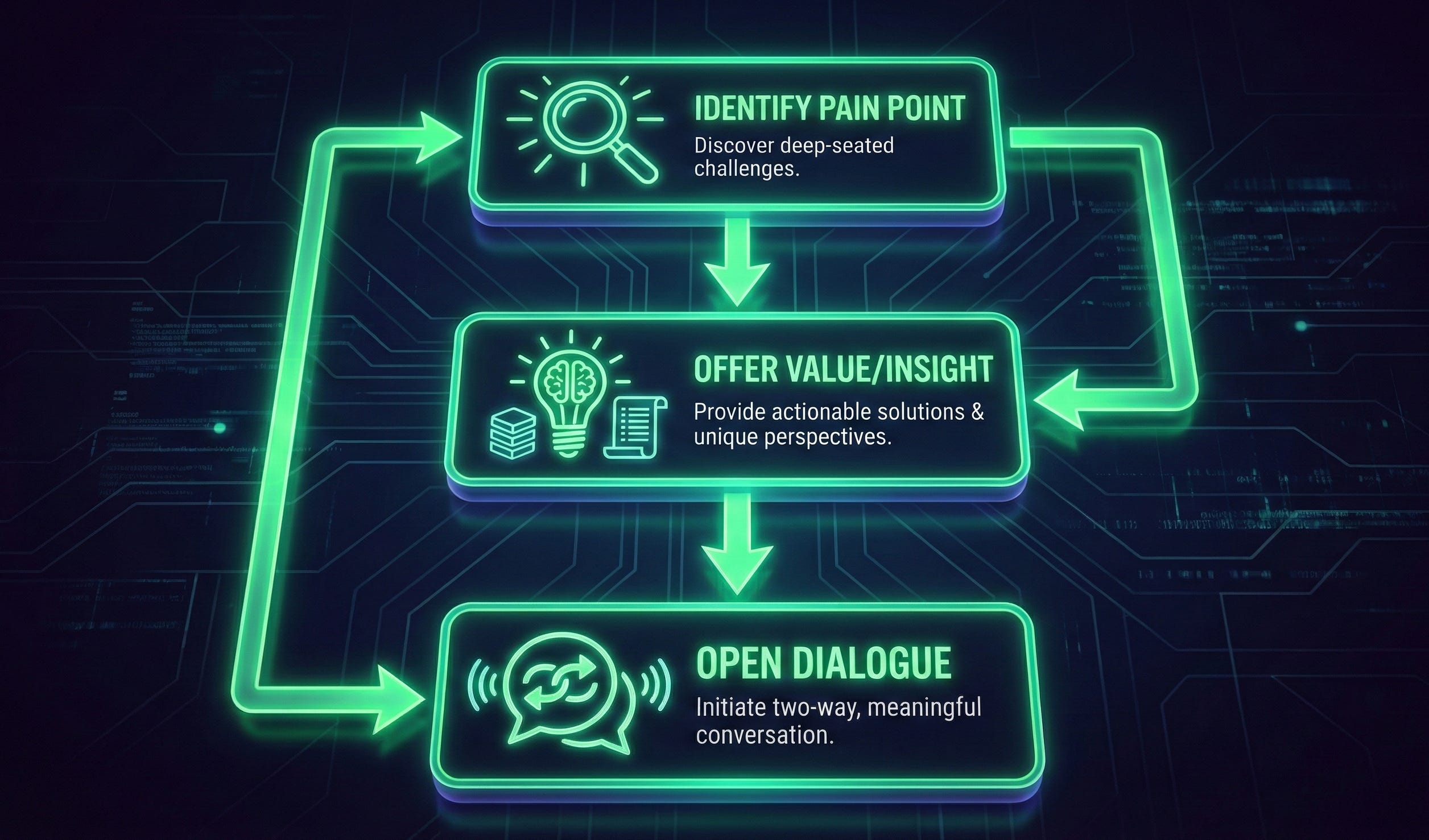
Lead with Value: “I noticed many HVAC owners are struggling with [Specific Regulation X]...”
The Lead Magnet: “...we just released a breakdown of how to navigate it. Would you be open to seeing it?”
The Psychology: You are not selling a service; you are giving away a solution. This triggers the law of reciprocity.
Alex Hormozi: "Grand Slam Offers" & The Chasm of Silence
Step 4: The Transparency Engine (Content Strategy)
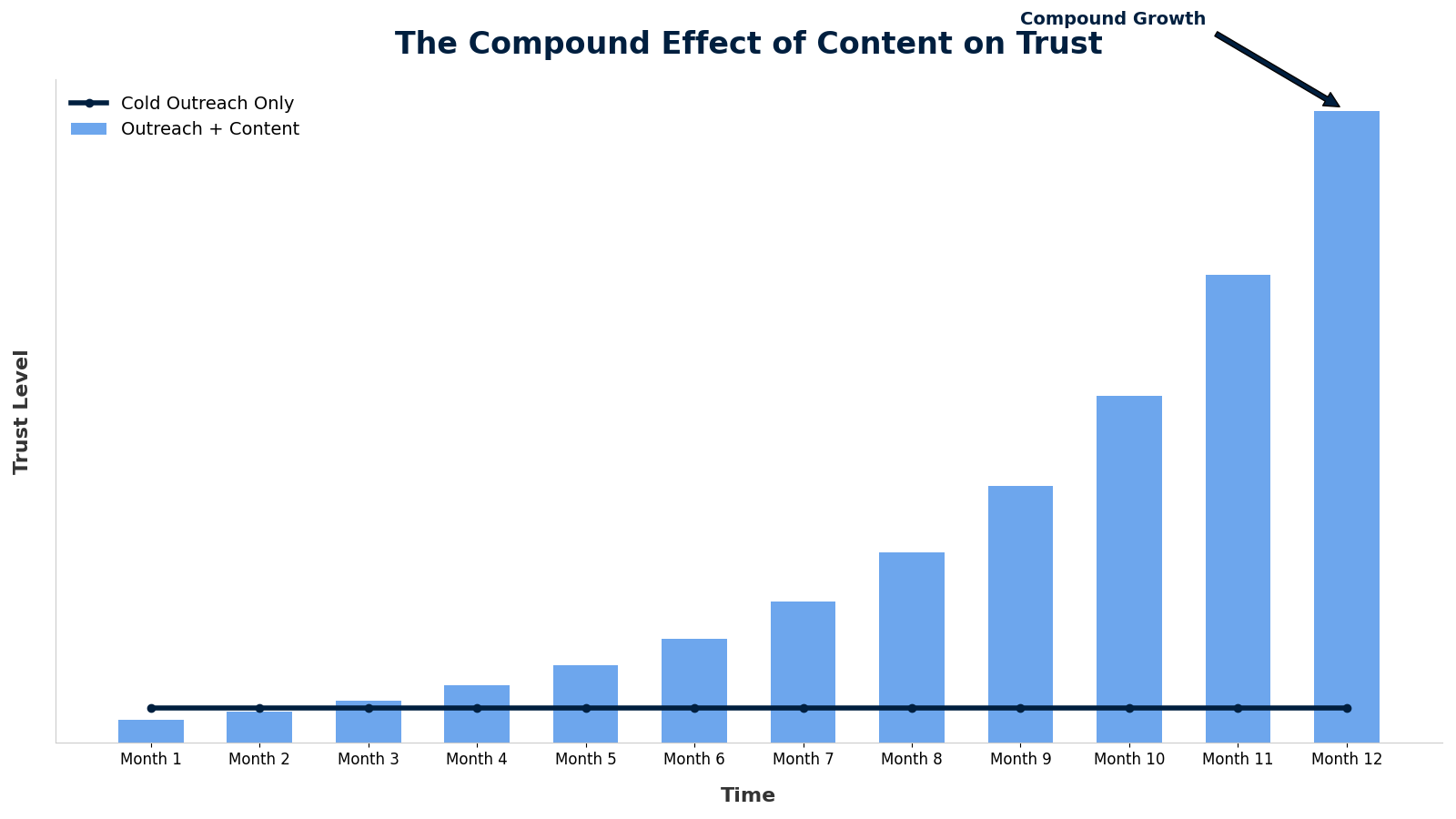
You are not posting content to go viral. You are posting content so that when you finally send that message, they say, “Oh, I’ve seen this person before.”
Ben Francis, founder of Gymshark, didn’t just build a clothing brand; he documented the entire process. He built trust by “building in public.” In the B2B world, this is your secret weapon. You don’t need millions of subscribers; you need to demonstrate competence to the right people.
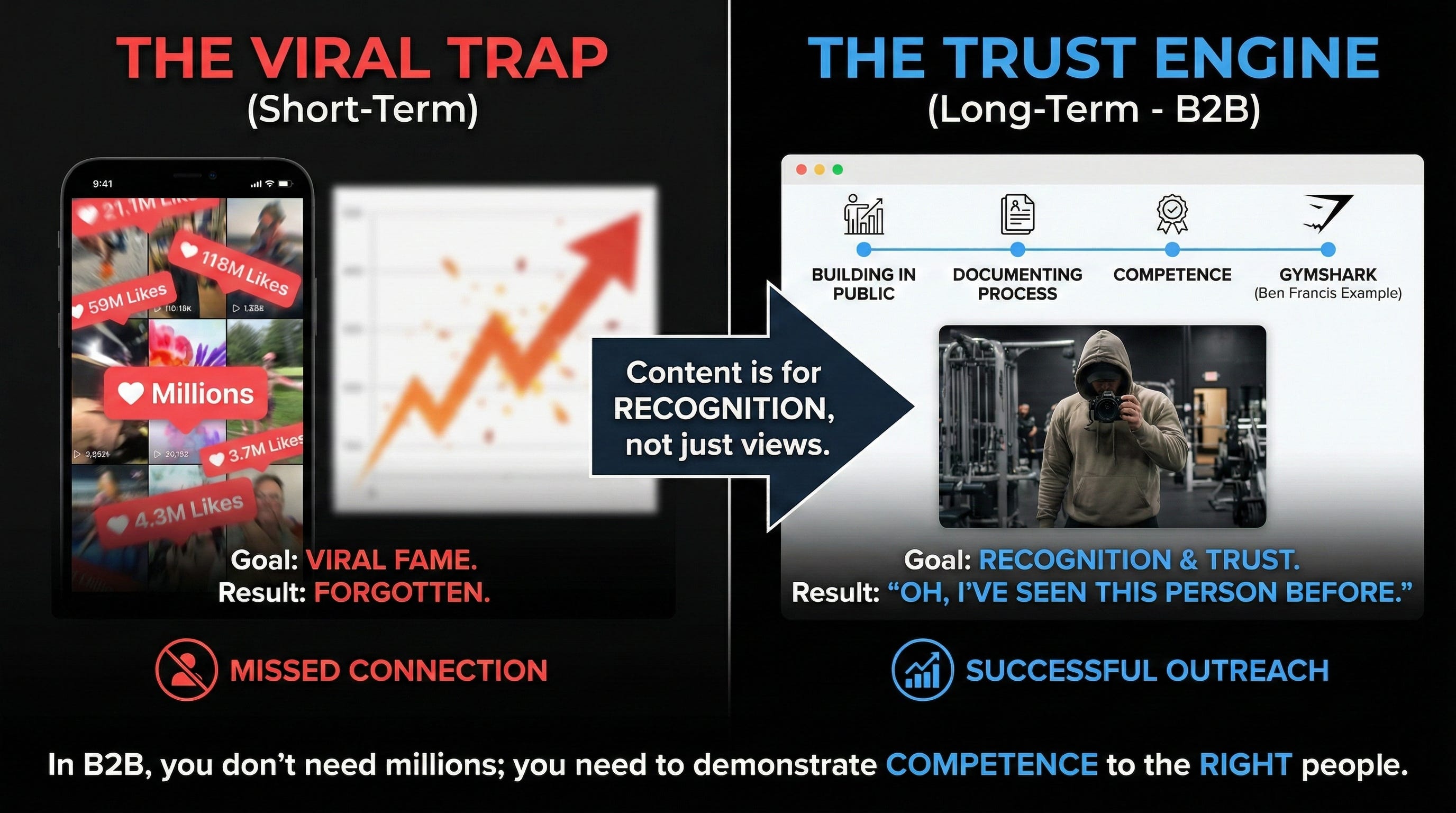
The “Not Random” Rule: If a prospect receives your message and checks your profile, they should see recent posts about the exact problems they are facing.
Frequency: Consistency beats intensity. A daily or weekly cadence of valuable, problem-solving content builds a “familiarity bias” in your favor.
The “Empowerment” Factor
Ultimately, the most successful modern leaders focus on empowering the user. Melanie Perkins, CEO of Canva, built a $26B company not by showing off her design skills, but by making others feel like designers. Your outreach and content should do the same: make your potential client feel smarter, more capable, and ready to win.
Your Breakthrough Roadmap
You have the strategy. Now, you need the execution. Here is your four-step implementation plan to stop hoping and start having fun growing your business.
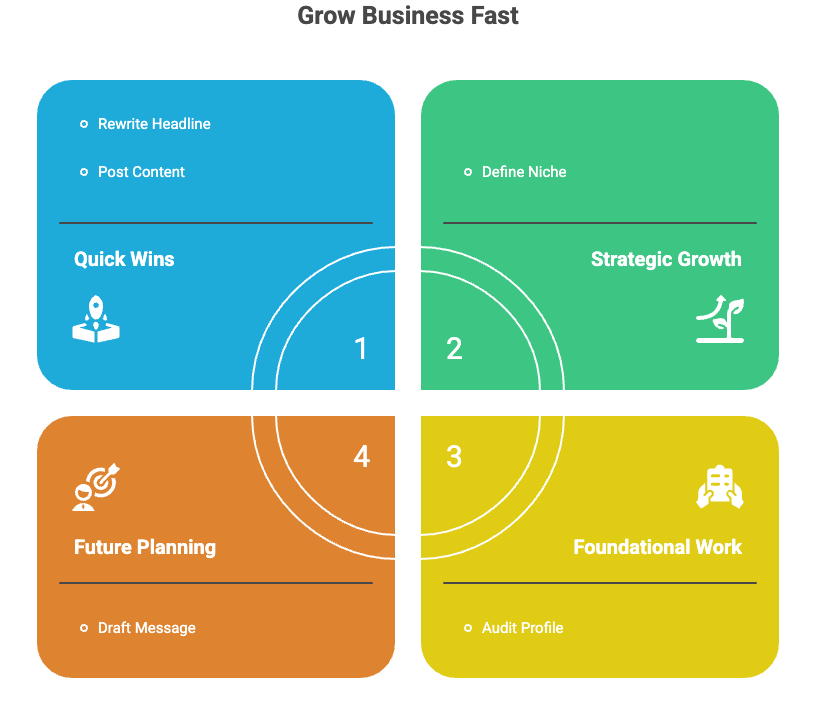
Audit Your Billboard (Today): Go to your LinkedIn profile. Rewrite your headline to follow this formula: “I help [Specific Niche] achieve [Specific Result] by [Method].” Remove your internal job titles.
Define Your “Boring” Niche (Tomorrow): Channel Codie Sanchez. Choose one specific, unsexy role in one industry. Write down the top three problems this person faces on a Tuesday morning.
The “Hormozi” Message (Day 3): Draft a message that offers a solution (a PDF, a video, a checklist) to one of those problems without asking for a meeting. “I saw you’re in [Industry], here is a resource we made to fix [Problem].”
The Transparency Cadence (Day 4): Commit to posting three times a week about the problems you defined in Step 2. Don’t overthink it. Just share what you know.
The shift from “Who do I know?” to “Who needs me?” is the difference between a business that survives and a brand that thrives. Make the shift.