Your Product Is Not the Hero
The Storytelling Shift That Wins Millions

Why This Matters Now - Your groundbreaking innovation will remain obscure without a narrative that demands attention by connecting on a primal level. The difference between a forgotten pitch and a market-dominating valuation is rarely the feature set; it is the emotional resonance of the story you tell. Master the art of the narrative immediately to secure funding, galvanize your team, and capture the market.
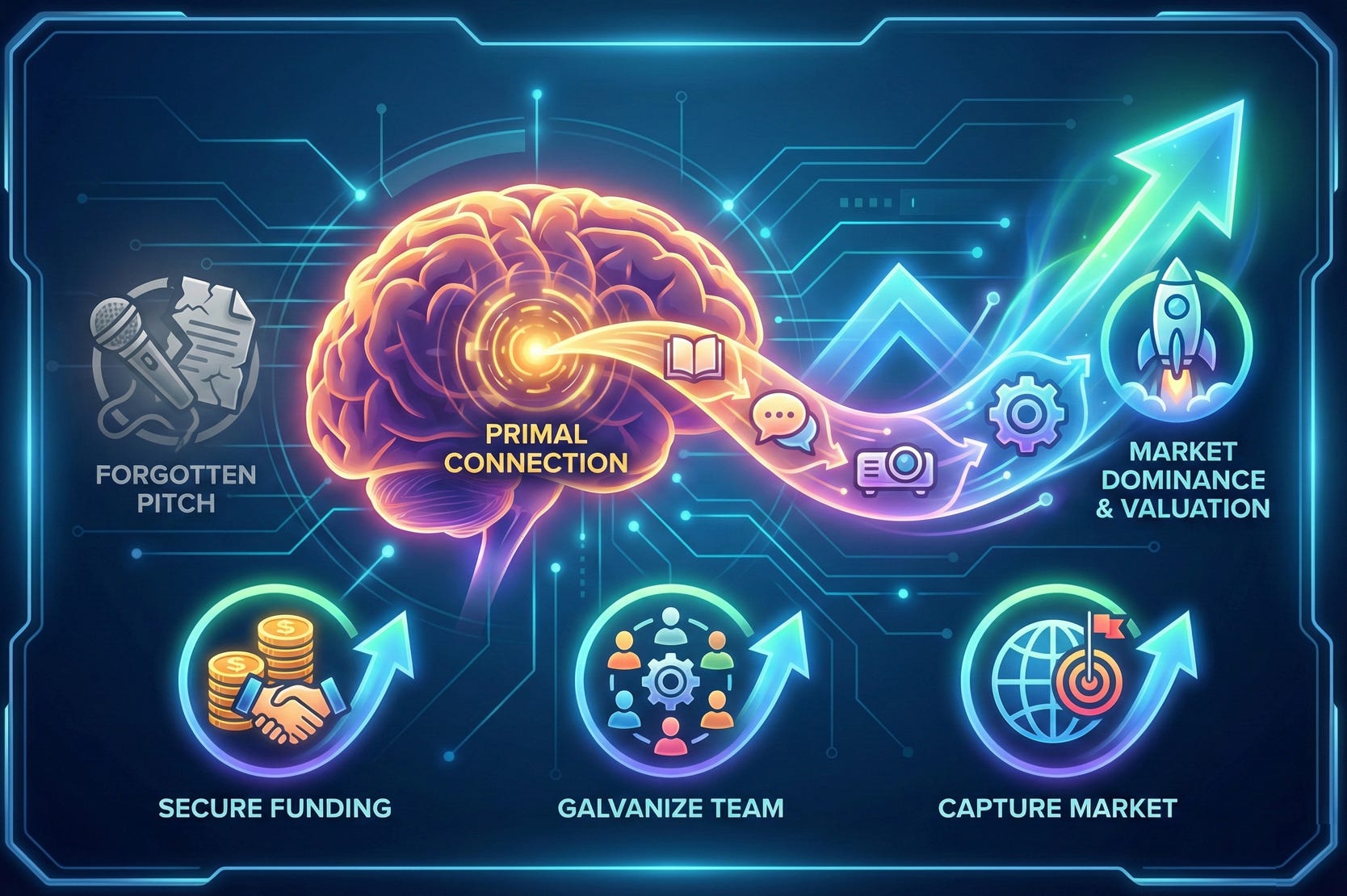
Great products don’t sell themselves. They never have. Behind every ubiquitous brand is a masterfully crafted narrative that bridges the gap between a human problem and a technological solution. In an era of unprecedented market noise, cognitive overload is your primary competitor. Data sheets and technical specs are fast passes to oblivion. To win, you must stop explaining and start storytelling.
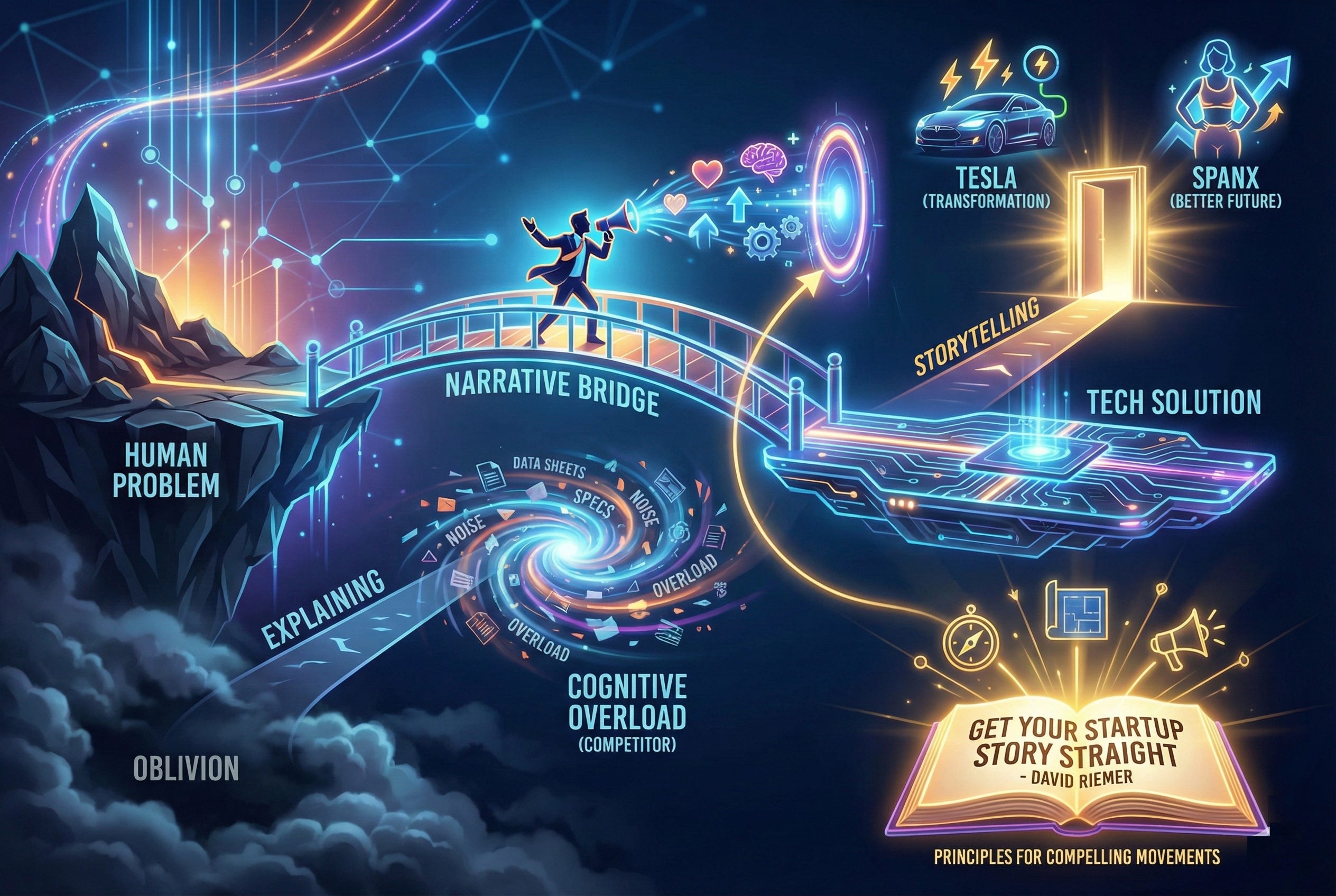
The most successful founders, from Elon Musk at Tesla to Sara Blakely at Spanx, understand that they aren’t just selling cars or undergarments. They are selling a transformation. They are selling a better version of the future. We can deconstruct how to turn abstract ideas into compelling movements by drawing on the principles outlined by storytelling expert David Riemer in his book Get Your Startup Story Straight.
Here is how to engineer a narrative that bypasses skepticism and drives action.
1. Hack the Brain: Target “System 1” Thinking
Human beings like to believe they make rational decisions based on data. They do not. Behavioral economics, popularized by Nobel laureate Daniel Kahneman, reveals two modes of thinking. “System 2” is slow, analytical, and calorie-expensive; it is the skeptical brain. “System 1” is fast, intuitive, and emotional; it is the gut-check brain.
Ambitious founders often make the fatal mistake of leading with System 2 data. They dump specs on investors, forcing them into an analytical crouch. A compelling story, however, targets System 1. It creates an immediate emotional hook that bypasses initial skepticism. Once the emotional connection is established, the analytical brain looks for data to justify the gut feeling.
If you don’t capture their hearts in the first minute, you will never capture their minds.

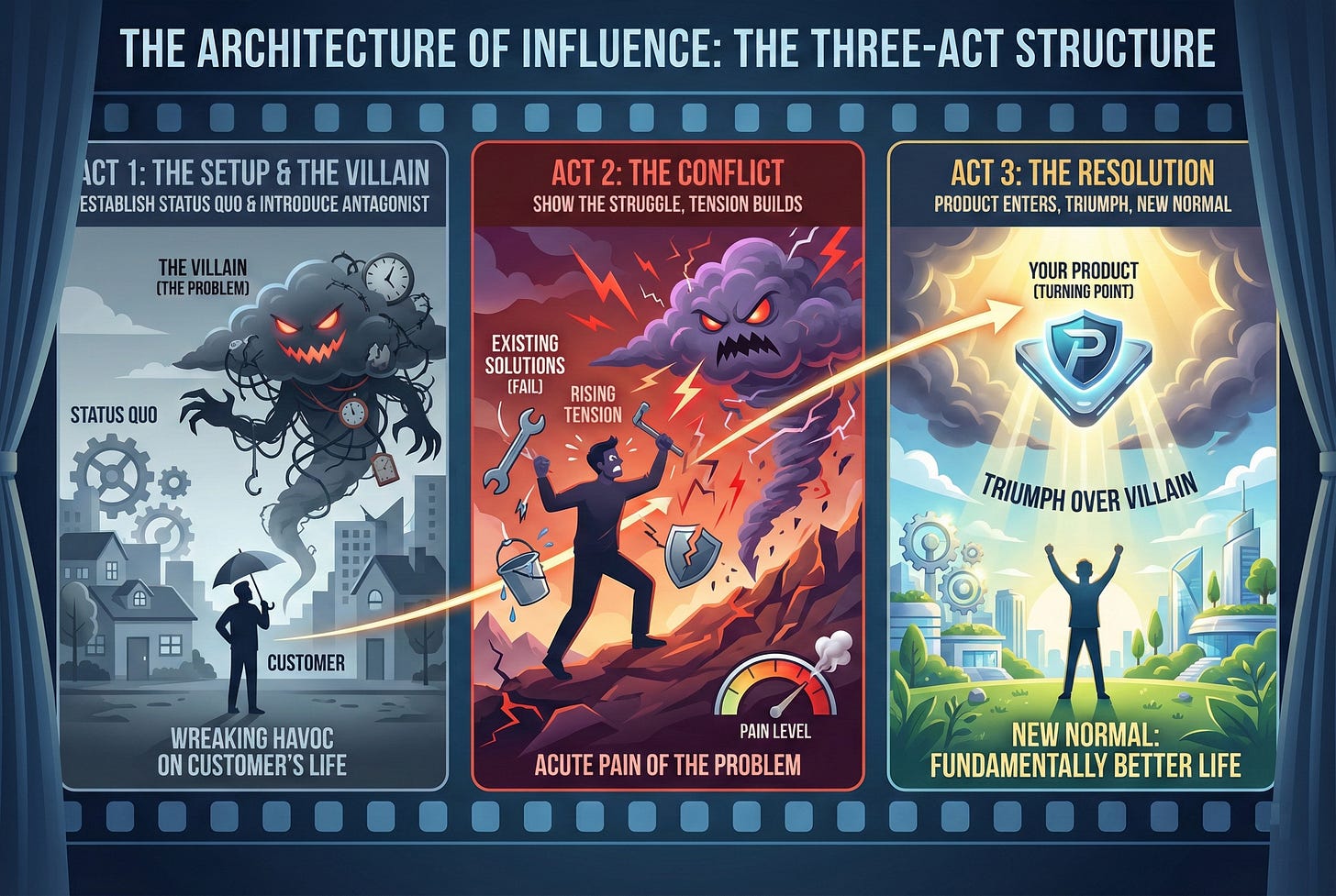
2. The Architecture of Influence: The Three-Act Structure
Business is theater. If your pitch lacks structure, it lacks impact. Riemer argues that great product stories mirror classic cinematic structure. You must take your audience on a journey.
Act 1: The Setup and The Villain. Establish the status quo and introduce the antagonist. In business, the antagonist isn’t a person; it is the status quo problem wreaking havoc on the customer’s life.
Act 2: The Conflict. Show the struggle. The customer tries existing solutions, but they fail. Tension builds. The pain of the problem becomes acute.
Act 3: The Resolution. Your product enters the stage. It is the turning point that allows triumph over the villain, leading to a “new normal” where life is fundamentally better.
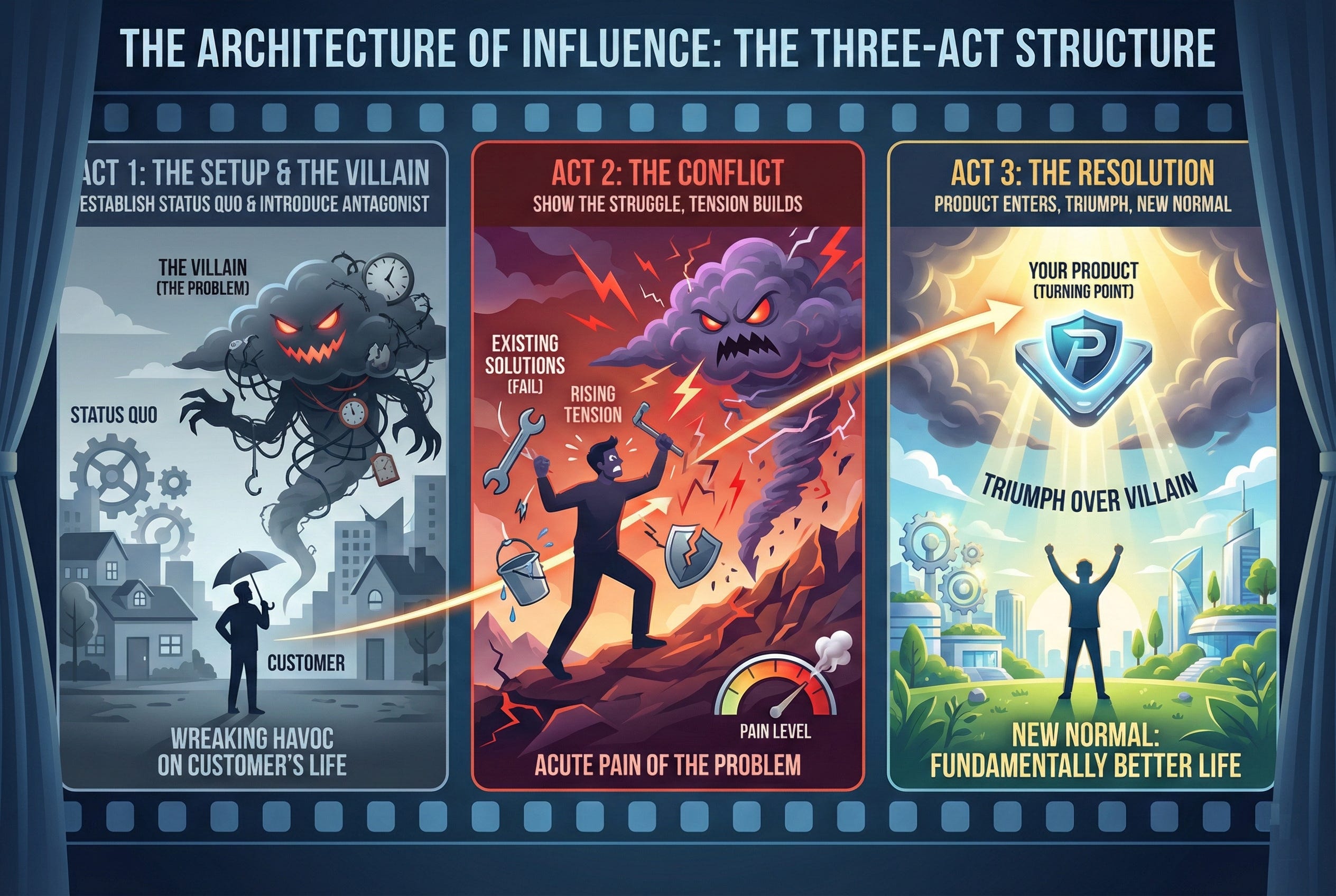
To truly hook your audience, you must “romance the problem.” Before offering a solution, you need to make the audience viscerally feel the pain of the current state. If they don’t fear the villain, they won’t value your victory.
A prime example of “romancing the problem” (and initially failing, only to succeed massively later) is Jamie Siminoff’s pitch for DoorBot (now Ring). He identified the villain—not knowing who is at your door—and pitched the safety solution. While the Sharks missed it, the market didn’t.
Watch how Jamie Siminoff’s persistence turned a Shark Tank rejection into a billion-dollar Amazon exit:
3. Stop Playing Hero: You Are The Guide
The single greatest mistake founders make is positioning their company as the hero of the story. This is ego, not strategy.
In the narrative of your business, the customer is the hero. They are Luke Skywalker; they are Katniss Everdeen. Your startup is not the protagonist. Your startup is Yoda; it is Haymitch. You are the guide, the tool, the catalyst that equips the hero with the power to defeat the villain and win the day.
When Nike communicates, the athlete is always the hero overcoming adversity. Nike is simply the equipment that aids the journey. When you shift this perspective, your messaging moves from bragging to empowering. It changes the dynamic from “look at me” to “I see you, and I can help.”

4. Authenticity and Vulnerability: The Origin Story
In an age of curated perfection, vulnerability is a competitive advantage. Founders often try to appear invincible, but authentic storytelling requires humanity. Sharing genuine struggles, pivots, or the deeply personal reasons why you started the company creates an emotional hook that data sheets cannot replicate.
Sara Blakely, the founder of Spanx, didn’t have an MBA or millions in funding. She had a pair of scissors, a bad pair of pantyhose, and a lot of grit. Her willingness to share her embarrassing moments and her raw journey built a brand that women didn’t just buy—they rooted for.
Watch Sara Blakely explain how embracing the “unknown” fueled her rise to becoming a self-made billionaire:
5. The “Why” Creates the Culture
Your story isn’t just for investors; it is the glue that holds your team together. If your employees don’t know the “saga” they are part of—who the villain is and what victory looks like—they cannot make autonomous decisions that align with the vision.
As leadership expert Simon Sinek famously articulated, people don’t buy what you do; they buy why you do it. Great leaders embed the company’s core story into the culture, ensuring every hire understands the mission deeply. When the “Why” is clear, the “How” becomes flexible.
Watch Simon Sinek break down the “Golden Circle” and the biology of decision-making
6. Sell the Transformation, Not the Product
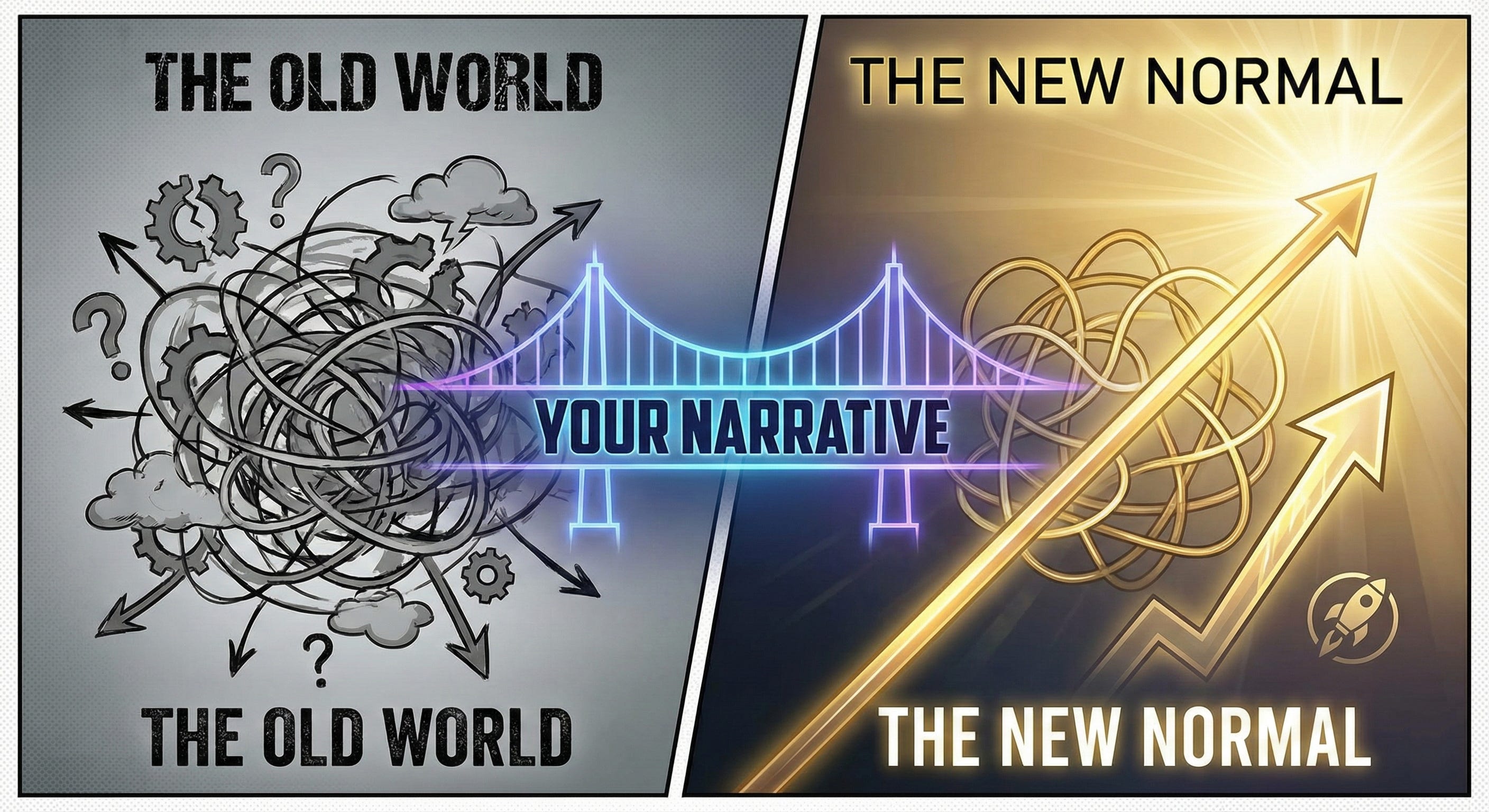
Finally, your story must conclude with the “New Normal.” Do not just describe the transaction (”they bought the software”); describe the transformation. How has the customer’s world fundamentally changed?
Investors invest in the transformation, not the features. When Steve Jobs introduced the iPhone in 2007, he didn’t just list technical specs about screen resolution. He told a story about three separate devices—an iPod, a phone, and an internet communicator—becoming one. He sold a world where technology was no longer a burden but an extension of the hand.
Watch the masterclass in selling a “New Normal” during the original iPhone Keynote:
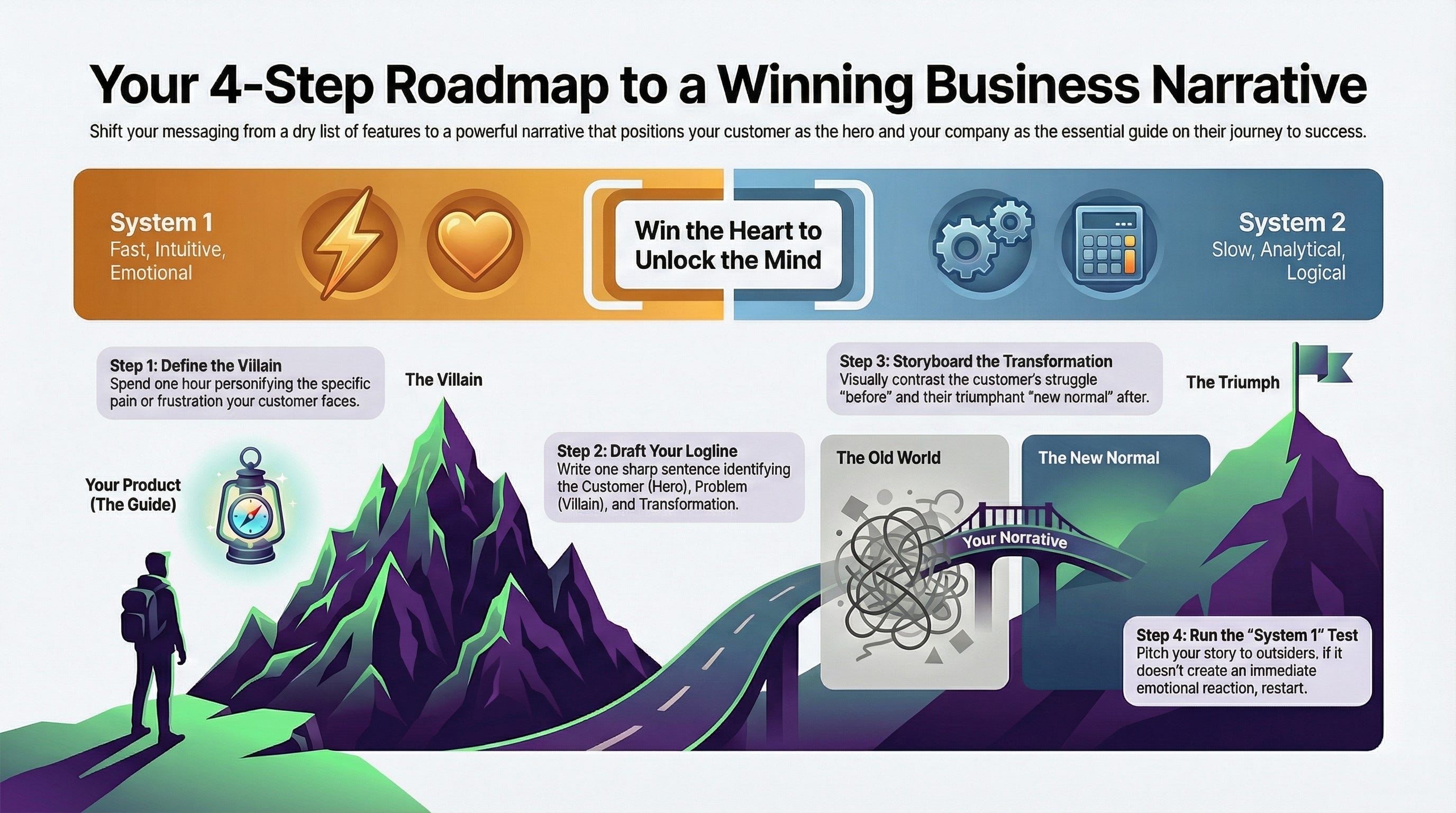
Your 4-Step Narrative Roadmap
Don’t just read this. Execute it. Here is your immediate roadmap to reframing your business narrative and unlocking your next stage of growth.
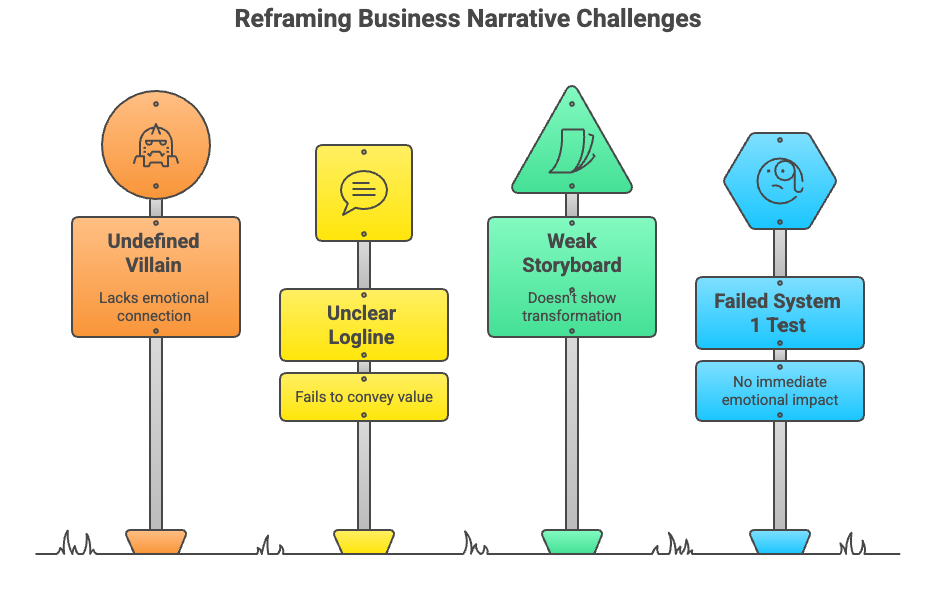
1. Define the Villain (1 Hour) Stop focusing on your solution. Spend one hour deep-diving into the problem. Personify it. What is the specific pain, frustration, or inefficiency ruining your customer’s day? Name the villain. If it doesn’t sound scary or annoying, dig deeper.
2. Draft Your Logline (30 Minutes) Write a single sentence that clearly identifies the Customer (Hero), the Villain (Problem), and how your Solution (Guide) leads to a Transformation. Iterate until it is razor-sharp and free of jargon.
3. Storyboard the “Transformation” (2 Hours) Sketch out a six-panel storyboard. The first three panels must show the customer’s struggle without your product. The last three must show the relief and “new normal” with your product. This visual gap is your value.
4. The “System 1” Test (Immediate) Pitch your new logline and storyboard to three people outside your industry. Ask them for their immediate gut reaction, not their analysis. If they don’t get it emotionally within 60 seconds, go back to step one.